

New TAFE program for Aboriginal health-care students sees a near perfect completion rate
- Written by: Kylie Gwynne, Associate Professor and Research Director, Poche Centre for Indigenous Health Faculty of Medicine and Health, University of Sydney
A customised scholarship program developed for Aboriginal TAFE students has led to a 96% completion rate – more than 60% above the average completion rate for Aboriginal TAFE students in New South Wales.
Our research, published today in the Australian Health Review, shows how a seven-step approach – which includes supporting students by picking them up from the airport and ensuring Aboriginal staff are involved in each step – can dramatically improve vocational-education outcomes for Aboriginal students.
The completion rate for vocational education students across all cultures, locations and programs of study in NSW was 37.3% in 2013. For Aboriginal students, who make up 6.6% of all TAFE students, the completion rate was 29.6%.
What the program looks like
Previous research has shown a model made of five components (respect, communication, safety and quality, reflection and advocacy) could improve the completion rates of Aboriginal nursing students.
We adapted this model for vocational education and enrolled 31 students in the first cohort. One group studied Certificate III or IV in Dental Assisting. A second group studied Certificate IV in Allied Health Assisting.
Of our cohort who followed the five steps, 96% of students completed their course. But interviews with the first cohort of students and their teaching and support staff revealed an opportunity to add two more steps. And so, the seven step approach was born.
The seven step model has been implemented under the leadership of Bundjalung Elder and Poche Director, Boe Rambaldini. Aboriginal support staff were involved in all aspects of the program, and all staff engaged in ongoing cultural competence awareness and skill development.
The vocational training and scholarships were designed and scheduled to take account of students’ family responsibilities, financial circumstances and academic support needs in the following ways:
the course was run in mixed-mode with intensive face-to-face blocks of 3-5 days, supplemented by work experience close to home and some assignments at home (to minimise time away from family and employment)
students received a computer as part of the scholarship as well as pre-paid internet access to download course materials, undertake research online and connect with students and staff
students were contacted regularly to check on their progress and provide advice/assistance where needed.
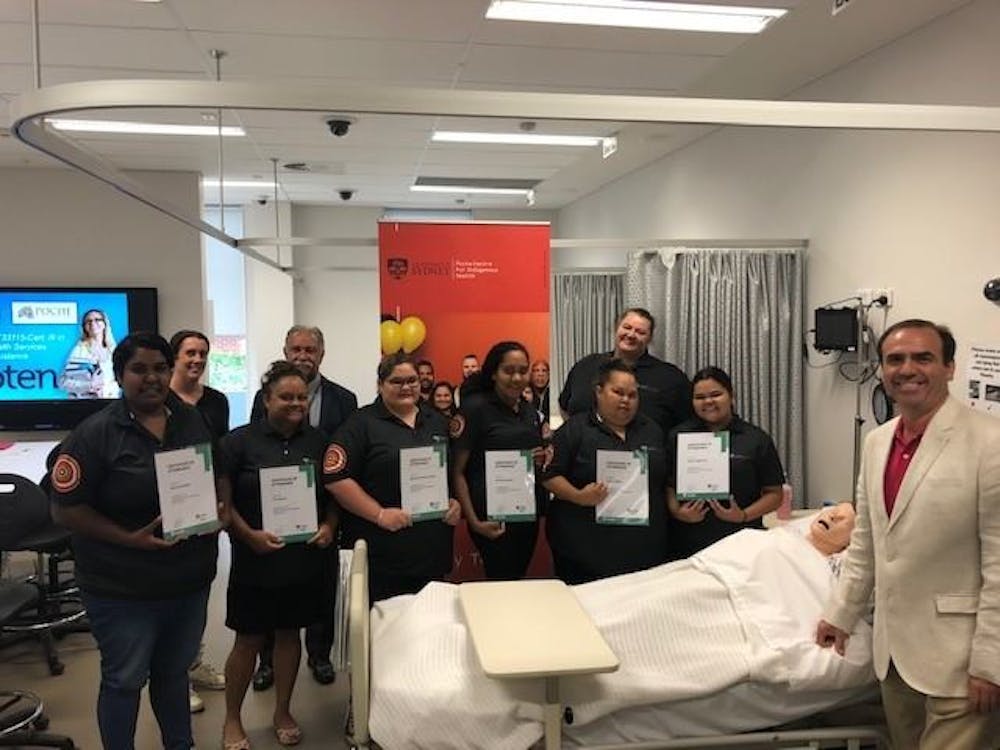 By the end of last year, 380 qualifications had been awarded to Aboriginal students.
Poche Centre for Indigenous Health, CC BY
By the end of last year, 380 qualifications had been awarded to Aboriginal students.
Poche Centre for Indigenous Health, CC BY
By the end of last year, 380 qualifications had been awarded to Aboriginal students and the completion rate of 96% had been maintained.
One of the first graduates of the seven-step approach, Rachel Williams, has gone on to complete a Bachelor of Oral Health. She is now the registered oral health therapist at her local Aboriginal Health Service, Armajun, where she started as a trainee.
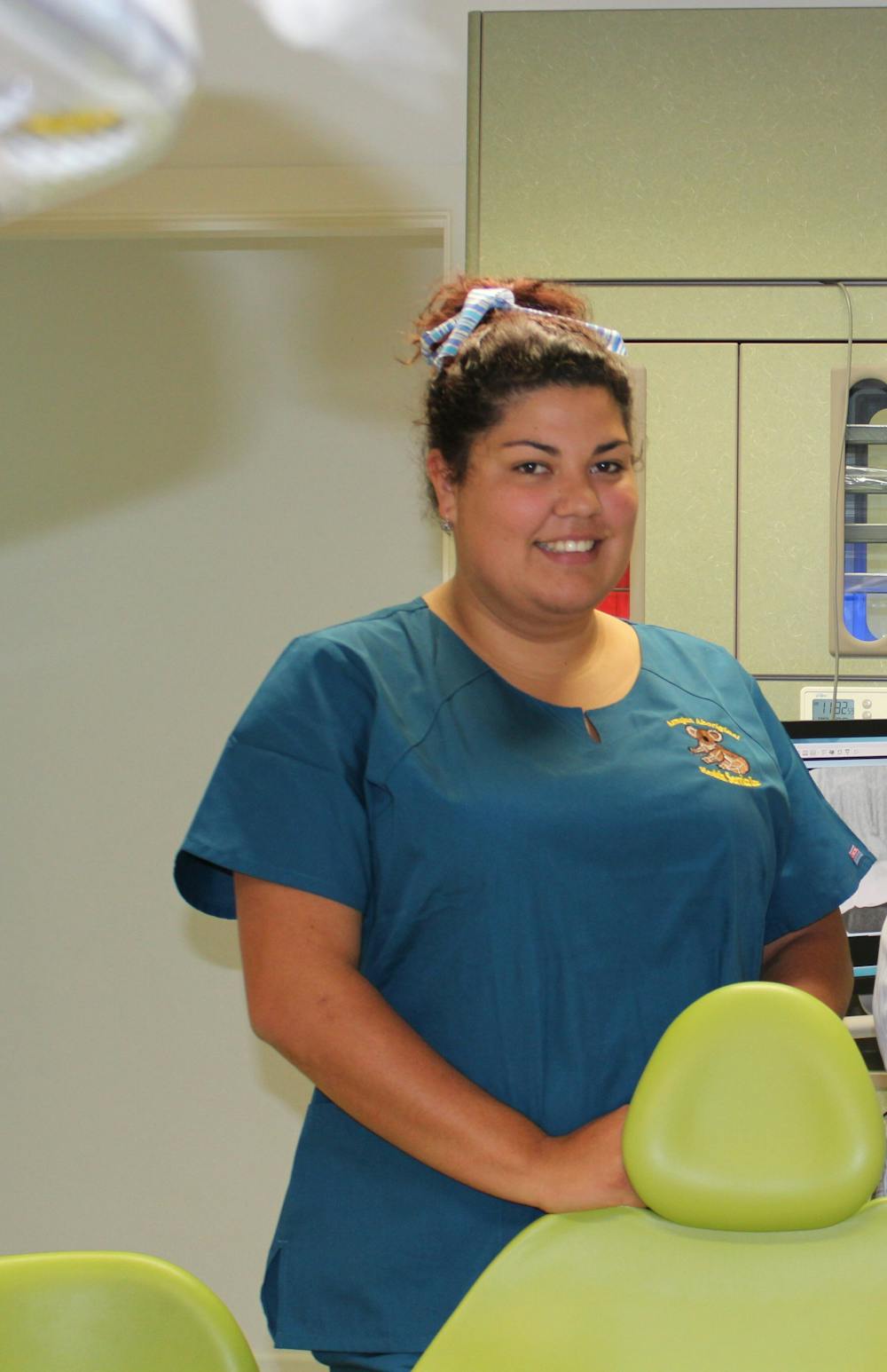 Rachel is just one of many Poche scholars (as they have become known) who have gone on to build a career in rural health.
Author provided., Author provided
Rachel is just one of many Poche scholars (as they have become known) who have gone on to build a career in rural health.
Author provided., Author provided
Rachel is just one of many Poche scholars (as they have become known) who have gone on to build a career in rural health. The program, funded by the NSW Ministry of Health, is now in its fifth year and has helped us meet a commitment to employ at least 50% Aboriginal staff in rural and remote health clinics associated with the Poche Centre for Indigenous Health.
Programs like this are important both because TAFE can be a pathway for Aboriginal people to secure local skilled work or study at university, and because they can help improve the cultural competence of health-care services.
Why the steps matter
Our program encourages scholars to make a strong commitment to completion, which builds a strong cohort. As one student told us:
Whenever I’ve fallen behind […] I’ve emailed or messaged them (other students) and we’ve helped each other in that way. We’ve been each other’s support system.
We also wanted to ensure the program could be continuously adapted and improved as needed.
And importantly, applicants did not require prior academic success. The critical factor was the motivation of the scholar and support from family, financial, administrative, cultural, employer and personal support. All qualifications are awarded through the usual TAFE process, and TAFE has adapted their approach for the Poche scholars.
The program costs more to deliver than a standard TAFE place, to cover higher staff to student ratios, laptops and prepaid data, travel and accommodation to attend intensive study blocks, uniforms, cultural and social support staff and customisation of some of the study materials. As one student told us:
I wouldn’t be able to do it if they didn’t pay for the travel. I wouldn’t be able to do it if they didn’t pay for the accommodation. I would find it hard if they didn’t pay for the food, so all of that is amazing and I’m very thankful for all of that.
The latter is particularly important. The curriculum is made relevant to the students by using, for example, case studies that reflect the students’ culture and context.
Getting qualified is not enough
It is not enough, however, to get qualified. Aboriginal people in rural and remote communities must also have real opportunities for secure employment. Economic analysis by the Australian Social Investment Trust has been adapted for this program. It suggests a greater than A$27,000 return on investment for every person who secures a job. This is largely made up of reduced welfare payments and increased tax.
More work needs to be done, of course. If we are to close the gap in health outcomes for Aboriginal people, we need to develop and staff culturally competent health-care services. Building a skilled, qualified, local Aboriginal health workforce is a critical step to achieving this.
Read more: Closing the gap on Indigenous education must start with commitment and respect
Authors: Kylie Gwynne, Associate Professor and Research Director, Poche Centre for Indigenous Health Faculty of Medicine and Health, University of Sydney


















