

Cannibalism helps fire ants invade new territory
- Written by: Pauline Lenancker, PhD student in biology and ecology, James Cook University
Tropical fire ants (Solenopsis geminata), originally from central and South America, are a highly aggressive, invasive ecological pest. Our new research has shed light on how they successfully establish new colonies.
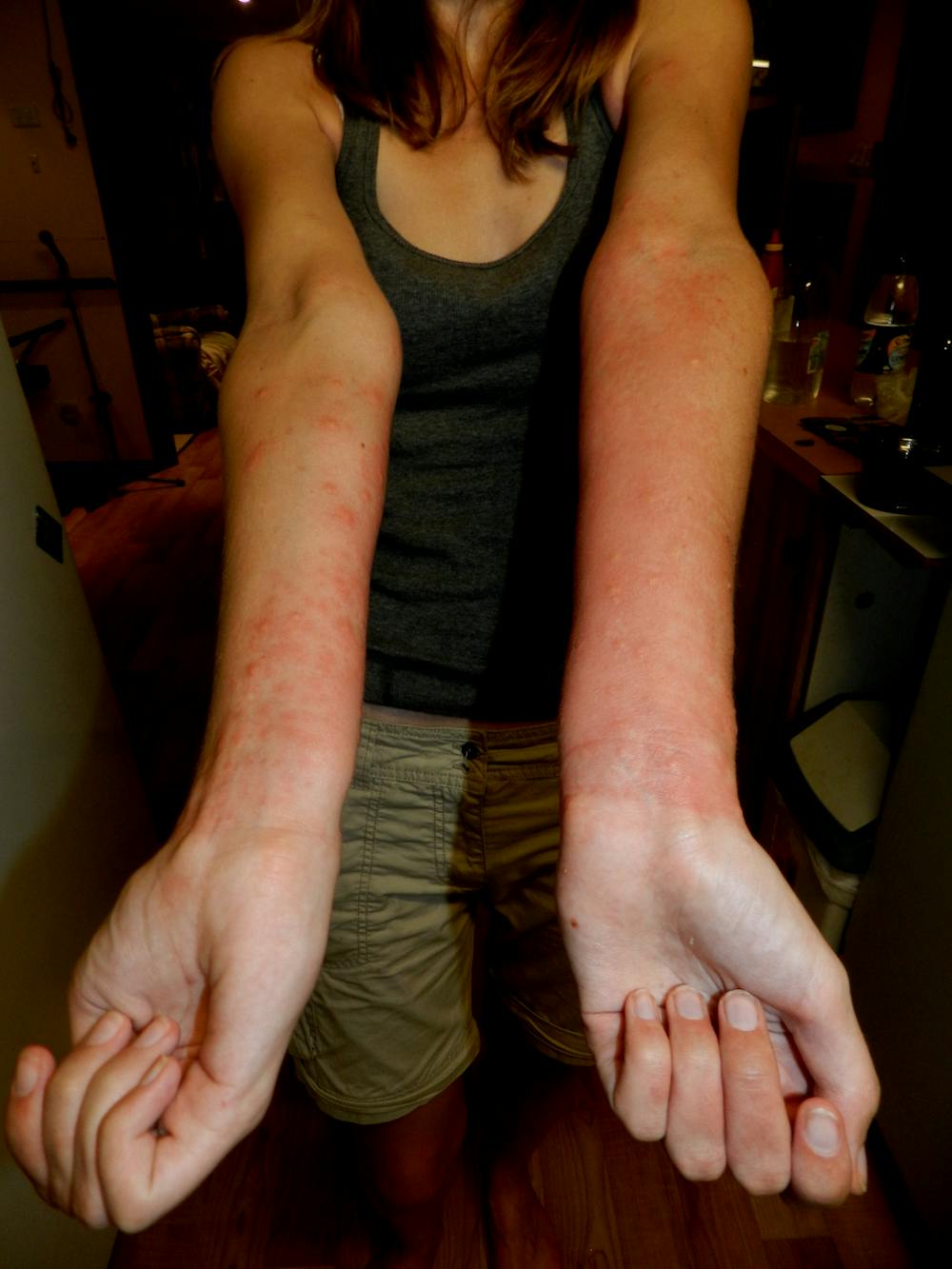 An allergic reaction to painful tropical fire ant bites.
Pauline Lenancker, Author provided
An allergic reaction to painful tropical fire ant bites.
Pauline Lenancker, Author provided
While we don’t know exactly how widespread tropical fire ants are in Australia, they are well established around Darwin and Katherine, as well as on Christmas Island and Ashmore Reef. Disturbing one of their nests will result in many workers inflicting painful stings on the intruder, and can trigger an allergic reaction in some people.
When invasive ants move to a new region, the pioneers may be one or a few colonies. Because these pioneers are isolated, they often inbreed, which causes genetic problems in their offspring. But our new research, published in Scientific Reports, reveals how tropical fire ants use cannibalism to survive and spread, despite their low genetic diversity.
Read more: Eradicating fire ants is still possible, but we have to choose now
Sons and daughters
Founding new colonies is how fire ants spread. Queens fly off to start their own colonies just after they have mated. It is a perilous journey – they need to avoid predators and find a good spot to start laying eggs. If queens do not quickly rear daughters that can forage, called workers, they will starve to death.
Queens can lay two different types of eggs: fertilised eggs, which will develop into workers, and unfertilised eggs, which will develop into males. Therefore, female workers have two copies of each gene (diploid), while males have a single copy of each gene (haploid). However, when an ant queen and her mate are closely related, a flaw in the sex determination system of ants causes half of the fertilised eggs to develop into diploid males instead of workers.
The role of males is only to mate with queens – they do not forage, and they die after they have mated. Queens founding a colony have no interest in producing males, because males will not feed them. What’s more, diploid males are often sterile, and their larvae are larger than worker larvae. Therefore, queens can waste precious resources feeding fat useless sons instead of workers.
We wanted to find out how common diploid males are in field colonies, and how queens could successfully start colonies despite them. Understanding how tropical fire ants spread, we hope, can help us stop them expanding their range.
Abandoned and eaten
Our field sampling of tropical fire ant colonies around Darwin revealed eight out of ten colonies produced diploid males.
We collected 1,187 queens that had just mated, and assigned them to start colonies on their own or with other queens.
We observed that in 34% of colonies producing diploid males, diploid male larvae were placed in the colony trash pile by the queens instead of being kept with the worker larvae. It is usual for ants to keep dead individuals away from the rest of the colony, but when we looked at some of these abandoned larvae under a microscope, we realised they were still alive.
Read more: Curious Kids: do ants have blood?
Queens not only abandoned their sterile sons, they ate them. Three-quarters of the 109 sterile male larvae disappeared from the colonies within 12 days of when we first observed them. Because the queens were the only adult ants present in the colony, this means the queens were eating their diploid males or feeding them to their worker larvae.
This cannibalistic behaviour allowed the queens to redirect nutrients towards themselves or productive members of their colony. Diploid male larvae require more food than worker larvae to develop, so we expected queens from diploid male producing colonies to lose more weight than queens from colonies that only produced workers, but we found that was not the case. Queens with diploid males lost less weight or as much weight as queens from regular colonies, probably because they ate their sterile sons.
We also found queens who worked together in groups to start a colony reared more workers. Therefore, queens in groups would likely have a better chance of survival even if they produced sterile males. But in 6% of colonies, queens did not tolerate having housemates and dismembered other queens.
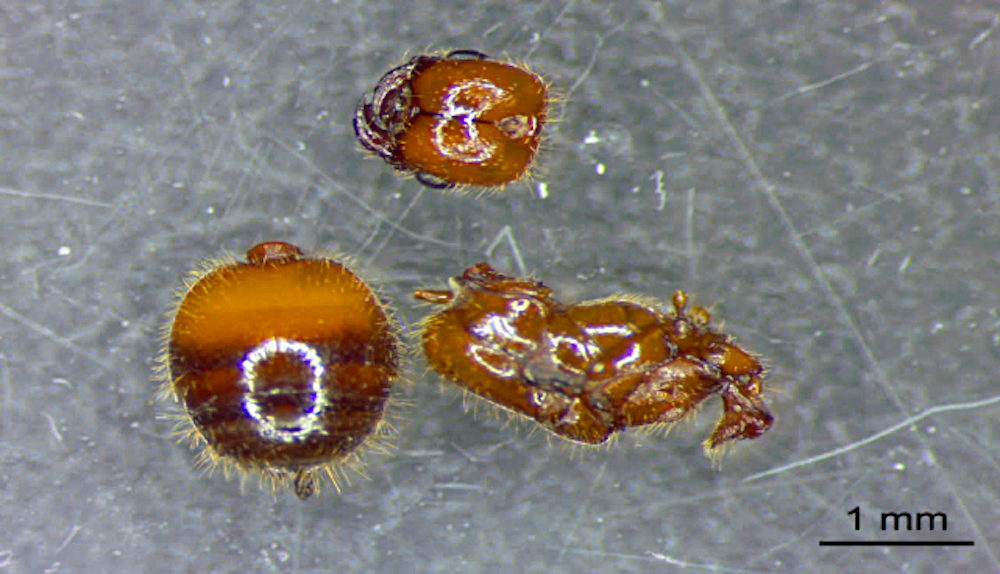 A queen dismembered by a tetchy rival.
Pauline Lenancker, Author provided
A queen dismembered by a tetchy rival.
Pauline Lenancker, Author provided
For tropical fire ants, cannibalising sterile sons and cooperative brood rearing among queens are two behavioural mechanisms for avoiding inbreeding costs. A third possible mechanism for the queens is to “sleep around”.
Promiscuity would increase the chance of mating with a genetically different male, and reduce the likelihood of producing diploid sons.
Queens only mate right before starting their colony and store the sperm in an organ called the spermatheca. We genetically analysed sperm from the spermatheca of 40 queens, but found no evidence queens had mated with more than one male.
Tropical fire ants are currently established on Ashmore Reef, a protected Australian Marine Park which is an important breeding site for seabirds and turtles. The invasive ant threatens this sanctuary by attacking seabird and turtle hatchlings. Accidental spreading of tropical fire ants to suitable habitats in the Northern Territory, Queensland and Western Australia would threaten invaluable ecosystems as well as our health and lifestyles.
Read more: How we wiped out the invasive African big-headed ant from Lord Howe Island
The current eradication program for the closely related red imported fire ant (Solenopsis invicta) in Queensland has been granted A$411 million over ten years, and failure to eradicate red imported fire ants could cost Australia A$1.65 billion per year in damaged crops, livestock harmed and people treated. The more we learn about invasive ant biology, the closer we are to new methods of preventing their spread.
Authors: Pauline Lenancker, PhD student in biology and ecology, James Cook University
Read more http://theconversation.com/cannibalism-helps-fire-ants-invade-new-territory-113752


















