

There is reliable evidence social media harms young people – debates about it are a misdirection
- Written by: Danielle Einstein, Adjunct Fellow, School of Psychological Sciences, Macquarie University
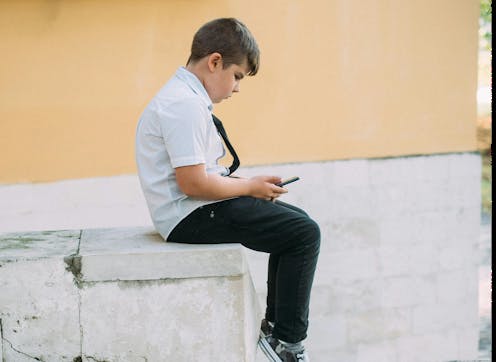
The Australian government is developing legislation that will ban children under 16 from social media. There has been a huge public debate about whether there is sufficient direct evidence of harm to introduce this regulation.
The players in this debate include academics, mental health organisations, advocacy groups and digital education providers. Few step back to look at the entire research landscape.
Social media has become integral to everyday life. Not many teens want to be extensively researched, so studies are pragmatic, require consent and findings are limited. As a result, we tend to hear that the effects are small or even inconclusive.
For the public it’s crucial to understand all research studies have limitations, and must be interpreted within the context in which the data was collected. To understand any report, we must scrutinise the details.
Several mechanisms are at play
In recent years, anxiety has been on the rise among children and young people. Understanding why young people are anxious, depressed or overly focused on themselves is no easy task.
When it comes to the potential negative impact of social media, several mechanisms are at play. To unpack them, data is needed from many angles: examining mood while online, examining mental health over several years, school relationships, even brain scans, to name just a few.
Despite all this complexity, the public tends to mostly hear about it through splashy headlines. One example is the “small and inconsistent” result from an umbrella study of several meta-analyses totalling 1.9 million children and teenagers. However, it’s important to recognise this umbrella study included many research papers from an earlier time when researchers couldn’t measure social media use as accurately as they can now.
One influential data set asked people to leave out time spent “interacting with friends and family” when they estimated their time on social media. Yet in 2014 to 2015, sharing photos, following, and interacting with people you knew was the main use of social media. The findings appeared within a larger study a few years later, resulting in one headline that stated: “screen time may be no worse for kids than eating potatoes”.
With so many sources of error, it’s no wonder there is vigorous debate among researchers over the extent of social media harm. Limitations are par for the course. Worse, researchers are often not given full access to data from social media companies. That’s why we need to pay more attention to big tech whistleblowers who have inside access.
Meanwhile, these companies do have access to the data. They use it to exploit human nature.
Focusing on debates between researchers is a misdirection and makes us complacent. There is enough evidence to demonstrate excessive social media use can be harmful to young people.

Here’s what the evidence shows
One argument you may hear a lot is that it’s not clear whether depression and anxiety cause higher screen time use, or higher screen time causes more depression and anxiety. This is known as a bidirectional effect – something that goes both ways.
But that’s no reason to ignore potential harms. If anything, bidirectional effects matter more, not less, because factors feed into one another. Unchecked, they cause the problem to grow.
Harms of social media use are shown in studies that examine the effects of sharing selfies, the impact of algorithms, influencers, extreme content, and the growth in cyberbullying.
Social media activates envy, comparisons and fear of missing out, or FOMO. Many teens use social media while procrastinating.
It is through these mechanisms that the links to depression, anxiety, low self esteem and self harm are clear.
Finally, until the age of 16, increased time on social media is associated with feeling less satisfied with appearance and school work.
There is also reliable evidence that limiting social media use reduces levels of anxiety, depression and FOMO in 17–25-year-olds.
We ignore this evidence at our peril.
 We know limiting social media use reduces levels of FOMO.
Mandy Godbehear/Shutterstock
We know limiting social media use reduces levels of FOMO.
Mandy Godbehear/Shutterstock
The evidence is sufficient
Understanding the intricacies of how every aspect of modern life affects mental health will take a long time. The work is difficult, particularly when there is a lack of reliable data from tech companies on screen time.
Yet there is already enough reliable evidence to limit children’s exposure to social media for their benefit.
Instead of debating the nuances of research and levels of harm, we should accept that for young people, social media use is negatively affecting their development and their school communities.
In fact, the government’s proposed ban of children’s social media use has parallels with banning phones in schools. In 2018, some critics argued that “banning smartphones would stop children gaining the knowledge they needed to cope online”.
Yet evidence now shows that smartphone bans in schools have resulted in less need for care around mental health issues, less bullying, and academic improvements – the latter especially for socio-economically disadvantaged girls.
It’s time to agree that the harms are there, that they are damaging our community, and that we need strong, thoughtful regulation of social media use in young people.
Authors: Danielle Einstein, Adjunct Fellow, School of Psychological Sciences, Macquarie University


















