

Fully fenced dog parks alongside nature reserves could help protect wildlife
- Written by: Jasmin Packer, Research Fellow in Wildlife Conservation, University of Adelaide
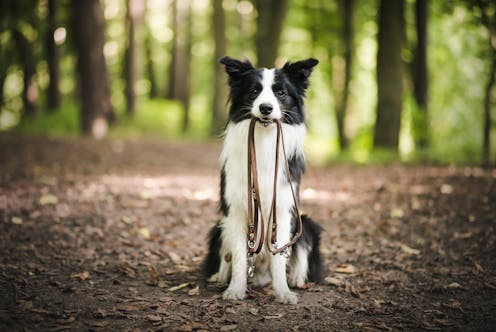
Watching a pet dog run free can be a source of joy for many people. But letting your dog off the leash is not so good for wildlife, especially if you’re in an area set aside for native species.
In our new research, we conducted open-ended interviews with dog walkers to better understand their behaviour. This was the first step towards a new community-based social marketing campaign to increase the proportion of dogs on lead in nature reserves.
We focused on a park in the Mount Lofty Ranges of South Australia, which is known as a biodiversity hotspot and home to endangered species.
We found people walk their dog there for two main reasons: they love the natural atmosphere, and/or it’s near home. But whether they keep their dog on a lead depends on what they feel is best for the dog at the time, and who’s nearby. Our research shows changing that behaviour depends on meeting the needs of pet owners and their dogs.
Why do dogs need to be on lead in nature?
Dogs are predators that can kill, hurt or scare native animals such as small mammals, reptiles and birds.
Dogs also threaten wildlife indirectly. They can damage or destroy habitat by digging, trampling on vegetation and chewing up – or running off with – sticks. They can also crush eggs and nests, or pollute waterways by romping in streams.
On the flip side, we know non-native species can sometimes support native species. For instance, some dogs are trained to protect wildlife. We wanted to better understand what’s working well so we can boost these benefits while reducing any potential harm.

Protecting the last of the bandicoots
Wirraparinga–Brownhill Creek Recreation Park is home to the nationally endangered southern brown bandicoot, known as “marti” to the Kaurna people.
Marti are the last of eight species from the bandicoot family living in the wild of SA.
At Wirraparinga, marti live in the thin strip of protected dense vegetation along the creek line reserve. But this reserve is also popular with dog walkers, joggers, cyclists and other visitors. Dogs are legally required to be always on a lead, but often aren’t.
Members of the local conservation group initially asked us to survey the marti population in 2020. They wanted to know how many marti were there, and where.
To our surprise, this isolated colony was breeding. Within five hectares of habitat we found ten marti, including a mum with three joeys.
Protecting this marti family from predation and stress became a priority for the community group. They expressed concern about unrestrained dogs, as well as foxes. And they asked us how to increase the proportion of people walking their dog on a lead.
Talking about walking in nature
We conducted semi-structured interviews with 37 dog walkers in this reserve during September 2021.
When asked “why this park?”, most people told us they enjoy walking in nature. But the decision to walk on or off lead was more complex. Most walk their dog on a lead at least some of the time. For those who switch between on and off lead, the decision depends on what’s going on around them.
People told us they prefer to have their dog off lead if they feel it’s best for their dog – “because it’s lovely to let (her) go off the lead and be just a dog”.
Giving a dog the freedom to chase a ball, follow a scent or play in the creek were common reasons for letting a dog off lead.
Some, but not all, put their dog back on lead when they saw other dogs, wildlife or people.
The power of social norms
Many people don’t consider their dog a threat to wildlife. So any negative consequences of letting a dog off lead in nature may be mostly unintentional.
We found dog walkers were mainly guided by social norms. These are shared behaviours, underpinned by shared values, that can have powerful but often invisible influences on individuals in a group. People noticed most other people use a lead, saying for example: “When there’s more people around, I respect other people’s wishes and put (the lead) on”.
Those who walked their dog on a lead – either some or all of the time – said they did so because they cared for and wanted to protect the natural world. These motivations suggest dog walkers value a peaceful walk free from conflict. This is the first study to identify peace as a universal driver in people who walk with their dog on a lead.
So at least in this nature reserve, people kept their dog on lead (or put their dog back on lead) to avoid conflict with other dogs, wildlife and people.
Helping people to do the right thing
We need to increase the proportion of people who keep their dog on lead in nature reserves.
Trying to make people obey the signs generally doesn’t work. Understanding and supporting people who value both their dog and wildlife, as well as connections with other people, is likely to be more effective.
Through our research, we discovered an unmet need for dog walkers to access wild spaces where their dog can be free to burn off energy and explore before going into a nature reserve. Having the option of visiting an attractive, easily accessible, enclosed natural dog park – reached from the same car park as the next-door nature reserve – may help more dog walkers keep their dog on lead when in the nature reserve.
Links between social norms and behaviour are a lever for policy makers who want more people to keep their dog on lead in nature reserves. We recommend designing community-based social marketing campaigns that connect with the dog walkers’ underlying values of caring for their dog and keeping the peace with other dogs, wildlife, and people.
Our findings show how nurturing peaceful connections among people, dogs and wildlife can empower dog walkers to keep their dog on lead in nature reserves.
We acknowledge the roles of our colleagues in the study this article is based on: Conservationist Dr Rossi von der Borch from the Bee Hub of Brownhill Creek who co-founded and co-designed the research, and University of Adelaide psychology researchers Dr Mark Kohler co-designed the research, while Dolly Dawson coded the data, and Nusrat Asad conducted and transcribed many of the interviews.
Authors: Jasmin Packer, Research Fellow in Wildlife Conservation, University of Adelaide


















