

David Graeber argued against ‘Great Man’ approaches to knowledge, but it seems his fate to become one
- Written by: Holly High, Associate Professor, Anthropology, Deakin University
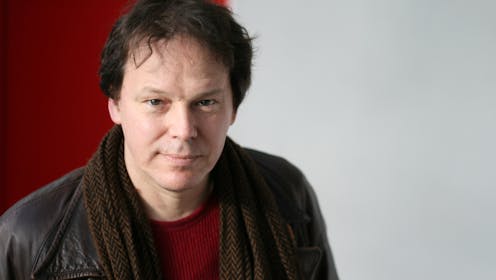
David Graeber, who died in 2020 at the age of 59, was an anthropologist and a political activist. The Ultimate Hidden Truth of the World is a curated collection of his essays. Like a glitzy museum exhibition, it is part serious memorialisation, part entertainment, and part invitation to play.
In her foreword, Rebecca Solnit assures us that the title is taken from Graeber’s sensational line:
The ultimate hidden truth of the world is that it is something we make, and could just as easily make differently.
He sounds like a prophet! But Solnit does not tell us where Graeber said this. Worse, she makes it sound like the sentence sums up his lasting legacy.
The volume’s editor Nika Dubrovsky doubles down in her introduction, repeating the “ultimate hidden truth” line and claiming it was Graeber’s “deep understanding”. Again, there is no reference to where readers might catch the great man actually saying this.
Review: The Ultimate Hidden Truth of the World – David Graeber, edited by Nike Dubrovsky (Allen Lane)
Solnit and Dubrovsky are not alone. This sentence is often attributed to Graeber in the press. And it is true that he did write these words. But he did so as an anthropologist attempting to elucidate an underlying principle of the left, not as an activist promoting a position he seriously held.

 David Graeber (left) speaks at Maagdenhuis occupation, University of Amsterdam, March 2015.
Guido van Nispen, via Wikimedia Commons, CC BY
An anthropologist’s worst nightmare
This compilation of Graeber’s work, then, is poorly named. It misattributes to him, as his own belief, something he had identified as a belief among the subjects of his ethnographic work.
He was attempting to make this belief clear precisely so that the left could critically reflect upon its particular stupidities. The line is now being fed back to the left as a profound truth. This is an anthropologist’s worst nightmare.
More than once, Graeber complained that publishers insisted on changing the titles of his books to something he found objectionable – see, for example, the prefaces to his books on Value and the Occupy movement. Perhaps the publishers intervened again this time.
In the protests Graeber described in Direct Action, puppets stood for other possible worlds in the eyes of protesters. For the police, the puppets suggested secret violence and thus were symbolically destroyed. Graeber is the puppet here. His fate, it seems, is to be similarly inflated and then destroyed.
At least we can comfort ourselves knowing he was well aware that this is the typical fate of political figures after death. In Possibilities, Graeber wrote that this, along with “the fact that the dead person is no longer himself playing an active role”, underlines “how much of the work of making and maintaining a career is always done by others”.
In the same passage, he urged readers to move away from “Great Man” approaches to intellectual history and instead treat ideas “as something emerging from endless conversations and arguments in cafes, classrooms, bedrooms, and barber shops, involving thousands of people”.
David Graeber (left) speaks at Maagdenhuis occupation, University of Amsterdam, March 2015.
Guido van Nispen, via Wikimedia Commons, CC BY
An anthropologist’s worst nightmare
This compilation of Graeber’s work, then, is poorly named. It misattributes to him, as his own belief, something he had identified as a belief among the subjects of his ethnographic work.
He was attempting to make this belief clear precisely so that the left could critically reflect upon its particular stupidities. The line is now being fed back to the left as a profound truth. This is an anthropologist’s worst nightmare.
More than once, Graeber complained that publishers insisted on changing the titles of his books to something he found objectionable – see, for example, the prefaces to his books on Value and the Occupy movement. Perhaps the publishers intervened again this time.
In the protests Graeber described in Direct Action, puppets stood for other possible worlds in the eyes of protesters. For the police, the puppets suggested secret violence and thus were symbolically destroyed. Graeber is the puppet here. His fate, it seems, is to be similarly inflated and then destroyed.
At least we can comfort ourselves knowing he was well aware that this is the typical fate of political figures after death. In Possibilities, Graeber wrote that this, along with “the fact that the dead person is no longer himself playing an active role”, underlines “how much of the work of making and maintaining a career is always done by others”.
In the same passage, he urged readers to move away from “Great Man” approaches to intellectual history and instead treat ideas “as something emerging from endless conversations and arguments in cafes, classrooms, bedrooms, and barber shops, involving thousands of people”.
 Everything in The Ultimate Hidden Truth of the World is available elsewhere, often free on the internet, from the beautifully designed Harper’s Magazine website to his Guardian column and grungy anarchist websites.
About halfway through reading this compilation, I started looking up the originals and reading them side by side with the anthologised versions. I discovered they were not identical: an “is” for an “are”, a full stop for a semicolon, plain text for an italicised word. The opening of sentences, particularly, were modified. For example, Graeber’s opening lines in his Harper’s article Army of Altruists are:
In the lead-up to the midterm elections, the Republicans’ single fleeting ray of hope was a botched joke by Senator John Kerry. The joke was obviously aimed at George W. Bush, but they took it to suggest that Kerry thought only those who flunked out of school end up in the military.
In the volume under review, the same essay opens thus:
The one fleeting moment of hope for Republicans during the lead-up to the 2006 congressional elections was afforded by a lame joke by Senator John Kerry – a joke pretty obviously aimed at George Bush – which they took to suggest that Kerry thought that only those who flunked out of school end up in the military.
These are small changes, unlikely to alter the meaning, but readers should be aware that the book is what it says on the cover: “edited”. The extent of the editing is not explained or signposted. Could these be earlier drafts? Or later changes? We don’t know.
This contrasts with classic academic and activist writing. In Marx’s Capital, for example, each edition has a preface explaining any changes, and footnotes throughout offering further details and flagging where Engels made changes after Marx’s death. Such scholarly conventions can make the text difficult to read on the one hand, but on the other hand it is absolutely clear who said what when. There is a kind of honour in the complexity. We can see Marx’s words, even if through a glass darkly.
George Orwell said good prose is transparent like a windowpane. Both Solnit and Dubrovsky praise Graeber’s clear writing. Dubrovsky appears to have chosen some of his simplest prose for this collection and perhaps tried to simplify it further.
But this was not Graeber’s only style of writing. Especially in his ethnographic work, he eschewed simplifications. He described simplification as a kind of violence to reality. His writing brought out how extraordinarily complex ordinary human experience generally is.
Reading this compilation next to the Graeber originals on the web, I found I preferred reading the web versions. If his original sentences are sometimes clumsy, they are closer to how he actually spoke. This collection attempts to polish his prose, but in the process leaves streaks and distortions.
The Ultimate Hidden Truth of the World does us all a service by keeping Graeber’s ideas in circulation, but it does harm insofar as it introduces distortions, particularly the distortion indicated in the title, apparently in the name of simplifying Graeber’s thought for a wider audience.
Why buy an edited edition which will gather dust on your shelf when you can read the original for free online? On Kings, arguably Graeber’s best book, is open access. His writings are easy to find on anarchist websites. Read them, then email them to your friends. That would be truest to Graeber’s legacy: keep the discussion going.
Authors: Holly High, Associate Professor, Anthropology, Deakin University
Everything in The Ultimate Hidden Truth of the World is available elsewhere, often free on the internet, from the beautifully designed Harper’s Magazine website to his Guardian column and grungy anarchist websites.
About halfway through reading this compilation, I started looking up the originals and reading them side by side with the anthologised versions. I discovered they were not identical: an “is” for an “are”, a full stop for a semicolon, plain text for an italicised word. The opening of sentences, particularly, were modified. For example, Graeber’s opening lines in his Harper’s article Army of Altruists are:
In the lead-up to the midterm elections, the Republicans’ single fleeting ray of hope was a botched joke by Senator John Kerry. The joke was obviously aimed at George W. Bush, but they took it to suggest that Kerry thought only those who flunked out of school end up in the military.
In the volume under review, the same essay opens thus:
The one fleeting moment of hope for Republicans during the lead-up to the 2006 congressional elections was afforded by a lame joke by Senator John Kerry – a joke pretty obviously aimed at George Bush – which they took to suggest that Kerry thought that only those who flunked out of school end up in the military.
These are small changes, unlikely to alter the meaning, but readers should be aware that the book is what it says on the cover: “edited”. The extent of the editing is not explained or signposted. Could these be earlier drafts? Or later changes? We don’t know.
This contrasts with classic academic and activist writing. In Marx’s Capital, for example, each edition has a preface explaining any changes, and footnotes throughout offering further details and flagging where Engels made changes after Marx’s death. Such scholarly conventions can make the text difficult to read on the one hand, but on the other hand it is absolutely clear who said what when. There is a kind of honour in the complexity. We can see Marx’s words, even if through a glass darkly.
George Orwell said good prose is transparent like a windowpane. Both Solnit and Dubrovsky praise Graeber’s clear writing. Dubrovsky appears to have chosen some of his simplest prose for this collection and perhaps tried to simplify it further.
But this was not Graeber’s only style of writing. Especially in his ethnographic work, he eschewed simplifications. He described simplification as a kind of violence to reality. His writing brought out how extraordinarily complex ordinary human experience generally is.
Reading this compilation next to the Graeber originals on the web, I found I preferred reading the web versions. If his original sentences are sometimes clumsy, they are closer to how he actually spoke. This collection attempts to polish his prose, but in the process leaves streaks and distortions.
The Ultimate Hidden Truth of the World does us all a service by keeping Graeber’s ideas in circulation, but it does harm insofar as it introduces distortions, particularly the distortion indicated in the title, apparently in the name of simplifying Graeber’s thought for a wider audience.
Why buy an edited edition which will gather dust on your shelf when you can read the original for free online? On Kings, arguably Graeber’s best book, is open access. His writings are easy to find on anarchist websites. Read them, then email them to your friends. That would be truest to Graeber’s legacy: keep the discussion going.
Authors: Holly High, Associate Professor, Anthropology, Deakin University 


















.jpg)