

Without clean water, Pacific Islanders turn to sugary drinks. Tackling this could reduce obesity
- Written by: Suneha Seetahul, Senior Research Fellow, Applied Microeconomics, University of Sydney
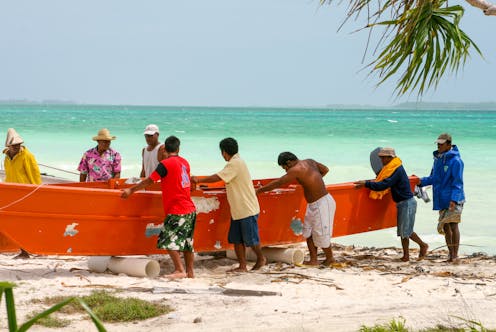
One in two people in the Pacific Islands is classified as overweight (with a body mass index of 25–29) or obese (a BMI 30 or above). This is a problem because obesity increases the risk of health conditions such as diabetes, heart disease, strokes and some cancers.
While various factors contribute to obesity, limited access to clean drinking water plays an overlooked role. Without a safe drinking water supply, many households may turn to sugary drinks as an alternative. This type of substitution increases the risk of obesity.
Our new research explored how water insecurity in the Pacific island nation of Kiribati correlates with sugary drink consumption. We used survey data, including more than 2,000 of households spread over 21 rural and urban islands, to track locals’ water supply and their consumption of sugary drinks such as soft drinks and juice.
Water insecurity is a big issue in Kiribati, with households relying mainly on unprotected groundwater (40%) and rainwater (28%) for drinking.
We found households that relied on unprotected groundwater and rainwater drank 381–406 grams more sugary drinks per week than those with access to a piped water system. For households with water insecurity, this brings their weekly consumption to more than 1.7 litres.
Dietary drivers of obesity
Located in the middle of the Pacific Ocean, the Republic of Kiribati comprises 33 low-lying islands (with an average height of 3 metres above sea level) and a population of 133,000.
The Kiribati archipelago is spread across a wide maritime territory, neighbouring other Pacific countries such as Marshall Islands and Tuvalu. This makes our results relatively generalisable to other enclaved countries and small island developing states in Micronesia.
Households in the Pacific Islands are already grappling with the dietary changes globalisation and urbanisation have brought. Traditional diets of fresh fish, root vegetables and local fruits have been partially replaced by processed foods and sugary drinks. These are high in calories and low in nutrition.
These dietary shifts, combined with water insecurity, create an environment that exacerbates health challenges and contributes to obesity.
What can be done about it?
Only one-third of the population in Kiribati has access to a safe piped water system for drinking.
The rest of the population use unprotected groundwater and rainwater. But they cannot afford expensive tank kits, filters and treatment systems to remove harmful contaminants in water such as animal waste and chemicals. Locals are aware of these risks and therefore look to other options.
Improving access to clean, safe drinking water can be a cost-effective public policy that reduces sugary drink consumption and addresses the broader public health challenge of obesity.
To achieve this goal, a number of interventions are needed, such as:
ensuring households that rely on rainwater harvesting have access to tank kits, filters and treatment systems to remove harmful contaminants
developing seawater desalination plants that rely on clean energy sources. This would improve access to clean, piped water but comes at a significant cost
taxing sugary drinks to reduce consumption. In Mexico, a 10% increase in the price of sugary drinks led to an 11.6% decrease in their consumption.
Climate change will compound the problem
Water insecurity in small island developing nations such as Kiribati are exacerbated by climate change. Rising sea levels are contaminating freshwater sources with salt, while more frequent and severe droughts are straining already limited resources.
These climate-related pressures make it increasingly difficult for communities to access clean drinking water, entrenching reliance on sugary drinks.
This phenomenon is similar in countries characterised by higher levels of sugary drinks imports and intakes such as in Niue, Cook Islands, Tonga, Tuvalu and Palau, but also for Australia’s remote Indigenous communities for whom access to safe drinking water isn’t guaranteed and sugary drink consumption is high.
Addressing water insecurity and obesity in tandem offers an opportunity to create sustainable solutions and build resilience against some of the adverse effects climate change can have on public health.
Authors: Suneha Seetahul, Senior Research Fellow, Applied Microeconomics, University of Sydney



















.jpg)