

Even calm people can fly into a rage behind the wheel. Here’s how to curb your road rage – before it’s too late
- Written by: Milad Haghani, Senior Lecturer of Urban Risk & Resilience, UNSW Sydney

If someone bumps into us on the footpath or in the mall, we’re generally quite forgiving. We instinctively apologise or step aside, and usually don’t scream at, stalk, or attack the other person.
But put us in a car, and something changes. People who appear calm in everyday life suddenly tailgate, honk, or shout at strangers. Problems at work or home can suddenly explode in the form of righteous anger toward other road users.
Road rage increases crash risk, and victims of road rage incidents often have children in the car with them.
So, why does driving bring out the worst in us? And more importantly, what can we do about it?

Road rage remains common
Recent surveys indicate road rage remains common in Australia.
In September 2024, insurer NRMA reported a survey of 1,464 of its members in two states found many had witnessed road rage incidents such as:
- tailgating (71%)
- drivers beeping other drivers (67%)
- drivers gesturing angrily at other drivers (60%)
- drivers deliberately cutting in front of other vehicles (58%)
- drivers getting out of their car to confront to confront another driver (14%)
- stalking (10%)
- physical assault (4%).
Another insurer, Budget Direct, reported last year on a survey of 825 people that found about 83% had experienced shouting, cursing, or rude gestures from other people on the road (up by 18% since 2021).
And of the female respondents, 87% reported they’d copped this kind of behaviour from other road users.
Common triggers for driver anger include tailgating, perceived rudeness (such as not giving a “thank you” wave), and witnessing another person driving dangerously.
Aggressive driving behaviours tend to be more common in younger, male drivers.
Road rage is a global problem, with studies finding road rage remains common in places such as Japan, the US, New Zealand and the UK, but the degree varies significantly from country to country.
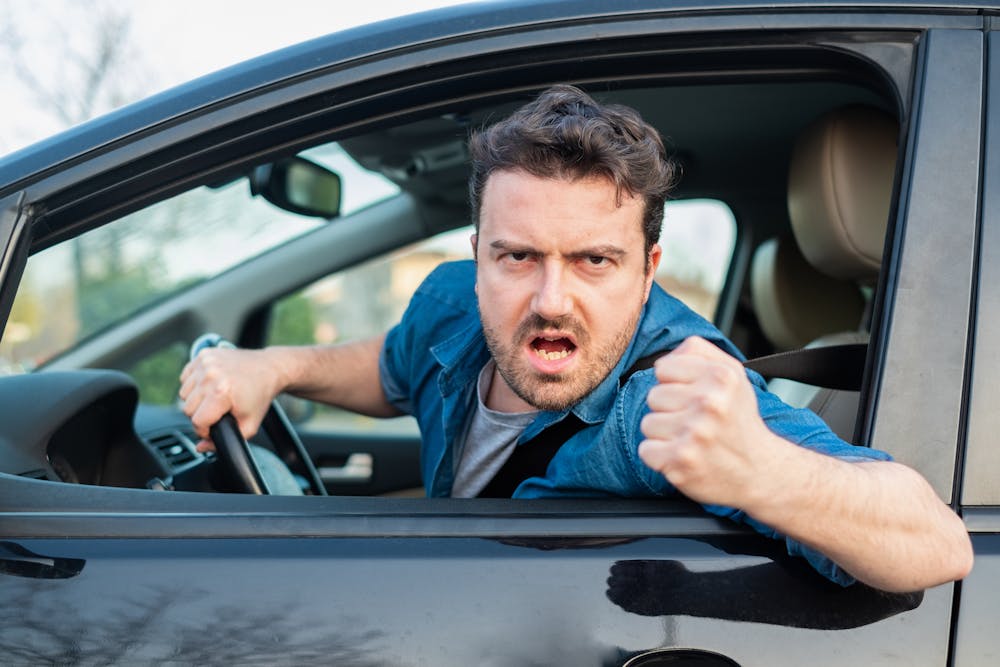 Some of us are more likely than others to fly into a rage while driving.
F01 PHOTO/Shutterstock
Some of us are more likely than others to fly into a rage while driving.
F01 PHOTO/Shutterstock
Who is more likely to fly into a rage on the road?
Some of us are more likely than others to fly into a rage while driving. One way researchers measure this is via a testing tool known as the Driving Anger Scale.
Data from many studies using this test show drivers who are more prone to anger in general are more likely to turn that anger into aggression. They get annoyed by more things, are quicker to act on their feelings, take more risks, and as a result, are more likely to be involved in anger-related crashes.
Research suggests that while female drivers experience anger just as much as male drivers, they are less likely to act on it in a negative way.
Female drivers tend to feel more intense anger in certain situations, such as when faced with hostile gestures or traffic obstructions, compared to their male counterparts.
 Tailgating is a common trigger for road rage.
Sue Thatcher/Shutterstock
Tailgating is a common trigger for road rage.
Sue Thatcher/Shutterstock
What can I do to reduce my road rage?
In a car, we’re physically separated from others, which creates a sense of distance and anonymity – two factors that lower our usual social filters. Encounters feel fleeting.
There’s a good chance you won’t be held accountable for what you or say or do, compared to if you were outside the car. And yet, we perceive the stakes as high because mistakes or bad decisions on the road can have serious consequences.
This mix of isolation, stress, and the illusion of being in a bubble is a perfect recipe for heightened frustration and anger.
Research suggests techniques drawn from cognitive behavioural therapy may help.
These include learning to identify when you are starting to feel angry, trying to find alternative explanations for other people’s behaviour, using mindfulness and relaxation and trying to move away from the trigger.
The American Automobile Association also suggests you can reduce road rage incidents by being a more considerate driver yourself – always use your indicator, avoid cutting others off and maintain a safe distance from other cars.
Try to stay calm when other drivers are angry, and allow extra time in your journey to reduce stress.
If driving anger is a frequent issue, consider seeking support or anger management resources.
 Even people who are normally fairly calm can suddenly get angry while driving.
Halfpoint/Shutterstock
Even people who are normally fairly calm can suddenly get angry while driving.
Halfpoint/Shutterstock
Avoiding — or at least being aware of — anger rumination can make a big difference. This happens when someone replays anger-inducing events, like being cut off in traffic, over and over in their mind. Instead of letting it go, they dwell on it, fuelling their frustration and making it harder to stay calm.
Recognising this pattern and shifting focus — like taking a deep breath or distracting yourself — can help stop anger from escalating into aggression.
More broadly, public awareness campaigns highlighting the link between anger and risky driving could also encourage more drivers to seek help.
The next time you get behind the wheel, try to remember the other driver, the cyclist, or pedestrian is just another person — someone you might pass on the street without a second thought.
We’re often good at forgiving minor missteps in non-driving contexts. Let’s try to bring that same patience and understanding to the road.
Authors: Milad Haghani, Senior Lecturer of Urban Risk & Resilience, UNSW Sydney


















