

we catalogued 400 ways to help species survive a warmer world
- Written by: Jess Melbourne-Thomas, Transdisciplinary Researcher & Knowledge Broker, CSIRO
Australia’s natural environment is changing rapidly as the world warms, and many species are struggling to keep up. The pace of change is staggering, with 2024 declared Earth’s hottest year, shattering the previous record set in 2023.
Conservation managers recognise the need for new ways to help species and ecosystems adapt to climate change. But dreaming up new tactics and testing them out requires lots of time, effort and – often – money.
So we decided to gather examples of new tactics from Australia and around the world and offer them up in one place. Our free new online tool is full of fresh ideas to help Australian conservation groups find out about what might be worth trying on their patch.
The catalogue contains more than 400 interventions such as purpose-built shelters and cooling systems, or relocation programs moving species to areas where the future climate may be more suitable. Having a ready-made toolkit means we can respond more rapidly and effectively to the changing environment, helping preserve Australia’s unique biodiversity.
Replacing lost habitat: from cod logs to frog bogs
Our project team searched through academic papers, reports and plans, and connected with dozens of different organisations undertaking climate change adaptation in Australia.
We found many new tactics are being tested to help wildlife adapt to climate change. We fed this information into the new Adaptation Catalogue for Conservation we call “AdaptLog” – a searchable public repository of conservation interventions for climate adaptation. We also invited conservation groups to add to the database.
Here are just a few of the inspiring success stories.
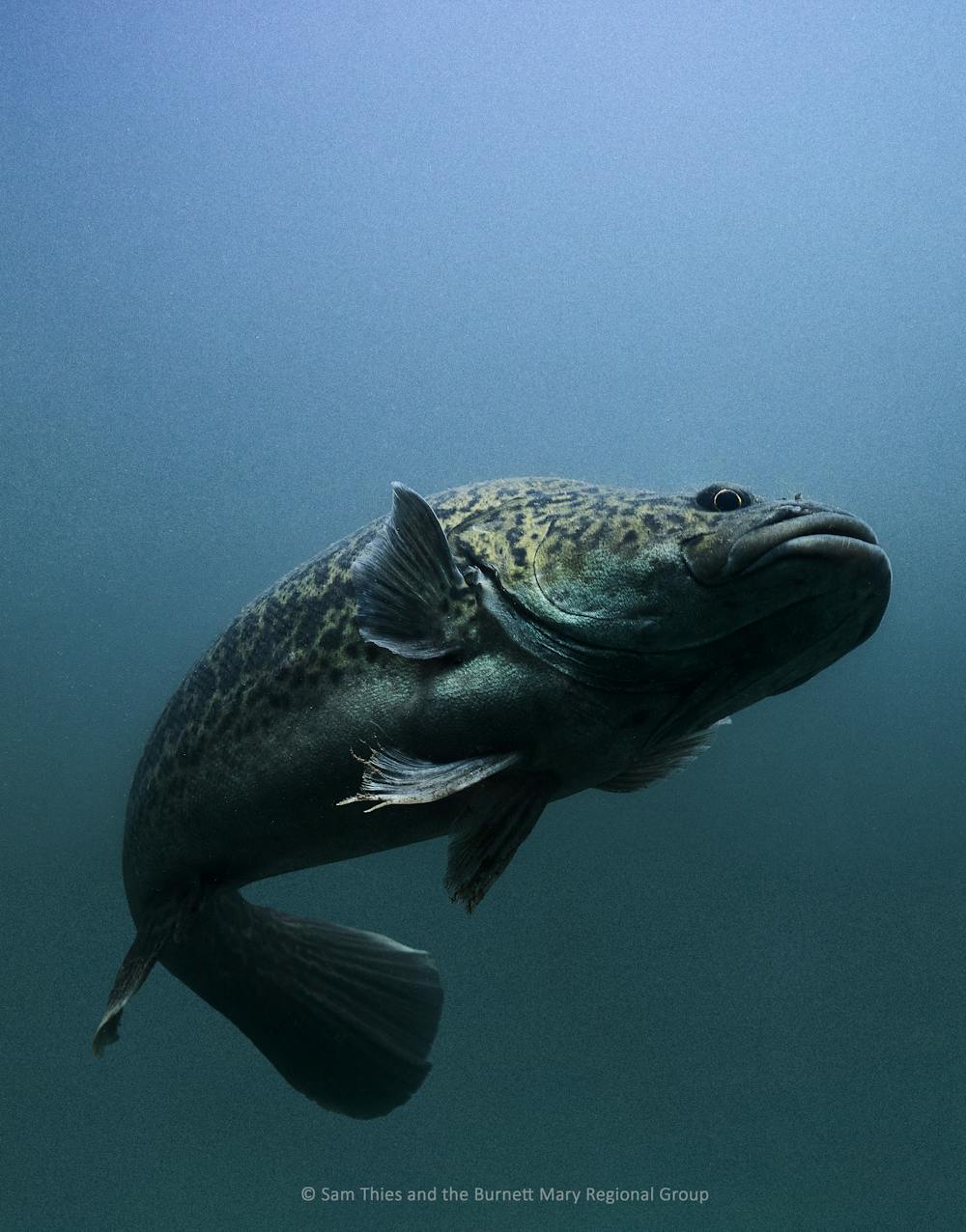
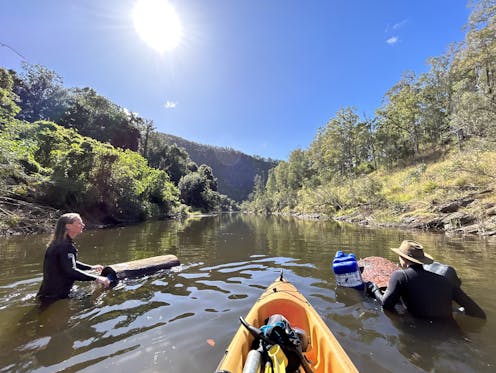
The Mary River (Moonaboola) in southeastern Queensland is a sanctuary for several threatened freshwater species, including the endangered Mary River cod. But recent floods have washed away many of the natural spawning habitats these fish need to breed. So “cod logs” are being trialled to house spawning native fish.
These logs are made from local, hollowed-out timber. They are then placed in the river to provide shelter and nesting habitat for the endangered Mary River cod.
Early results have been encouraging, with researchers monitoring large male cod using the logs as nesting sites, protecting their brood of eggs.
 Researchers transporting hollowed out cod logs to be placed in the river for fish habitat.
Nathaniel Larsen/Mary River Catchment Coordinating Committee
Researchers transporting hollowed out cod logs to be placed in the river for fish habitat.
Nathaniel Larsen/Mary River Catchment Coordinating Committee
Tailor-made frog habitat is being recreated after fires, or during dry times.
More than half of East Gippsland in Victoria burned during the 2019–20 Black Summer Bushfires, forcing many frogs into urban areas. In response, the East Gippsland Catchment Management Authority urged people to build temporary habitats for frogs in their backyards.
A “frog hotel” can be built using a large container or pot, soil, native plants and PVC pipes. They allow frogs to take refuge during the heat of the day. They also provide protection from predators such as kookaburras, dogs and cats.
 Frog hotels come in many shapes and sizes.
East Gippsland Catchment Management Authority
Frog hotels come in many shapes and sizes.
East Gippsland Catchment Management Authority
The West Gippsland Catchment Management Authority worked with the conservation group Greening Australia to create another type of tailor-made frog habitat they call “frog bogs”. Frog bogs look deceptively simple, just like ordinary farm dams, but they contain multiple chambers at various depths, allowing tadpoles to grow, shelter and safely feed. Native vegetation is planted around the edges, water plants are added and rocks allows frogs to bask.
 Martin Potts from Greening Australia has been busy creating frog bogs like the one shown here, providing refuge for the green and golden bell frog and growling grass frog as conditions change.
Martin Potts
Martin Potts from Greening Australia has been busy creating frog bogs like the one shown here, providing refuge for the green and golden bell frog and growling grass frog as conditions change.
Martin Potts
Keeping cool
WWF-Australia responded to our invitation to share their conservation efforts, such as placing sprinklers in trees to help fruit bat colonies cool down and using irrigation to keep green turtle nests the right temperature.
Many groups around Australia are testing atmospheric cooling systems for keeping heat-sensitive flying foxes cool after mass deaths during heatwaves. One of these trials, jointly funded by WWF-Australia, the City of Greater Bendigo and the Department of Environment, Land, Water and Planning, was a success in Bendigo’s Rosalind Park. Hundreds of flying foxes had died in a record-breaking heatwave in the previous year, but despite temperatures climbing above 40°C during the trial, no deaths were recorded.
These systems need more testing and are a far cry from the scale needed to support functioning ecosystems and populations. But it is heartening to see lots of passionate people working so hard to support nature in these challenging times.
The Turtle Cooling Project – a partnership between WWF-Australia, The University of Queensland and the Conflict Islands Conservation Initiative, with funding support from furniture company Koala – tested ways to cool turtle nests on the beach, so more males would hatch. Further testing promises to identify which beaches need these interventions most, and how communities can get involved around Australia and the world.
Sharing is caring
By sharing these strategies, we can help conservation managers act quickly and decisively, drawing on evidence of what has worked elsewhere. We can also provide more opportunities for communities to get involved as volunteers helping out with different kinds of adaptation actions.
Conservation managers in Australia and globally can now use this tool to share and find new ideas. They can also add more examples and tactics to the tool, to help with testing and learning what works in different settings.
It is very early days for this field of climate adaptation research and practice, so there is still a long way to go to build an evidence base. But by collating what is happening already, we hope to encourage the development and dissemination of more innovative approaches to give wildlife a fighting chance.
We would like to acknowledge the following people for their contributions to the development of AdaptLog: Jason Hartog, Alistair Hobday, Sarah Boulter, Ingrid van Putten, Jenny Styger, the Project 2.7 Steering Committee, AdaptLog beta testers and CS2.7 case study participants. This work was funded through the National Environmental Science Program (NESP) Climate Systems Hub.
Authors: Jess Melbourne-Thomas, Transdisciplinary Researcher & Knowledge Broker, CSIRO

















