

We live in times of multiple entwined crises – but our policy responses aren’t keeping up
- Written by: Peter Bridgewater, Adjunct Professor in Conservation, University of Canberra
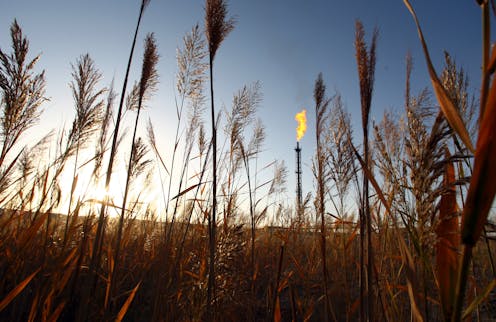
Existing policies to tackle environmental challenges fail to take into account that biodiversity loss, climate change and pollution are intertwined crises and produce compounding and intensifying impacts.
Policy measures taken in isolation are likely to result in unintended consequences.
These are key findings of two major assessment reports by the Intergovernmental Science-Policy Platform on Biodiversity and Ecosystem Services (IPBES) released late last year.
One report lays out a framework for transformative change. The other, known as the Nexus assessment, highlights links between biodiversity loss, water quality, food security, health risks and climate change.
Both assessments focus on feedbacks and cascading issues which collectively lead to a polycrisis. The Nexus assessment encapsulates this:
Biodiversity loss and climate change are interdependent and produce compounding impacts that threaten human health and human wellbeing.
The reports argue that transformative change is urgent and necessary, but also feasible, to achieve a just and sustainable world. They encourage weaving Indigenous knowledge with science to promote a more comprehensive and connected approach and to limit unintended consequences.
Options for a sustainable future
The reports suggest mainstreaming biodiversity in the sectors contributing to its loss. This includes agriculture, fisheries, forestry, urban development, infrastructure, mining and energy (especially fossil fuels). Mainstreaming means all ministries in government and private industry should consider biodiversity in their work.
Reducing competition for land can achieve positive outcomes across biodiversity, food, water, health and climate. These include sustainable healthy diets, reduced food waste, ecological intensification of agriculture and ecosystem restoration.
Both assessments offer several effective options for policy to drive the transformative change needed for a sustainable future. These include:
implementing nature-based solutions in urban areas to reconnect people with nature
employing spatial planning to configure the use of land and sea resources to balance trade-offs
measuring and reporting on the stocks and flows of natural assets to manage and enhance ecosystem services
restoring carbon-rich ecosystems such as forests, soils and mangroves
and supporting indigenous food systems.
The reports mention more than 70 options, highlighting the urgency of a globally coordinated and integrated effort.
Despite the clear value of the reports, the combined impacts of water, energy, health, agriculture and biodiversity already featured in the 2002 world summit on sustainable development. We must stop reinvention and move to implementing solutions to well-known problems.
Consensus process needs to change
The IPBES plenary bucked a trend of several unsuccessful global summits last year.
The Convention on Biological Diversity (COP16) could not finish and will have to resume in February. The annual climate summit (COP19) left many delegates disappointed over lack of funding. A meeting on combating desertification (COP16) ended with major items unfinished.
The IPBES not only released its reports, it also agreed to carry out a second global assessment of biodiversity and ecosystem services, starting this year.
But even though consensus was eventually reached, the long and tedious negotiations between governments were marred by national interests and were painful to watch.
Both assessments build on the work of hundreds of scientists, synthesising the latest science. Yet the politics on display during negotiations showed the worst of the human endeavour.
Why was this? The plenary consists of bureaucrats and diplomats from the 147 member governments, observers from other governments, Indigenous peoples and academia. It is not well suited to evaluate a scientific report. By placing their interpretation on the science in the reports they diluted the messages.
While the report authors attempted to accommodate the changes requested, differing requests often cancelled each other out. This created circular arguments, often taking the conclusions away from the science.
Even more than in previous years, this left authors saddened and highly frustrated with the process. A leading IPBES member opined that “very soon no scientist will want to take part in this process, willingly sacrificing three years of their life”.
This negotiation process must change in the future to put science back in the centre of IPBES assessments. Likewise, science must understand the need to offer a better and wider range of options to develop effective policy.
The plenary agreed to a review to examine ways and means of improving the IPBES process, building on the first review in 2019. If the upcoming review is serious, rethinking of the plenary process for the final negotiations and approval must be centre stage.
Another development that will help is better understanding between the IPBES and the Intergovernmental Panel on Climate Change on their respective roles. The scientific alarm bells are ringing loudly in assessments by both intergovernmental organisations. Science has done its job. Will policymakers and decision takers do theirs?
Authors: Peter Bridgewater, Adjunct Professor in Conservation, University of Canberra

















