

Luxon goes all out for growth in mining and tourism – we should be careful what he wishes for
- Written by: Glenn Banks, Professor of Geography, School of People, Environment and Planning, Te Kunenga ki Pūrehuroa – Massey University
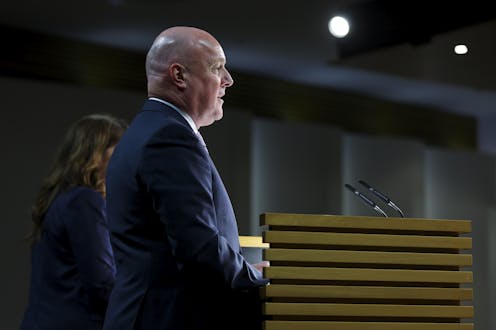
Prime Minister Christopher Luxon’s state-of-the-nation address yesterday focused on growth above all else. We shouldn’t rush to judgement, but at least one prominent financial commentator has concluded the maths behind the goals “just doesn’t add up”.
Luxon specified mining and tourism among a number of sectors where the government was anticipating and facilitating growth. Having researched these sectors across the Pacific and Aotearoa New Zealand for more than 30 years, we would echo a cautionary approach.
There is certainly scope for more activity in both sectors. But there also needs to be a dose of realism about what they can deliver, and recognition of the significant risks associated with focusing solely on growth.
NZ is not Australia
Luxon wants to see mining “play a much bigger role in the New Zealand economy”, comparing the local sector with the “much higher incomes” generated in places such as Australia. If we wanted these, he suggested, we need to be aware it is “mining that pays” them.
But it is simplistic to compare domestic mining’s potential to the industry in Australia, which exports more than 400 times as much mineral wealth as New Zealand.
In addition, mineral wealth does not necessarily translate into significant increases in local or even national wealth. This is especially relevant when the local sector is dependent on foreign investment, high levels of imports and offshore expertise for construction and operations, highly volatile commodity prices and generous taxation regimes.
Luxon cited Taranaki and the West Coast as potential areas where mining could deliver “higher incomes, support for local business and families, and more investment in local infrastructure”.
This echoes Regional Development Minister Shane Jones’ linking of mining and regional development. But it flies in the face of historical trends and empirical evidence.
The West Coast has seen the longest continuous presence of large- and small-scale gold and coal mining (for well over a century). And yet the region consistently scores among the worst for socioeconomic deprivation. Mining itself does not create regional development.
The ‘critical minerals’ cloak
The prime minister also gave a nod to the minerals “critical for our climate transition”.
While it’s true that “EVs, solar panels and data centres aren’t made out of thin air”, they are also not made in any significant way with the minerals we currently or might potentially mine (aside from some antimony, possibly).
The “critical minerals” argument risks being a cloak for justifying more mining of coal and gold.
So, even leaving aside the very real (though unacknowledged by Luxon) environmental risks, mining will not be the panacea the government suggests, and certainly not in the short term.
New Zealand does need mining, of course. Aggregates for roads and construction are the most obvious “critical mineral”. But the country also deserves a 21st-century sector that is environmentally responsible and transparent, and which generates real returns for communities and the national economy.
The tourist trap
Echoing Finance Minister Nicola Willis’ speech earlier in the week, Luxon also said “tourism has a massive role to play in our growth story”.
Willis said, “We want all tourists.” But this broad focus on high-volume tourism goes against international best practice in tourism development.
The negative impacts of a high-growth tourism model have been well documented in New Zealand. The Parliamentary Commissioner for the Environment’s 2019 report – titled “Pristine, popular … imperilled?” – warned of the environmental damage that would be caused by pursuing this approach.
Mayors and tourism industry officials have responded to the Willis and Luxon speeches this week by expressing concern that boosting tourism numbers will only work if there is more government funding.
This is needed to manage growth and provide infrastructure, particularly in areas with low numbers of ratepayers. The need stretches from providing public toilets for busloads of tourists flowing through MacKenzie District, to maintaining popular tracks such as the West Coast Wilderness Trail.
A 2024 report from Tourism New Zealand showed 68% of residents experienced negative impacts from tourism, including increased traffic congestion and rubbish.
Further expansion could see tourism losing its social licence – a dire outcome when international tourists particularly value the “warm and welcoming” nature of locals.
High value vs high volume
Luxon and Willis point to major employment wins from tourism growth. But tourism is notorious for creating low-income, insecure jobs. This is not the basis for strong and sustainable economic development.
While we agree with Luxon that our tourism industry is “world class”, we risk seriously damaging that reputation if we compromise the quality of experience for visitors.
Post-COVID, there have been significant efforts by the tourism industry to support and implement a regenerative approach. This aligns with a high-value – or “high values” – approach, rather than being fixated on high volume.
We are not arguing against mining or tourism per se. Rather, we are sounding a caution: they are sectors that need careful assessment and regulation, and reputable operators, to deliver sustainable and equitable growth, regionally and nationally.
Simply generating profits for foreign investors and leaving local communities to deal with the costs cannot be a sustainable model.
Authors: Glenn Banks, Professor of Geography, School of People, Environment and Planning, Te Kunenga ki Pūrehuroa – Massey University


















