

Even as the tide turned for fur, crocodile leather kept selling in high-end fashion. But for how much longer?
- Written by: Rachel Lamarche-Beauchesne, Senior Lecturer in Fashion Enterprise, Torrens University Australia
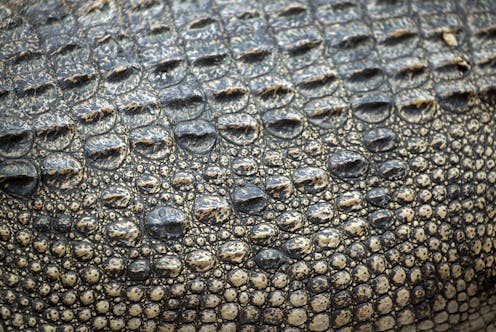
Dotted across northern Australia are 21 saltwater crocodile farms, home to around 130,000 crocodiles. Their skins are turned into crocodile leather, long sought for use in luxury handbags, belts and other items.
While fur lost favour due to welfare concerns about animals such as mink, chinchillas and arctic foxes raised for their skins, crocodile leather has kept selling. Australia dominates the global market of saltwater crocodile skins, producing almost 60% of all such skins traded internationally.
But the industry now faces real headwinds. Major retailers and fashion events in Australia and internationally are phasing out or banning crocodile and other exotic skins due to growing concerns over animal welfare.
The Northern Territory government’s crocodile farming plan acknowledges shifting consumer demand and increasing scrutiny as the industry’s largest threat.

Feathers, fur and now skins
Early animal rights activists in the 19th century focused on feathers due to concern about the enormous environmental damage done by plume hunters killing ostriches and egrets. Only later did activists turn their focus to fur.
In the early 20th century, countries such as the United States and Britain enacted bans or restrictions on feathers. In this century, sentiment has largely turned against wearing real fur, though faux fur and vintage fur are still popular.
But even as feathers went out of fashion, new animal products were arriving. By 1928, exotic skins such as crocodile, alligator and snake began commercialisation in Europe and the US. By the 1970s, they were widely used in fashion.
That looks to be changing.
By 2026, department store David Jones will phase out all exotic skins, including ostrich, crocodile, alligator, lizard and snake. The move builds on the company’s existing animal welfare policies, which already prohibit the sale of fur, angora rabbit wool and foie gras (duck or goose liver).
The 2025 Melbourne Fashion Festival will also ban exotic leathers, while London Fashion Week will be the first of the “Big Four” fashion weeks to follow suit.
In recent years, the kangaroo leather industry has also come under pressure due to concerns over animal welfare. California banned it altogether, and a full US ban is under consideration.
Feathers are also under increasing scrutiny, with fashion weeks in Copenhagen, Helsinki and Melbourne announcing feather bans starting this year.
These decisions reflect a growing shift toward ethical fashion, driven by consumer demand and rising awareness of animal welfare.

Exotic leather, native species
Crocodile leather is described as an “exotic” skin, even though saltwater crocodiles are native to Australia.
Two-thirds of Australia’s skins come from the Northern Territory, while Queensland and Western Australia have smaller industries.
Crocodile farms operate by harvesting eggs from the wild and raising the animals in captivity. In the wild, they are protected from hunting. But in farms, they are legally considered stock or production animals, which means they lose these protections.
When we farm animals, it’s common to think of them as resources waiting to be used for our purposes.
But the fashion backlash suggests another way of thinking is emerging. My research points to a more animal-centric perspective on how animal-derived materials are produced for fashion.
 Crocodile farms emerged as a way to protect these reptiles from being hunted to extinction. But the industry is now under increasing scrutiny.
RWK007/Shutterstock
Crocodile farms emerged as a way to protect these reptiles from being hunted to extinction. But the industry is now under increasing scrutiny.
RWK007/Shutterstock
From unregulated hunting to farmed crocodiles
Skin hunters nearly drove the saltwater crocodile to extinction in Australia. An estimated 300,000 animals were killed for their skins between 1945 and 1970. Saltie populations fell as low as 3,000 animals before authorities acted.
Freshwater crocodiles, too, were hunted for their skins from 1959. After both species were protected in the 1970s, their populations rebounded.
Crocodile farming started in Queensland in 1972, and in the Northern Territory in 1979.
In 1975, the international Convention on International Trade in Endangered Species of Wild Fauna and Flora on trading endangered animals came into effect, in part to regulate the trade of exotic animals in luxury products.
But this agreement doesn’t rule out uses for fashion. As crocodile experts at the International Union for Conservation of Nature write:
[…] crocodile farming was seen not only as a way to reduce pressure on the wild populations, but also as a means through which commercial incentives for the conservation of crocodilians could be generated.
As the website of one Australian crocodile farm states, crocodiles are a “natural renewable resource with considerable potential for sustainable commercial use”.
By 2018, the crocodile farming industry was worth A$26.7 million to the Northern Territory’s economy. Around 100,000 juvenile crocodiles are raised annually on farms. The NT industry plans to expand in coming years, with a target of 50,000 skins annually.
Trends in fashion heavily influence how crocodiles are farmed. While saltwater crocodiles can live up to 70 years in the wild, it takes three to four years for a crocodile to reach 1.5 metres, at which point their skins can make larger fashion items.
But in recent years, crocodiles have been slaughtered at around two years. Their smaller skins are used for smaller accessories.
Welfare concerns
The crocodile farming industry promotes its sustainability and positive economic impacts on First Nations communities. But this has come under question in recent years, with the release of documentaries featuring ex-crocodile farm workers, while activists from the Farm Transparency Project flew drones over crocodile farms and released footage of slaughtering practices in an effort to increase scrutiny and draw media coverage.
 This image of a crocodile in a Northern Territory farm was taken by activists using a drone.
Farm Transparency Project, CC BY
This image of a crocodile in a Northern Territory farm was taken by activists using a drone.
Farm Transparency Project, CC BY
Animal welfare organisations such as the RSPCA have long opposed the practice.
In 2023, the federal government announced an update of the code of humane treatment of wild and farmed crocodiles to incorporate new science and techniques, according to Environment Minister Tanya Plibersek. The updated code was expected late last year but has not been released.
In response, NT Crocodile Farmers Association chief Jodi Truman said the industry “supports independent audits to ensure humane treatment”. She added:
[…] animal rights activists have made clear that they are against all farms and the farming of all animals.
 This drone image taken by animal activists shows the slaughter of crocodiles at a NT farm.
Farm Transparency Project, CC BY
This drone image taken by animal activists shows the slaughter of crocodiles at a NT farm.
Farm Transparency Project, CC BY
What’s likely to happen?
While commercial operators and governments plan to expand, there are now real barriers to the industry’s growth.
For decades, animal derived products such as fur, feathers and leather have been prized in fashion. But consumers are increasingly less comfortable with how these products are made. That’s the thing about fashion – it changes.
Authors: Rachel Lamarche-Beauchesne, Senior Lecturer in Fashion Enterprise, Torrens University Australia


















