

Heads vs tails? A simple coin flip can be enough to change how we treat others
- Written by: Eliane Deschrijver, Senior Lecturer in Social Psychology and Neuroscience, University of Sydney
Imagine you are asked to give a small amount of money to a stranger. It’s not your money, so it doesn’t cost you anything. You’re just deciding how much they get.
But first, a pair of coins is flipped – one for you and one for the stranger – and you are told the results.
Would the coin flip change how much money you give? Specifically, would you give them a larger amount if you both got heads or tails than if you got different results?
As we discovered in a series of experiments with more than 1,400 participants, the coin flip – or other seemingly insignificant points of similarity or difference – might well affect your behaviour.
In a new paper in Proceedings of the National Academy of Sciences, we show how understanding why even a coin flip can influence behaviour might help us understand what makes people discriminate against others.
‘Us’ versus ‘them’
Historically, many psychological theories that aim to explain discrimination have focused on group processes, rather than on how we respond to individual people.
This focus on group processes followed, in part, from the discovery that people benefit their own group over another group even if the division into groups had happened based on seemingly irrelevant features.
The use of such features has been crucial for explaining the core psychology of discrimination, stripped from any wider societal elements such as race, gender, values or attitudes.
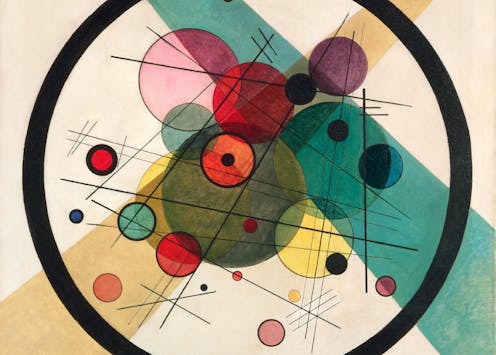
In the seminal “minimal group” experiment, people were assigned to one of two groups based on seemingly irrelevant differences. Some groups were split by a preference for the paintings of Paul Klee versus those of Wassily Kandinsky, others by whether they had over- or underestimated the number of dots in an image. Some were even allocated to groups by a random event like a coin flip.

The result? Klee fans tended to give financial benefits to other Klee fans ahead of Kandinsky enthusiasts. Likewise, people in the “heads” group favoured their own group over those in the “tails” group.
The results could not be explained easily by existing research at the time. Some theories had emphasised that people show favour towards an individual after agreeing on more meaningful topics than painting preferences or dots estimations. The meaningful topics were things like one’s belief system, values or political or religious views.
Small studies had also found that a coin flip – which didn’t lead to explicitly dividing people into groups – was not enough to make people show discriminatory tendencies.
An influential theory called social identity theory thus concluded that social categorisation – thinking in terms of “us” versus “them” – could lead to people discriminating. This was tied to an idea that people elevate their self-image or improve their self-esteem by benefiting their own group over others.
New research emphasises a role for even random similarity versus difference
In our recent research, we set out to reassess whether group division is crucial to understand discriminatory tendencies.
We carried out seven experiments with over 1,400 participants in total (all based in the United Kingdom).
The study analysed data from participants who were asked to either repeatedly choose their preferred painting from two, estimate the number of dots presented in a “cloud”, or take part in a coin toss.
After each choice or coin flip, participants had to assign money to another person (the same person each time).

The only information participants were given about the other individual was their outcome in the same situation. Neither participants nor the other person were assigned to groups. Someone asked to pick between two paintings, for instance, was only told which painting the person they were allocating money to preferred in that instance.
Participants allocated on average 43.1% more money to another person who demonstrated the same judgement – or chance outcome – to their own.
Our research demonstrates that some of our discriminatory tendencies may be driven by individual difference versus sameness even when that difference or sameness is based on random chance, like a coin flip.
The findings raise the possibility that more basic neural processes than thinking about groups may have contributed to these outcomes.
Detecting a difference often comes with a conflict signal in the brain, and may come with negative emotions. Sameness with another person may hence lead to a more favourable treatment. However, this potential explanation will require further research.
Why does this matter?
The findings can help understand our own tendencies for favouring another person.
Previous research had suggested that “incidental similarity” with somebody, such as sharing a birthday or a name, can influence pro-social behaviour or liking because we associate the person with the way we see ourselves.
Our research surprisingly suggests that something similar can happen on the basis of an even less-relevant chance event such as a coin flip.
This may affect how we think about discrimination. We usually understand discrimination as making unfair distinctions between people based on groups or other social categories.
Our research suggests future perspectives on discrimination may incorporate a role for individual-level difference, too.
Does this new understanding suggest ways we can lessen discrimination? At this stage, they would only be speculative.
However, earlier scientific efforts to find ways to reduce prejudice and discrimination have largely been informed by group-based theories of discrimination. For example, some interventions have aimed to influence people’s perceptions of other groups.
In the same way, our new findings may inspire future research into interventions based on individual-level drivers of discrimination.
Authors: Eliane Deschrijver, Senior Lecturer in Social Psychology and Neuroscience, University of Sydney


















