

Suicide or accident? The hidden complexities of intentional road crashes in Australia
- Written by: Milad Haghani, Associate Professor & Principal Fellow in Urban Risk & Resilience, The University of Melbourne
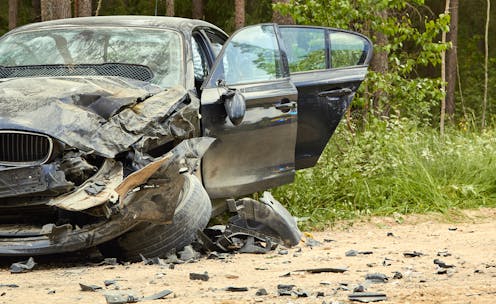
In Australia, fatal road crashes are climbing again, especially since the pandemic, and despite years of attempts to reduce road trauma, the numbers remain stubbornly high.
Strategies to reduce the road toll have largely focused on speeding, distractions and enforcement gaps, such as roadside drug testing.
But hidden in these statistics is a lesser-known, deeply troubling reality: some of these crashes are not unintentional at all.
A difficult area to explore
A portion of road fatalities each year are deaths by suicide.
For some, cars and trucks are not just modes of transport – they become a means to intentionally end their lives.
The true scale of this issue is difficult to determine, as coroners and crash investigators often struggle to distinguish suicide from accidental death.
The phenomenon is not confined to Australia – it has been studied and documented in several countries including the United Kingdom, Sweden, Finland, and the United States.
International research suggests driver suicides may account for up to 8–9% of all fatal road crashes. But studies indicate up to half of these cases may go unreported.
So what do we know about these cases? Why are they so difficult to identify and what patterns exist in these incidents?
How bad is the problem?
Between 2001 and 2017, the rate of suicide involving a road vehicle collision in Australia nearly doubled from 0.125 per 100,000 people to 0.25 per 100,000.
These suicides take several forms.
Some involve single-vehicle crashes, where a driver deliberately collides with a tree, pole, or concrete barrier.
Others are multiple-vehicle collisions, where a driver or rider intentionally steers into oncoming traffic, often targeting trucks.
There are also pedestrian suicides, where people step or lie in front of moving vehicles.
Among driver suicides, single-vehicle crashes are the most common, with studies estimating more than half of driver suicides involve collisions with fixed objects (some studies suggest the figure is more than 70%).
For multiple-vehicle collisions, almost 82% of cases involve colliding with an oncoming truck.
More than half of pedestrian deaths by suicide also involve trucks.
While there are variations in research findings, current evidence suggest males make up between 78% and 91% of those who die by road transport suicide.
Certain demographics have been found to be more likely to die in a road suicide in Australia compared to other methods of suicide:
This includes those who are:
- male (15% more likely than females)
- younger than 25 (nearly five times more likely than those older)
- non-Indigenous (three times more likely than First Nations people)
- born overseas (40% more likely than those born in Australia)
The ripple effects
Unlike most other suicide methods, road vehicle collisions pose a significant risk to others.
Intentional crashes can involve unsuspecting drivers, passengers and pedestrians, turning a personal act of self-harm into a broader public safety issue.
Studies show that when a suicide collision involves vehicles with a large weight disparity — such as a car colliding with a truck — nearly 30% result in injury to another person and almost 4% result in the death of another person.
Beyond the immediate loss of life or injury, these incidents leave lasting psychological scars on the drivers involved.
Why is it difficult to establish suicide on the road?
Determining whether a fatal road crash was intentional or unintentional is fraught with challenges. Unlike other suicide methods, there is often no definitive proof of intent.
Coroners and crash investigators rely on a patchwork of evidence: eyewitness accounts, vehicle behaviour before impact, the driver’s psychological history and physical crash characteristics.
Even when red flags are present — such as high-speed impacts with no signs of braking, the driver not wearing a seat belt, collisions with trucks, or cases where drivers abruptly veer into oncoming traffic — these alone are not always enough to confirm intent.
Investigators must also navigate the cultural and social sensitivities surrounding suicide, which can lead to hesitation in formally classifying a death as intentional. Families, religious beliefs and even financial factors such as life insurance claims can influence how these cases are handled.
In many instances, those who use this method do so in a way that obscures their intent, deliberately staging a crash to appear unintentional.
Without conclusive evidence, such as a documented history of suicidality or a suicide note, these cases often remain in statistical limbo — unconfirmed, unclassified, and possibly unreported.
What can be done?
While broader suicide prevention efforts are always relevant, reducing suicide-related road crashes requires targeted, practical interventions that make vehicles less likely to be used for suicide. Some ideas include:
1. Vehicle safety features that reduce lethality, such as automatic emergency braking and collision avoidance systems, can make intentional high-speed crashes less likely to be fatal. As such, they could discourage the use of vehicles as a suicide method. Airbags, in particular, can play a crucial role, as they can make the outcome of a crash less predictable for people attempting suicide.
2. A national standardised process for classifying intentional crashes would improve detection and data accuracy. Incorporating psychological autopsies and mandating coroners consider behavioural indicators (such as lack of evasive action) could help identify cases that currently go unreported.
3. Heavy vehicle drivers and first responders should receive specialised training to recognise potential suicide crash indicators and manage the psychological toll of being involved in such incidents.
Together, these measures can make vehicle-related suicide, as a very complex issue, less likely and more detectable.
If you or someone you know is struggling, help is available. In Australia, you can contact Lifeline at 13 11 14 for confidential support.
Authors: Milad Haghani, Associate Professor & Principal Fellow in Urban Risk & Resilience, The University of Melbourne


















