

Modern Australian
The Times

Households are burning plastic waste as fuel for cooking and heating in slums the world over

  • Written by Bishal Bharadwaj, Adjunct Research Fellow, Curtin Institute for Energy Transition, Curtin University
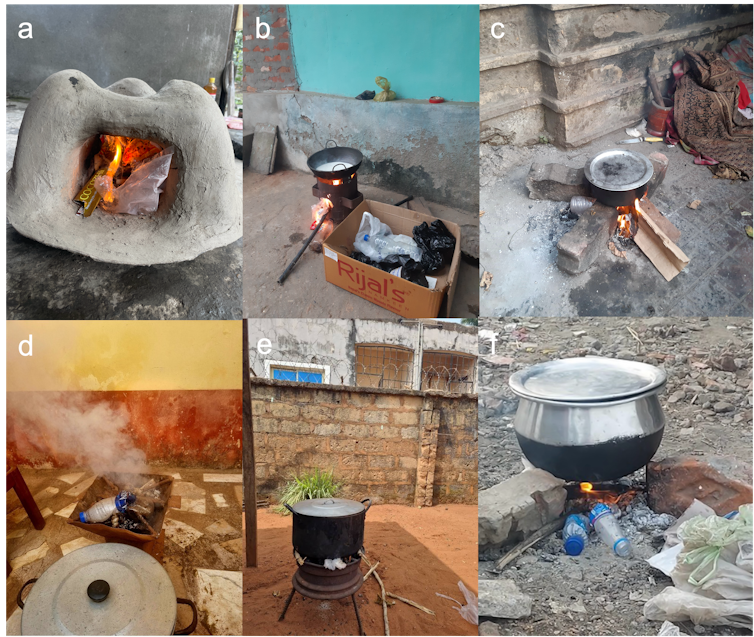
Households are burning plastic waste as fuel for cooking and heating in slums the world over

Poor people in vast city slums across the Global South are burning plastic to cook their food, warm their homes and boil water for hot showers.

Waste plastic is plentiful and highly flammable. So it’s not surprising people in developing countries, mainly in Africa, Asia and Latin America, are putting it to use – especially as wood is increasingly scarce.

But burning plastic is hazardous, as it releases toxins into the surrounding air – and possibly into the food on the stove.

We wanted to draw attention to this growing problem, which has received little attention to date despite the many potential harms.

In our new “perspective” paper, published in Nature Cities, we explain why so many communities are using plastic as an energy source.

We then explore further research needed and recommend ways for policymakers to tackle the issue.

Mountains of plastic waste

The world has produced more plastic in the past 20 years than the total previously produced since commercial production began in 1950. Roughly half a billion tonnes of plastic is now produced every year.

Plastic production is still accelerating. Global plastic use is predicted to almost triple by 2060 due to soaring demand from a growing population with rising incomes.

Unfortunately, most plastic is not recycled. Instead, it is discarded and ultimately ends up polluting marginal land such as flooded areas and open dumping grounds before making its way into the ocean.

A composite image showing examples of how people are using plastic to cook and heat their homes.
Burning plastic waste for cooking and heating is becoming increasingly common in city slums. a–f, Photographs showing the use of plastic to start a fire in Koshi Province in Nepal (a), a household heating milk by burning plastic in Madhesh province of Nepal (b) and the burning of plastic in Guwahati, India (c), in Enugu, Nigeria (d,e) and in the slums of Lahore, Pakistan (f). Credits for photographs: a, Srijana Baniya; b, Pramesh Dhungana; c, Monjit Borthakur; d,e, Chizoba Obianuju Oranu; f, Sobia Rose. Bharadwaj, B., Gates, T., Borthakur, M. et al. The use of plastic as a household fuel among the urban poor in the Global South. Nat Cities (2025).

A product of energy poverty in city slums

Increasing urbanisation is reducing access to traditional fuels such as wood and crop residue from farmland.

But plastic is readily available. Low-income households with little or no access to gas or electricity often find themselves living alongside mountains of rubbish.

This plastic, made from fossil fuels, represents a cheap and convenient fuel. It’s lightweight, easy to transport, and a nuisance material that people want to be rid of. Plastic is also relatively easy to dry and store, but can burn even when wet. It’s also flexible and pliable, so it can be used easily in traditional cooking arrangements such as basic stoves.

Burning plastic releases toxins such as dioxins, furans and heavy metals into the air. These chemicals are known to cause cancer, heart disease and lung diseases.

The more vulnerable people in the household – including women and children and those who spend more time indoors – tend to be most exposed to the fumes. But the problem also affects people in the neighbourhood and the wider community.

Burning plastic is likely to also contaminate food. For example, eggs from farms near plastic waste incinerators in Indonesia contained hazardous chemicals from burned plastic. However, more evidence is needed around food contamination.

Furthermore, when households burn plastic bottles and other containers, some of the original contents also burn. Given chemicals are poorly regulated, the consequences of burning plastic could be greater still.

Overcoming the problem

A first step to overcoming the problem is understanding the reality of those living in slums. Policy-makers need to recognise these people’s needs and the challenges they face.

Extensive research is needed to design the most effective and inclusive policy interventions. This needs to be addressed if we are to reduce the associated health and environmental impacts on such large populations across the world.

We have gathered a collaborative, multidisciplinary team of researchers from around 35 countries – mostly in the Global South – to better understand the problem. We recently completed a survey of people exposed to the issue such as local government employees, teachers and community workers in more than 100 cities in 26 countries.

We are also examining the emissions from waste plastic during food preparation to determine the extent of contamination in variety of stoves.

Nobody wants to burn plastic waste to cook food, so policies like ban on burning plastic with out contextual intervention will not work. There is a need to design inclusive policy interventions that provide equitable benefits to the wider community. For example, encouraging people to:

  • wash any plastic before it is burned, to remove chemical residues
  • use improved cookstoves that vent the fumes outside
  • expand basic urban amenities like waste management to low income settlements
  • provide support to help lift households out of poverty.

Each approach will depend on the specific requirements of the slum settlement. But by implementing multiple approaches in parallel, we can tackle the problem more effectively.

Authors: Bishal Bharadwaj, Adjunct Research Fellow, Curtin Institute for Energy Transition, Curtin University


Read more https://theconversation.com/households-are-burning-plastic-waste-as-fuel-for-cooking-and-heating-in-slums-the-world-over-250265

Hoteliers Look to Clever Value Adds to Increase Revenue

The Australian hospitality industry is still in recovery mode after a notoriously rough patch in recent years. While there has been a post-COVID tra...

Moving to Queensland? Here’s How to Prep Your Car for the Big Move North

There’s no sign of the northern migration slowing down, with thousands of southerners fleeing from chaotic lifestyles and cooler climates for a brig...

Diesel Shortage to Impact Trades and Contractors

Strait of Hormuz blockage affecting all major parts of trades and construction Trades and construction across residential, commercial and industria...

Why Holiday Home Owners Turn to Rental Management Agents

The Allure — and the Reality — of Renting Out Your Property Owning a holiday home is a dream for many Australians. Whether it's a beachside sha...

Why Finding Reliable Doctors In Bundoora Is Important For Long-Term Health

Access to quality healthcare plays an important role in maintaining overall wellbeing and managing health concerns early. Trusted Doctors in Bundoor...

Understanding the Different Types of Car Services: Minor vs Major

When it comes to car maintenance, one of the most important things every vehicle owner should understand is the difference between a minor and a maj...

How Superannuation and TPD Insurance Work Together

Superannuation is an essential part of financial planning in Australia. It is designed to provide individuals with income during retirement, helping...

Tiny Towns funding granted for Mt Hotham and Mt Buller upgrades

Alpine Resorts Victoria (ARV) has welcomed funding support from the Victorian Government’s  Tiny Towns Fund, with both Mt Hotham and Mt Buller se...

Locksmith Services: Why Professional Security Solutions Matter More Than Ever

Security is a critical concern for homeowners, businesses, and vehicle owners alike. Whether it involves protecting a property, replacing damaged lo...

Why Tooth Fillings Are Important For Protecting Damaged Teeth

Cavities and minor tooth damage are common dental problems that can worsen if left untreated. Professional tooth fillings help restore damaged teeth, ...

The Connection Between Visibility and Driver Confidence

Operating a vehicle safely requires an immediate, uncompromised stream of visual information from the surrounding road environment. A driver's decis...

Important Things To Know Before Starting An SMSF Setup

Planning for retirement requires careful financial decisions, and many Australians are now looking for more direct control over how their superannua...

Why Retail Cleaning Plays a Key Role in Customer Experience and Business Success

Professional retail cleaning services are an essential part of maintaining a welcoming, safe, and professional environment for customers and staff...

Simple Ways to Make a Commercial Property More Appealing to Buyers

Selling or leasing a commercial property isn’t just about listing the square metres, taking a few photos and waiting for the right person to appea...

What Café Owners Should Know Before Upgrading Their Display Setup

A café display fridge does a lot more than keep cakes cold and sandwiches fresh. It quietly shapes the way customers browse, the way staff move beh...

Creating a Backyard That Feels Comfortable All Year Round

A great backyard doesn’t need to be huge, expensive or perfectly styled. Most of the time, the spaces people actually use are the ones that feel e...

How Homeowners Can Make Smarter Energy Decisions Before Upgrading

Energy upgrades used to feel like something you only looked into after a power bill gave you a nasty surprise. These days, though, more homeowners a...

Why Retail CX Breaks During Peak Sales Events and How to Prevent It

Retail customer experience has become one of the most important drivers of revenue growth, especially during high-intensity sales periods. However, ev...















