

Australia wants zero road deaths by 2050 – but there’s a major hurdle
- Written by: Ali Soltani, Mid-Career Researcher, College of Medicine and Public Health, Flinders University
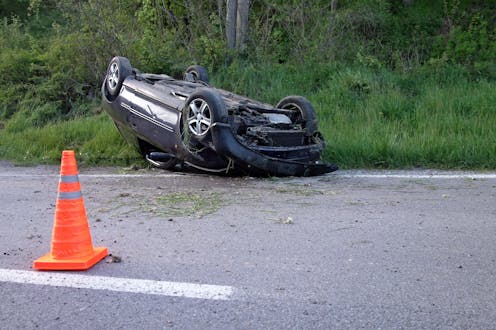
In the past 12 months, more than 1,300 people have died on Australia’s roads. In January alone, there were 114 road deaths in Australia – roughly 20% more than the average for that month over the previous five years.
Our new study projects these tragedies are set to continue over the next 25 years, despite a commitment by Australian governments to achieving zero deaths on the nation’s roads by 2050.
Published in the journal Injury, our study uses a modelling tool to forecast the number of road fatalities in 2030, 2040 and 2050. Importantly, it also identifies the people and regions at higher risks, which provides an opportunity for taking a more nuanced and targeted approach to road safety.
Clear trends
Improved vehicle safety technology, stricter traffic laws and public awareness campaigns have led to a significant drop in the number of road deaths over the past several decades in Australia. But tragically, the number of people dying on Australia’s roads is still high.
The data reveal some clear trends. For example, weekdays see fewer fatalities, likely due to routine commuting and lower-risk behaviours. On the other hand, weekends, particularly Saturdays, experience spikes linked to alcohol consumption and more social travel.
December emerges as the deadliest month. This is likely driven by holiday travel surges, with secondary peaks in March and October tied to school holidays and seasonal weather changes that affect road conditions.
Geographic disparities further complicate the picture. Urban centres in New South Wales and Victoria such as Sydney and Melbourne account for 35% to 40% of fatalities, in part because of dense traffic volumes, complex intersections and pedestrian-heavy zones.
In contrast, rural and remote areas, though less congested, have more severe road accidents because of inadequate road infrastructure and higher speed limits. For example, the Northern Territory, with vast stretches of high-speed highways, records the highest fatality rate, while the Australian Capital Territory, with its urban planning emphasis on safety, reports the lowest.
Speed zones of 51–80 km/h are particularly lethal for vulnerable road users such as pedestrians, cyclists and motorcyclists. This underscores the crucial role of speed management in urban and rural areas alike.
Demographic risks also remain entrenched. For example, men constitute more than 70% of fatalities – in part because they are more likely to engage in risky behaviour such as speeding and drunk driving. Young drivers (17–25 years) and middle-aged adults (40–64 years) are also over-represented due to a combination of inexperience, overconfidence and high mileage.
In good news, child fatalities (0–16 years) have sharply declined. This reflects the success of targeted measures like child seat laws and school zone safety campaigns.
35 years of data
To forecast these trends over the next 25 years, our new study used a modelling tool called Prophet developed by tech company Meta.
We fed 35 years of road data – from 1989 to 2024 – into the model. This data came from Australia’s Bureau of Infrastructure, Transport and Regional Economics. It incorporated variables such as road user type, age, gender, speed limits and geographic location.
To refine predictions, we also incorporated public holidays such as Christmas and Easter.
Prophet outperformed other models we tested, including SARIMA and ETS. It did a better job at modelling past changes in road safety. And it especially excelled at handling non-linear trends, multiple seasonal patterns (daily, weekly, yearly) and the effects of holiday periods.
An unmet target
The findings of the study are cause for some cautious optimism.
Overall, by 2050 fatalities are expected to decline. But Australia’s ambitious zero fatality target by the middle of the century will remain unmet.
The modelling indicates annual male fatalities will drop from 855 in 2030 to 798 in 2050, while female fatalities will plummet from 229 to 92.
There will also be a drop in the number of child fatalities – from 37 in 2030 to just two in 2050. But the model shows a troubling rise of the number of older drivers (over 65) dying on Australia’s roads – from 273 in 2030 to 301 in 2050. This reflects Australia’s ageing population, with more people expected to have both reduced mobility and reduced reflexes.
Motorcyclist fatalities buck the overall trend, rising from 229 in 2030 to 253 in 2050. This signals urgent needs for dedicated lanes and better rider education.
Regionally, Queensland and the Northern Territory lag due to rural road risks. Urban areas with speed limits lower than 80 km/h show steadier declines.

A shared priority
Based on these findings, our study provides several recommendations to mitigate the risk of death on Australia’s roads.
Speed management: enforce dynamic speed limits in high-risk zones such as school areas and holiday corridors, and expand 80 km/h zones on rural highways.
Targeted campaigns: launch gender-specific safety initiatives for men (for example, anti-speeding programs) and age-focused interventions, such as mandatory refresher courses for drivers over 65.
Infrastructure upgrades: invest in rural road safety such as median barriers and better signage, as well as dedicated cyclist pathways.
Technology integration: accelerate the adoption of autonomous vehicles to reduce crashes caused by human error and risky behaviours, and pilot artificial intelligence-driven traffic systems for real-time hazard detection.
Expand public transport: subsidise off-peak travel and rural transit networks to reduce how much people – particularly high-risk groups – depend on car travel.
Better enforcement: strengthen weekend and nighttime policing of roads and deploy more mobile speed cameras during peak holiday periods.
By following these recommendations, Australia can move closer to its vision of safer roads. Our findings underscore that sustained progress demands not only rigorous policy, but also community engagement.
Authors: Ali Soltani, Mid-Career Researcher, College of Medicine and Public Health, Flinders University


















