

Modern Australian
The Times

Trump is reviving a tariff strategy from America’s ‘Gilded Age’. It didn’t end well last time

  • Written by Garritt C. Van Dyk, Senior Lecturer in History, University of Waikato
Trump is reviving a tariff strategy from America’s ‘Gilded Age’. It didn’t end well last time

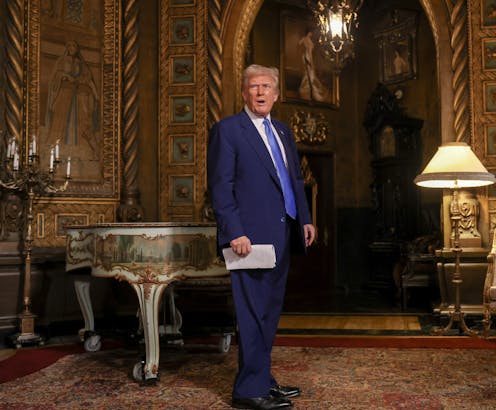
A White House fact sheet about Donald Trump’s recently announced “Fair and Reciprocal Plan” on trade described it as “the art of the international deal” – a reference to Trump’s 1987 business book, The Art of the Deal.

It was a classic piece of self-marketing from the president, but whether his latest tariff proposal will really turn out to be artful is very much open to question.

In fact, the United States’ long history of “reciprocity” in tariffs and trade suggests ordinary Americans could be in for a bumpy ride.

In essence, Trump is reviving a strategy used in the US more than a century ago to protect developing domestic industries. This time, according to the president, reciprocal tariffs aim “to correct longstanding imbalances in international trade and ensure fairness across the board”.

The plan targets trade relationships with other countries where the US does not receive reciprocal treatment. And it echoes the policies of the 25th US president, William McKinley, who presided over an aggressive reciprocal tariff regime in the late 19th century.

McKinley was president from 1897 until he was assassinated in 1901. And while Trump greatly admires his business acumen, McKinley’s economic legacy also reads like a cautionary tale.

Not a simple equation

From the current US perspective, “reciprocity” refers to symmetrical tariffs. Trump’s plan targets unequal rates, such as the European Union’s 10% tariff on US cars, compared with the 2.5% US tariff on European automobiles.

The EU’s 10% rate represents its “most-favoured-nation” tariff, which applies to all its favoured-nation trading partners (with certain exceptions).

While this looks like a clear lack of reciprocity, it’s not that simple. The US also applies a 25% tariff on EU utility vehicles (pickup trucks).

This is significant because of the popularity of pickups in the US – a 2024 survey found 47% of Americans owned one. Until last year, the Ford F150 had been the bestselling “car” in the US for 42 years in a row.

This is just one example of how differences in tariffs can be more complex than they appear at first glance.

A history of reciprocal tariffs

This cycle of higher and lower tariffs has gone on for well over a century. From 1861 to 1930, the US Congress maintained control over trade tariffs, with levels as high as 50% to protect developing industries.

But in 1934, Congress passed the Reciprocal Trade Agreements Act, giving President Franklin D. Roosevelt authority to negotiate reciprocal tariff reductions with individual nations to stimulate global trade during the Great Depression.

These tariff reductions continued after World War II with the development of the World Trade Organization and US tariff levels declining to 5%. Economist Douglas Irwin refers to this period as the “reciprocity period” of nations lowering barriers to international trade.

The last time “reciprocity” was used to refer to the opposite process of raising tariffs was in 1890, under the Tariff Act, often just called the McKinley Tariff. It is this era Trump harked back to in his inaugural address:

President McKinley made our country very rich through tariffs and through talent – he was a natural businessman.

William McKinley. Getty Images

Before he became president, McKinley was head of the House of Representatives’ Ways and Means Committee. He proposed an average increase in tariffs on all imports, rising from 38% to 49.5% to “secure reciprocal trade”.

The new law was designed to protect the tinplate industry with a tariff of 70%, and “to reduce the revenue and equalize duties on imports”.

At the time, the US was running large surpluses from tariff revenues, which was threatening economic growth. This sounds counterintuitive these days, but surpluses were a problem because the US dollar was backed by gold at a fixed price (the gold standard).

Because the amount of money in circulation – and state spending – were limited to the amount of gold held by the government, surplus funds had to be kept in the Treasury reserves. This reduced the money supply and led to lower growth, less investment and tighter credit.

Republicans thought higher tariffs would reduce imported goods and therefore tariff revenues. Instead, income from the higher tariffs more than compensated for import reductions, and the surpluses increased.

Consumer prices rose, farm prices dropped, and the resulting voter backlash saw the Republicans lose control of Congress at the 1890 midterm elections. There was a financial panic in 1893, followed by a recession that lasted until 1896.

A new ‘Gilded Age’

This period in late 19th-century US history is often referred to as the “Gilded Age”, from the title of an 1873 book by Charles Dudley Wright and Mark Twain.

The book was a satire of political corruption and unscrupulous businessmen who benefited from political favours. The title reflects the reality of the era – superficially prosperous but not truly golden. A thin veneer of technological progress, innovation and wealth concealed widespread corruption, scandals and income inequality. But aside from the obvious historical parallels, it is overly optimistic to expect a plan from 1890 to succeed in a complex global trade environment that relies on interdependent supply chains to function. McKinley’s flawed strategy sought protection for a few industries, but also aimed to reduce revenue for a government running large surpluses. However, Trump’s new tariffs are meant to raise revenue to pay off the US$36.5 trillion national debt, as well as to enforce reciprocal trade terms. Trump began his second term with a declaration that “the golden age of America begins right now”. As in 1890, however, the risk remains that a handful of wealthy industrialists will benefit from increased protection, while ordinary citizens will pay higher prices. Less the “art of the deal”, then, than a possible dealbreaker. In which case, Trump may yet be remembered less for a new golden age than for a Gilded Age 2.0. Authors: Garritt C. Van Dyk, Senior Lecturer in History, University of Waikato

Read more https://theconversation.com/trump-is-reviving-a-tariff-strategy-from-americas-gilded-age-it-didnt-end-well-last-time-250389

Why Material Handling Hose Is Critical for Industrial Efficiency

A high-performance material handling hose is an essential component in industries that transport abrasive, dry, or bulk materials on a daily basis...

How to Choose the Right Lawyer in Melbourne for Your Situation

Choosing legal support can feel difficult, especially when the stakes are personal or business-related. The right lawyer in Melbourne should underst...

Hoteliers Look to Clever Value Adds to Increase Revenue

The Australian hospitality industry is still in recovery mode after a notoriously rough patch in recent years. While there has been a post-COVID tra...

Moving to Queensland? Here’s How to Prep Your Car for the Big Move North

There’s no sign of the northern migration slowing down, with thousands of southerners fleeing from chaotic lifestyles and cooler climates for a brig...

Diesel Shortage to Impact Trades and Contractors

Strait of Hormuz blockage affecting all major parts of trades and construction Trades and construction across residential, commercial and industria...

Why Holiday Home Owners Turn to Rental Management Agents

The Allure — and the Reality — of Renting Out Your Property Owning a holiday home is a dream for many Australians. Whether it's a beachside sha...

Why Finding Reliable Doctors In Bundoora Is Important For Long-Term Health

Access to quality healthcare plays an important role in maintaining overall wellbeing and managing health concerns early. Trusted Doctors in Bundoor...

Understanding the Different Types of Car Services: Minor vs Major

When it comes to car maintenance, one of the most important things every vehicle owner should understand is the difference between a minor and a maj...

How Superannuation and TPD Insurance Work Together

Superannuation is an essential part of financial planning in Australia. It is designed to provide individuals with income during retirement, helping...

Tiny Towns funding granted for Mt Hotham and Mt Buller upgrades

Alpine Resorts Victoria (ARV) has welcomed funding support from the Victorian Government’s  Tiny Towns Fund, with both Mt Hotham and Mt Buller se...

Locksmith Services: Why Professional Security Solutions Matter More Than Ever

Security is a critical concern for homeowners, businesses, and vehicle owners alike. Whether it involves protecting a property, replacing damaged lo...

Why Tooth Fillings Are Important For Protecting Damaged Teeth

Cavities and minor tooth damage are common dental problems that can worsen if left untreated. Professional tooth fillings help restore damaged teeth, ...

The Connection Between Visibility and Driver Confidence

Operating a vehicle safely requires an immediate, uncompromised stream of visual information from the surrounding road environment. A driver's decis...

Important Things To Know Before Starting An SMSF Setup

Planning for retirement requires careful financial decisions, and many Australians are now looking for more direct control over how their superannua...

Why Retail Cleaning Plays a Key Role in Customer Experience and Business Success

Professional retail cleaning services are an essential part of maintaining a welcoming, safe, and professional environment for customers and staff...

Simple Ways to Make a Commercial Property More Appealing to Buyers

Selling or leasing a commercial property isn’t just about listing the square metres, taking a few photos and waiting for the right person to appea...

What Café Owners Should Know Before Upgrading Their Display Setup

A café display fridge does a lot more than keep cakes cold and sandwiches fresh. It quietly shapes the way customers browse, the way staff move beh...

Creating a Backyard That Feels Comfortable All Year Round

A great backyard doesn’t need to be huge, expensive or perfectly styled. Most of the time, the spaces people actually use are the ones that feel e...
















