

DeepSeek is now a global force. But it’s just one player in China’s booming AI industry
- Written by: Mimi Zou, Professor, School of Private & Commercial Law, UNSW Sydney
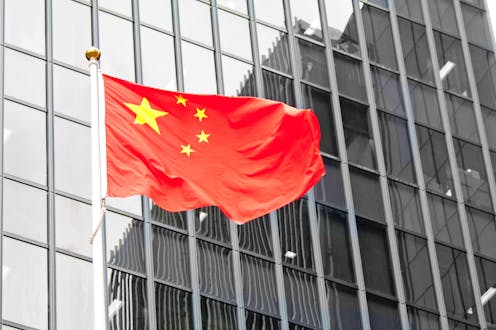
When small Chinese artificial intelligence (AI) company DeepSeek released a family of extremely efficient and highly competitive AI models last month, it rocked the global tech community. The release revealed China’s growing technological prowess. It also showcased a distinctly Chinese approach to AI advancement.
This approach is characterised by strategic investment, efficient innovation and careful regulatory oversight. And it’s evident throughout China’s broader AI landscape, of which DeepSeek is just one player.
In fact, the country has a vast ecosystem of AI companies.
They may not be globally recognisable names like other AI companies such as DeepSeek, OpenAI and Anthropic. But each has carved out their own speciality and is contributing to the development of this rapidly evolving technology.
Tech giants and startups
The giants of China’s technology industry include Baidu, Alibaba and Tencent. All these companies are investing heavily in AI development.
Alibaba CEO Eddie Wu earlier this month said the multibillion dollar company plans to “aggressively invest” in its pursuit of developing AI that is equal to, or more advanced than, human intelligence.
The company is already working with Apple to incorporate its existing AI models into Chinese iPhones. (Outside China, iPhones offer similar integration with OpenAI’s ChatGPT.)
But a new generation of smaller, specialised AI companies has also emerged.
For example, Shanghai-listed Cambricon Technologies focuses on AI chip development. Yitu Technology specialises in healthcare and smart city applications.
Megvii Technology and CloudWalk Technology have carved out niches in image recognition and computer vision, while iFLYTEK creates voice recognition technology.

Innovative paths to success
Despite United States’ chip sanctions and China’s restricted information environment, these Chinese AI companies have found paths to success.
US companies such as OpenAI have trained their large language models on the open internet. But Chinese companies have used vast datasets from domestic platforms such as WeChat, Weibo and Zhihu. They also use government-authorised data sources.
Many Chinese AI companies also embrace open-source development. This means they publish detailed technical papers and release their models for others to build upon. This approach focuses on efficiency and practical application rather than raw computing power.
The result is a distinctly Chinese approach to AI.
Importantly, China’s state support for AI development has also been substantial. Besides the central government, local and provincial governments have provided massive funding through venture funds, subsidies and tax incentives.
China has also established at least 48 data exchanges across different cities in recent years. These are authorised marketplaces where AI companies can purchase massive datasets in a regulated environment.
By 2028, China also plans to establish more than 100 “trusted data spaces”.
These are secure, regulated environments designed to standardise data exchanges across sectors and regions. They will form the foundation of a comprehensive national data market, allowing access to and use of diverse datasets within a controlled framework.
A strong education push
The growth of the AI industry in China is also tied to a strong AI education push.
In 2018, China’s Ministry of Education launched an action plan for accelerating AI innovation in universities.
Publicly available data shows 535 universities have established AI undergraduate majors and some 43 specialised AI schools and research institutes have also been created since 2017. (In comparison, there are at least 14 colleges and universities in the United States offering formal AI undergraduate degrees.)
Together, these institutions are building an AI talent pipeline in China. This is crucial to Beijing’s ambition of becoming a global AI innovation leader by 2030.
China’s AI strategy combines extensive state support with targeted regulation. Rather than imposing blanket controls, regulators have developed a targeted approach to managing AI risks.
The 2023 regulations on generative AI are particularly revealing of Beijing’s approach.
They impose content-related obligations specifically on public-facing generative AI services, such as ensuring all content created and services provided are lawful, uphold core socialist values and respect intellectual property rights. These obligations, however, exclude generative AI used for enterprise, research and development. This allows for some unrestricted innovation.

International players
China and the US dominate the global AI landscape. But several significant players are emerging elsewhere.
For example, France’s Mistral AI has raised over €1 billion (A$1.6 billion) to date to build large language models. In comparison, OpenAI raised US$6.6 billion (A$9.4 billion) in a recent funding round, and is in talks to raise a further US$40 billion.
Other European companies are focused on specialised applications, specific industries or regional markets. For example, Germany’s Aleph Alpha offers an AI tool that allows companies to customise third-party models for their own purposes
In the United Kingdom, Graphcore is manufacturing AI chips and Wayve is making autonomous driving AI systems.
Challenging conventional wisdom
DeepSeek’s breakthrough last month demonstrated massive computing infrastructure and multibillion dollar budgets aren’t always necessary for the successful development of AI.
For those invested in the technology’s future, companies that achieve DeepSeek-level efficiencies could significantly influence the trajectory of AI development.
We may see a global landscape where innovative AI companies elsewhere can achieve breakthroughs, while still operating within ecosystems dominated by American and Chinese advantages in talent, data and investment.
The future of AI may not be determined solely by who leads the race. Instead, it may be determined by how different approaches shape the technology’s development.
China’s model offers important lessons for other countries seeking to build their AI capabilities while managing certain risks.
Authors: Mimi Zou, Professor, School of Private & Commercial Law, UNSW Sydney


















