

what kids say about Roblox, lootboxes and money in online games
- Written by: Taylor Hardwick, Postdoctoral Research Fellow in the School of Architecture, Design and Planning, University of Sydney
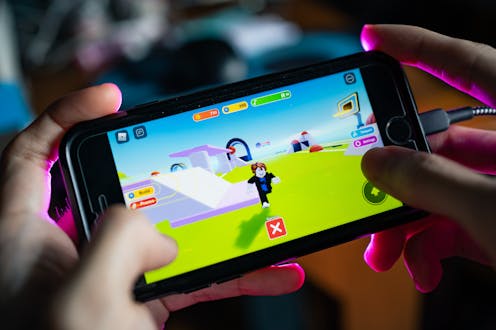
Roblox is one of the world’s most popular online platforms for children, offering a variety of “experiences” including games and virtual spaces. Most of the experiences are free, but offer upgrades, bonuses and random items in exchange for cash.
What do kids make of it? In new research, we interviewed 22 children aged seven to 14 (and their parents) from November 2023 to July 2024. Some 18 of the 22 played Roblox.
In the interviews, we gave children an A$20 debit card to spend however they liked, to help us understand children’s decision-making around spending. While four children purchased non-digital items with their debit card (such as bicycle parts, toys and lollies), 12 children made purchases in Roblox.
We found children greatly value their Roblox purchases – but complain of “scary” and complex transactions, describe random reward systems as “child gambling”, and talk of “scams” and “cash grabs”, with the platform’s inflexible refund policy providing little recourse.
What is Roblox?
Created in 2006, Roblox bills itself as “the ultimate virtual universe that lets you create, share experiences with friends, and be anything you can imagine”. There are 380 million monthly active users globally.
Around 42% of Roblox players are under 13 years old. In 2024, a study found Australian players aged four to 18 spent an average 137 minutes a day on it.
Roblox has come under fire in recent years, particularly for the prevalence of grooming and child abuse on the platform. Despite parental controls, many feel that it’s still not doing enough to protect children.
Much of Roblox’s US$3.6 billion revenue in 2024 was generated via in-game microtransactions, particularly through purchases of its virtual currency Robux.
Free to play – but plenty to pay for

It’s free to play Roblox. But Roblox and Roblox creators (people who make the platform’s “experiences”) make money via in-game purchases.
In Roblox experiences, players can purchase all sorts of things – cosmetic items to change the appearance of player avatars, functional items to use in games, and passes which give access to games or VIP experiences.
Some Roblox games also offer random reward mechanics such as lootboxes, which offer players a chance-based outcome or prize (sometimes via monetary purchases).
Lootboxes were banned for users under 15 in Australia in 2024. However, we found many of Roblox’s most popular games still have random reward mechanics for sale to accounts under 15 years of age.
In response to questions from The Conversation, a Roblox spokesperson wrote:
As a user-generated content platform, we provide our developer community with tools, information and guidelines that apply to aspects of gameplay within their games and experiences, including the recent classification update relating to paid random items. We take action on reports of developers not following guidelines or not using our tools properly to meet local compliance requirements.
Concerns about children’s digital game spending often focus on the idea that engaging with random reward mechanics might later lead to problem gambling.
While this remains the subject of ongoing research, our research shows Roblox’s spending features already harm children now. Children already feel misled or deceived.
Random rewards and ‘child gambling’
Many of Roblox’s most popular games, such as Adopt Me!, Blox Fruits and Pet Simulator 99, include random reward features. Players can purchase items of random rarity, and can often use or trade these items with other players.
One child in our study explained that playing these games is “literally just child gambling”.
Random reward mechanics are confusing for children who may not have a strong understanding of statistics or risk. This caused conflict in the families we spoke to, when children were disappointed or upset by not receiving a “good” reward.
Our research echoes earlier work identifying harms to children from monetised random reward systems.
‘Scary’ virtual currencies
Roblox also uses virtual currencies, which must be purchased using “real” currency. For instance, A$8.49 or US$5.00 will purchase 400 Robux to spend in games.
Some popular Roblox games then have their own virtual currency. Players must first convert real-world money into Robux, then convert the Robux into a game’s currency of “diamonds” or “gems”.
Some children we spoke to had sophisticated ways to handle these conversions – such as online Robux calculators or mental maths. However, other children struggled.
An 11-year-old described navigating nested virtual currencies as “scary”. A 13-year-old, when asked how much they thought Robux cost in Australian dollars, said, “I can’t even begin to grasp that.”
Virtual currencies make it difficult for children to discern the true price of items they want to buy in digital games. This leads to children spending more than they realise in games – something that concerns them.
Children referred to many of these in-game spending features and outcomes as “scams”, “tricks” and “cash grabs”. Although children value their in-game purchases, and parents use in-game spending to teach values around saving and spending money responsibly, these features ultimately harm children.
Current protections are not enough
Digital games have demonstrated benefits for childrens’s education, social lives and identity development. Children also value the items they purchase in digital games. However, efforts to make money from games aimed at children may have significant financial and emotional impact.
Our research does not suggest monetisation features should be barred from children’s games. But our findings indicate that policy regarding children’s digital safety should try to minimise harm to children as a result of their digital spending.
In particular, we conclude that monetised random reward mechanics and virtual currencies are not appropriate in children’s games.
Other countries have struggled to regulate lootboxes effectively. Current legislation, such as the Australian classification changes introduced last September, which ban lootboxes for players under 15, is not fit for purpose. Roblox is currently rated PG on Google Play store and 12+ on the Apple App Store, despite many of its most popular games including paid chance-based content.
Our interviews also found that parents feel lost navigating the complexities of these games, and are extremely anxious about how their children are being monetised.
Australia’s eSafety Commissioner has argued that the way forward for children’s safety online is “safety by design”. In this approach, digital service providers must design their services with the safety of users as a top priority.
In our conversations with children, we found this is not currently the case – but could be a good starting point.
Authors: Taylor Hardwick, Postdoctoral Research Fellow in the School of Architecture, Design and Planning, University of Sydney


















