

our tests reveal the tiny algae killing fish and harming surfers on SA beaches
- Written by: Shauna Murray, Professor; Faculty of Science, University of Technology Sydney
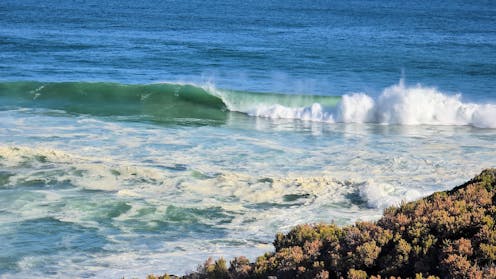
Confronting images of dead seadragons, fish and octopuses washed up on South Australian beaches – and disturbing reports of “more than 100” surfers and beachgoers suffering flu-like symptoms after swimming or merely breathing in sea spray – attracted international concern last week.
Speculation about the likely cause ranged from pollution and algae to unusual bacterial infections or viruses. Today we can reveal the culprit was a tiny – but harmful – type of planktonic algae called Karenia mikimotoi.
The SA government sent us water samples from Waitpinga Beach, Petrel Cove Beach, Encounter Bay Boat Ramp and Parsons Headland on Tuesday. We studied the water under the microscope and extracted DNA for genetic analysis.
Our results revealed high numbers of the tiny harmful algal species – each just 20 microns in diameter (where one micron is one thousandth of a millimetre). While relatively common in Australian coastal waters, blooms of K. mikimotoi occur only sporadically. But similar harmful algal blooms and fish kills due to K. mikimotoi have happened in the past, such as the 2014 bloom in Coffin Bay, SA. And this latest one won’t be the last.
Sick surfers and dead marine life from strange sea foam (ABC News)Harmful algal blooms
Single-celled, microbial algae occur naturally in seawater all over the world.
They are also called phytoplankton, because they float in the water column and photosynthesise like plants. “Phyto” comes from the Greek word for plant and “plankton” comes from the Greek word for wanderer, which relates to their floating movement with ocean currents and tides.
Like plants on land, the microalgae or phytoplankton in the ocean capture sunlight and produce up to half the oxygen in our atmosphere. There are more than 100,000 different species of microalgae. Every litre of seawater will normally contain a mixed group of these different microalgae species.
But under certain conditions, just a single species of microalgae can accumulate in one area and dominate over the others. If we are unlucky, the dominant species may be one that produces a toxin or has a harmful effect.
This so-called “harmful algal bloom” can cause problems for people and for marine life such as fish, invertebrates such as crabs, and even marine mammals such as whales and seals.
There are hundreds of different species of harmful algae. Each produces its own type of toxin with a particular toxic effect.
Most of these toxic chemical compounds produced by harmful algae are quite well known, including neurotoxins that affect the brain. But others are more complicated, and the mechanisms of toxicity are poorly understood. This can make it more difficult to understand the factors leading to the deaths of fish and other marine life. Unfortunately, the toxins from K. mikimotoi fall into this latter category.
Introducing Karenia mikimotoi

The species responsible for recent events in SA beaches, K. mikimotoi, causes harmful algal blooms in Asia, Europe, South Africa and South America, as well as Australia and New Zealand. These blooms all caused fish deaths, and some also caused breathing difficulties among local beachgoers.
The most drastic of these K. mikimotoi blooms have occurred in China over the past two decades. In 2012, more than 300 square kilometres of abalone farms were affected, causing about A$525 million in lost production.
Explaining the toxic effects
Microalgae can damage the gills of fish and shellfish, preventing them from breathing. This is the main cause of death. But some studies have also found damage to the gastrointestinal tracts and livers of fish.
Tests using fish gill cells clearly show the dramatic toxic effect of K. mikimotoi. When the fish gill cells were exposed to intact K. mikimotoi cells, after 3.5 hours more than 80% of the fish cells had died.
Fortunately, the toxin does not persist in the environment after the K. mikimotoi cells are dead. So once the bloom is over, the marine environment can recover relatively quickly.
Its toxicity is partly due to the algae’s production of “reactive oxygen species”, reactive forms of oxygen molecules which can cause the deaths of cells in high doses. K. mikimotoi cells may also produce lipid (fat) molecules that cause some toxic effects.
Finally, a very dense bloom of microalgae can sometimes reduce the amount of dissolved oxygen in the water column, which means there is less oxygen for other marine life.
The human health effects are not very well known but probably relate to the reactive oxygen species being an irritant.
K. mikimitoi cells can also produce “mucilage”, a type of thick, gluey substance made of complex sugars, which can accumulate bacteria inside it. This can cause “sea foam”, which was evident on beaches last week.

Unanswered questions remain
A question for many people is whether increasing water temperatures make blooms of K. mikimotoi more likely.
Another concern is whether nutrient runoff from farms, cities and aquaculture could cause more harmful algal blooms.
Unfortunately, for Australia at least, the answer to these questions is we don’t know yet. While we know some harmful algal blooms do increase when nutrient runoff is higher, others actually prefer fewer nutrients or colder temperatures.
We do know warmer water species seem to be moving further south along the Australian coastline, changing phytoplankton species abundance and distribution.
While some microalgal blooms can cause bioluminescence that is beautiful to watch, others such as K. mikimotoi can cause skin and respiratory irritations.
If you notice discoloured water, fish deaths or excessive sea foam along the coast or in an estuary, avoid fishing or swimming in the area and notify local primary industry or environmental authorities in your state.
Authors: Shauna Murray, Professor; Faculty of Science, University of Technology Sydney


















