

Kate Grenville faces her family history of stolen land in Australia – and asks us to feel it with her
- Written by: Tim Rowse, Emeritus Professor, Institute for Culture and Society, Western Sydney University
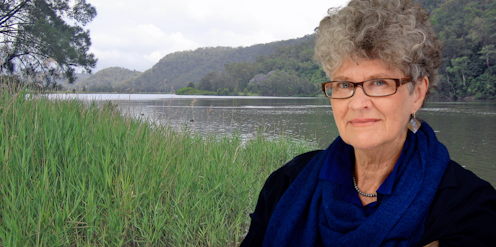
How do Australians feel about knowing the territory we inhabit was violently stolen from First Nations people? In Unsettled, Kate Grenville explores this through her own feelings. “I’ve been circling this book for years,” she writes.
But its immediate context is the 60% “No” vote in the 2023 referendum to establish an Aboriginal and Torres Strait Islander Voice to parliament, and to the executive government, which develops laws and policies.
The slogan “If you don’t know, vote No” gave Australians “permission to keep looking away” from the past, Grenville writes. She invites us to look into that past, accompanying her on a journey that leaves her “unsettled”, but hopeful.
Review: Unsettled: a journey through time and place – Kate Grenville (Black Inc.)
For Grenville, the difference between knowing the truth of Australia’s past and feeling it is significant. An accomplished historical novelist, she has taken readers into the imagined inner lives of colonist characters in books like The Secret River (2005), allowing us to feel what they felt. In Unsettled, she invites us to witness and share her responses to places and stories of colonial land theft.
Feeling the violence of stolen land
Most Australians acknowledge the violence of colonisation. In August 2022, a Reconciliation Australia survey found 76% of the general community believed First Nations people “were subject to mass killings, incarceration, forced removal from land and restricted movement throughout the 1800s”. The same survey found 63% believed “Frontier wars occurred across the Australian continent” as First Nations people “defended their traditional lands from European invasion”.


Grenville thus declares the purpose of her pilgrimage: to make herself emotionally vulnerable to knowledge. Implicitly, she imagines (or calls into being) a reader willing to rethink their own place in history, as receivers of the colonists’ insular legacy. Grenville exemplifies Australians’ possible openness to a loss of self assurance. Her book is an invitation to national uncertainty.
As she travels, she moves from her most time-distant ancestor, Wiseman, to her parents’ generation. (The 20 places named for the reader and visited include St Albans, Wollombi, Gunnedah and Tamworth.)
One source is her mother’s recorded memories, the basis of Grenville’s biographical 2015 book, One Life: My Mother’s Story. Here, she revisits her mother’s words with a sharpened awareness of what her mother’s generation didn’t know, or did not think it important to dwell on.
Tracing this descent, paying close attention to the terminology used in monuments and in family anecdotes, Grenville enacts her own emancipation from not seeing to seeing, from self-enclosure to emotionally risky openness. She urges Australians to reevaluate the self-understanding passed down to them by parents, grandparents and the wider culture.
Truth-telling and owning the past
National learning as personal quest is a beguiling way to portray contemporary Australian historical consciousness. Dja Dja Wurrung and Yorta Yorta journalist Bridget Brennan demonstrated this in last week’s Four Corners program on Victoria’s Yoorrook Justice Commission.
Her interviews with two witnesses to the Commission presented national enlightenment as the hoped-for sum of many hard individual journeys. A woman continuing her deceased husband’s pastoral enterprise on the site of the 1843 Warrigal Creek massacre was “grappling with how best to protect and honour the massacre site for future generations”. A descendant of Alfred Deakin apologised for his 1886 legislation that forced Aboriginal people of mixed descent off reserves, in the hope they would assimilate to the settler community.
I take Brennan to be saying that if non-Indigenous Australians are to “own” their past, they must open themselves to dialogue with the colonised – such as the commissioners of Yoorrook.
Dja Dja Wurrung and Yorta Yorta journalist Bridget Brennan demonstrated national learning as personal quest on a recent Four Corners.Grenville’s pilgrim self does not encounter actual Indigenous interlocutors. They are absent – for a variety of reasons – from the places her ancestors “took up”. They are imaginably present for her, however. Unsettled often recreates the structure of feeling produced by Jindyworobak poets such as Rex Ingamells: the intimation of an Aboriginal presence that persists in the land itself, beyond colonial erasure.
Indeed, the literary precedents of Unsettled go back to poems inspired by horror at the 1838 Myall Creek Massacre: Elizabeth Hamilton Dunlop’s The Aboriginal Mother (From Myall’s Creek) (1838) and Charles Harpur’s A Wail from the Bush (1845).
Grenville closes her book with a visit to the Myall Creek monument erected in 2000, near Bingara. There she allows herself to feel “shame, disgust, horror” as “the price to pay for being who I am”. Those who erected the monument – descended from both slayers and slain – are her exemplary Australians.
On difficult terms with multiculturalism
To say Unsettled is a sustained performance of a postcolonial conscience is not to belittle it. Its great achievement is the effortless and artful intertwining of received histories of the nation with stories specific to Grenville’s family. However, Unsettled is on difficult terms with another progressive Australian ideology: multiculturalism. I mean two things by this.
Recent migrants to Australia will be limited in their capacity to identify with Grenville’s deep colonial lineage. Subject to (at times) self-lacerating review, this heritage is not only Grenville’s burden, but also the cultural asset that enables her pilgrimage.
Those best placed to identify with her anguish are not only those yearning for truth-telling, but those descended, like her, from several generations of colony-born “natives”. This is the effect of the book’s configuration of self, family and nation.
The premise of shared heritage – celebrated or criticised – is vulnerable in a nation adding so rapidly to its stock of people.
It is likely that a large proportion of those who voted in the 2023 referendum are of non-British heritage. Of the three million permanent migrants added to Australia’s population between 2000 and 2021, settling mainly in the capital cities, one in three were from India, China, the Philippines or Vietnam; 77% of migrants who have lived in Australia for more than ten years have become citizens and eligible to vote. Even if these “new Australians” know they are beneficiaries of violent colonisation, what does that knowledge mean to them?
 A citizenship ceremony on Australia Day, 2025. 77% of migrants become citizens and eligible to vote after living here a decade or longer.
Mick Tsikas/AAP
A citizenship ceremony on Australia Day, 2025. 77% of migrants become citizens and eligible to vote after living here a decade or longer.
Mick Tsikas/AAP
Migration, the severing of a person from place and people, requires some erasure of a person’s past. This is for some, no doubt, part of its allure. Whether experienced as loss or renewal of self, this severance may breed an impatience with claims – moral or political – that invoke heritage.
On 24 May 2023, Michael Sukkar (Liberal member for Deakin and member of a Lebanese migrant family) heard Yes advocates refer to the ancient heritage of Indigenous Australians as if it were the basis of their right to a Voice. He replied, explaining his “vehement” opposition to the Voice, by expounding a migrant version of the equality ethos.
It didn’t matter if your family went back to the First Fleet or whether your family went back 60,000 years or whether your family arrived a couple of years ago and were at last night’s citizenship ceremony. The minute you were an Australian citizen, you were, in every single way, equal. There was no grading. There were no different rights or different rules for one or the other.
Unsettled, and the collective memory and identity it invokes, speaks powerfully to a structure of postcolonial feeling within Australian society that is significant, but may be of diminishing influence. Today, Australia’s high (diversely sourced) migration challenges the very possibility of a collective memory.
Authors: Tim Rowse, Emeritus Professor, Institute for Culture and Society, Western Sydney University


















