thousands of plant species are missing from places they could thrive – and humans are the reason
- Written by Cornelia Sattler, Research Fellow in Ecology, Macquarie University
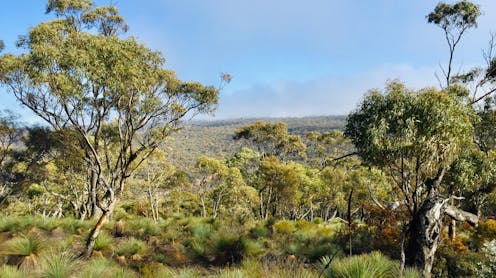
If you go walking in the wild, you might expect that what you’re seeing is natural. All around you are trees, shrubs and grasses growing in their natural habitat.
But there’s something here that doesn’t add up. Across the world, there are large areas of habitat which would suit native plant species just fine. But very often, they’re simply absent.
Our new research gauges the scale of this problem, known as “dark diversity”. Our international team of 200 scientists examined plant species in thousands of sites worldwide.
What we found was startling. In regions heavily affected by our activities, only about 20% of native plant species able to live there were actually present. But even in areas with very little human interference, ecosystems only contained about 33% of viable plant species.
Why so few species in wilder areas? Our impact. Pollution can spread far from the original source, while conversion of habitat to farms, logging and human-caused fires have ripple effects too.

Conspicuous by their absence
Our activities have become a planet-shaping force, from changing the climate through our emissions to farming 44% of all habitable land. As our footprint has expanded, other species have been pushed to extinction. The rates of species loss are unprecedented in recorded history.
When we think about biodiversity loss, we might think of a once-common animal species losing numbers and range as farms, cities and feral predators expand. But we are also losing species from within protected areas and national parks.
To date, the accelerating loss of species has been largely observed at large scale, such as states or even whole countries. Almost 600 plant species have gone extinct since 1750 – and this is likely a major underestimate. Extinction hotspots include Hawaii (79 species) and South Africa’s unique fynbos scrublands (37 species).
But tracking the fate of our species has been difficult to do at a local scale, such as within a national park or nature reserve.
Similarly, when scientists do traditional biodiversity surveys, we count the species previously recorded in an area and look for changes. But we haven’t tended to consider the species that could grow there – but don’t.
Many plants have been declining so rapidly they are now threatened with extinction.What did we do?
To get a better gauge of biodiversity losses at smaller scale, we worked alongside scientists from the international research network DarkDivNet to examine almost 5,500 sites across 119 regions worldwide. This huge body of fieldwork took years and required navigating global challenges such as COVID-19 and political and economic instability.
At each 100 square metre site, our team sampled all plant species present against the species found in the surrounding region. We defined regions as areas of approximately 300 square kilometres with similar environmental conditions.
Just because a species can grow somewhere doesn’t mean it would. To make sure we were recording which species were genuinely missing, we looked at how often each absent species was found growing alongside the species growing at our chosen sites at other sampled sites in the region. This helped us detect species well-suited to a habitat but missing from it.
We then cross-matched data on these missing species against how big the local human impact was by using the Human Footprint Index, which measures population density, land use and infrastructure.
Of the eight components of this index, six had a clear influence on how many plant species were missing: human population density, electric infrastructure, railways, roads, built environments and croplands. Another component, navigable waterways, did not have a clear influence.
Interestingly, the final component – pastures kept by graziers – was not linked to fewer plant species. This could be because semi-natural grasslands are used as pasture in areas such as Central Asia, Africa’s Sahel region and Argentina. Here, long-term moderate human influence can actually maintain highly diverse and well-functioning ecosystems through practices such as grazing livestock, cultural burning and hay making.

Overall, though, the link between greater human presence and fewer plant species was very clear. Seemingly pristine ecosystems hundreds of kilometres from direct disturbance had been affected.
These effects can come from many causes. For instance, poaching and logging often take place far from human settlements. Poaching an animal species might mean a plant species loses a key pollinator or way to disperse its seeds in the animal’s dung. Over time, disruptions to the web of relationships in the natural world can erode ecosystems and result in fewer plant species. Poachers and illegal loggers also cut “ghost roads” into pristine areas.
Other causes include fires started by humans, which can threaten national parks and other safe havens. Pollution can travel and settle hundreds of kilometres from its source, affecting ecosystems.
Our far-reaching influence can also hinder the return of plant species, even in protected areas. As humans expand their activities, they often carve up natural areas into fragments cut off from each other. This can isolate plant populations. Similarly, the loss of seed-spreading animals can stop plants from recolonising former habitat.
 Wild areas like this one in French Polynesia can look pristine – but when we looked closer, we found worrying gaps in which species were present.
Cornelia Sattler, Author provided (no reuse)
Wild areas like this one in French Polynesia can look pristine – but when we looked closer, we found worrying gaps in which species were present.
Cornelia Sattler, Author provided (no reuse)
What does this mean?
Biodiversity loss is not just about species going extinct. It’s about ecosystems quietly losing their richness, resilience and functions.
Protecting land is not enough. The damage we can do can reach deep into conservation areas.
Was there good news? Yes. In regions where at least a third of the landscape had minimal human disturbance, there was less of this hidden biodiversity loss.
As we work to conserve nature, our work points to a need not just to preserve what’s left but to bring back what’s missing. Now we know what species are missing in an area but still present regionally, we can begin that work.
Authors: Cornelia Sattler, Research Fellow in Ecology, Macquarie University