

Better cleaning of hospital equipment could cut patient infections by one-third – and save money
- Written by: Brett Mitchell, Professor of Nursing and Health Services Research, University of Newcastle
Hospital-acquired infections are infections patients didn’t have when they were admitted to hospital. The most common include wound infections after surgery, urinary tract infections and pneumonia.
These can have a big impact for patients, often increasing their time in hospital, requiring additional treatment and causing discomfort. Unfortunately, some people who sustain an infection in hospital don’t recover. In Australia, there are an estimated 7,500 deaths associated with hospital-acquired infections annually.
It’s important to prevent such infections not only for the benefit of patients, but also because of their cost to the health system and to reduce antibiotic use.
Even though patients don’t usually come into contact with each other directly in hospitals, there are many ways bacteria can be transmitted between patients.
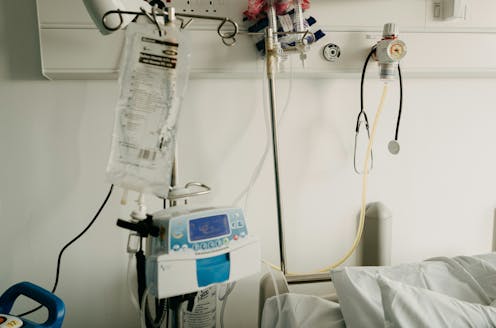
Our own and other research suggests medical equipment (such as blood pressure machines, dressing trolleys and drip stands) could be a common source of infection.
In recent research, we’ve shown that by regularly disinfecting shared medical equipment, we can help reduce infections picked up in hospitals – and save the health system money.
We introduced a new cleaning package
We conducted an experiment in a New South Wales hospital where we introduced a package of extra cleaning measures onto several wards.
The package consisted of designated cleaners specifically trained to clean and disinfect sensitive medical equipment. Normally, the cleaning of shared equipment is the responsibility of clinical staff.
These cleaners spent three hours a day disinfecting shared medical equipment on the ward. We also provided regular training and feedback to the cleaners.
The start date for the cleaning package on each ward was randomly selected. This is known as a “stepped wedge” trial (more on this later).
We monitored the thoroughness of cleaning before and after introducing the cleaning package by applying a florescent gel marker to shared equipment. The gel cannot be seen without a special light, but is easily removed if the surface is cleaned well.
We also monitored infections in patients on the wards before and after introducing the cleaning package. Over the course of the experiment, more than 5,000 patients passed through the wards we were studying.
Finally, we looked at the economic costs and benefits: how much the cleaning package costs, versus the health-care costs that may be saved thanks to any avoided infections.
What we found
Before the intervention, we found the thoroughness of cleaning shared equipment, assessed by the removal of the gel marker, was low. Once we introduced the cleaning package, cleaning thoroughness improved from 24% to 66%.
After the cleaning package was introduced, hospital-acquired infections dropped by about one-third, from 14.9% to 9.8% of patients. We saw a reduction in a range of different types of infections including bloodstream infections, urinary tract infections and surgical wound infections.
To put this another way, for every 1,000 patients admitted to wards with the cleaning package, we estimated there were 30 fewer infections compared to wards before the cleaning package was introduced. This not only benefits patients, but also hospitals and the community, by freeing up resources that can be used to treat other patients.
Treating infections in hospital is expensive. We estimate the cost of treating infections before the cleaning intervention was around A$2.1 million for a group of 1,000 patients, arising from 130 infections. These costs come from extra time in hospital and treatment costs associated with infections.
We estimated the 30 fewer infections per 1,000 patients reduced costs to $1.5 million, even when factoring in the cost of cleaners and cleaning products. Put differently, our intervention could save a hospital $642,000 for every 1,000 patients.
Some limitations of our research
Our experiment was limited to several wards at one Australian hospital. It’s possible the cleaning was particularly poor at this hospital, and the same intervention at other hospitals may not result in the same benefit.
For various reasons, even with trained designated cleaners we didn’t find every piece of equipment was cleaned all the time. This reflects common real-world issues in a busy ward. For example, some equipment was being used and not available for cleaning and cleaners were sometimes absent due to illness.
We don’t know whether even more cleaning might have resulted in an even greater reduction in infections, but there is often a law of diminishing returns when assessing infection control interventions.
A limitation of looking at infection rates before and after the introduction of an intervention is that other things may change at the same time, such as staffing levels, so not all the difference in infections may be due to the intervention.
But the stepped wedge model, where the cleaning package was introduced at different times on different wards, increases our confidence the reduction in infections was the result of the cleaning package.
Improving hospital cleaning is a no brainer
Shared medical equipment harbours pathogens, which can survive for long periods in health-care settings.
Like our study, other research has similarly suggested a clean hospital is a safe hospital. Importantly, cleaning needs to include thorough disinfection to reduce the risk of infection (not just removing visible dirt and stains).
Our work is also consistent with other research that shows improving cleaning in hospitals is cost-effective.
Cleaning services and products have often been subject to cuts when hospitals have needed to save money.
But prioritising effective cleaning of medical equipment appears to be a no brainer for health system administrators. We need to invest in better cleaning practices for both the health of patients and the financial bottom line.
Authors: Brett Mitchell, Professor of Nursing and Health Services Research, University of Newcastle


















