

Extinctions of Australian mammals have long been blamed on foxes and cats – but where’s the evidence?
- Written by: Arian Wallach, Future Fellow in Ecology, Queensland University of Technology
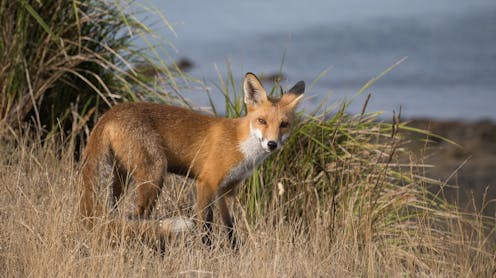
In 1938, zoologist Ellis Le Geyt Troughton mourned that Australia’s “gentle and specialized creatures” were “unable to cope with changed conditions and introduced enemies”.
The role of these “enemies” – namely, foxes and feral cats – in driving dozens of Australia’s animals towards extinction has solidified into a scientific consensus. This is a simple and plausible story: wily new predators arrive, decimating unwary native mammals.
In response, conservationists and governments have declared war on foxes and cats with large-scale trapping, shooting and poisoning campaigns.
But did foxes and cats definitely cause the extinction of animals such as the desert bandicoot, lesser bilby and the central hare-wallaby? Our new research shows the evidence base is nowhere near as strong as you might assume.

What did we do?
We catalogued mammal species experts believe have either declined or gone extinct due to predation by foxes (57 species) and cats (80 species) and searched for primary sources linking foxes and cats to their decline. To assess the evidence, we then asked three simple questions.
1. Did extinctions follow the arrival of new predators?
A common claim is that extinctions followed fox and cat arrival and spread.
But is it definitely true? To find out, we compiled the last recorded sightings of extinct mammals and compared them to maps estimating the arrival of foxes and cats in the area. We included local extinctions (extinct in an area) and full extinctions, where the species is no more.
We found extinction records for 164 local populations of 52 species. Nearly a third (31%) of these records did not confirm the timeline that extinctions followed predator arrival. We found that 44% of the extinctions blamed on foxes and 20% on cats could have happened before predator arrival.
Records can be inaccurate. But our findings mean we can’t authoritatively state that foxes and cats were at the scene of these crimes. For instance, banded hare-wallabies now live only on two islands in Western Australia. They were last recorded on the mainland 4–30 years before foxes are known to have arrived.
Then there are examples of coexistence. The eastern barred bandicoot lived alongside cats on the mainland for more than 150 years before becoming extinct on the mainland, and the two species continue to live together in Tasmania.

2. Is there evidence linking foxes and cats to extinctions?
Our study found experts attribute predation pressure from foxes and cats as a reason why 57% of Australia’s threatened mammals are at risk of extinction.
For this claim to be based on evidence, we would expect to find ecological studies finding these links in most cases.
We found 331 studies and categorised each according to whether they contained predator and prey population data and if they found a link between introduced predators and a decline in the prey species.
For 76% of threatened species attributed to foxes and 80% for cats, we found no studies supporting this with population data.
Experts aren’t claiming foxes and cats are the main threat in all these cases. But when we analysed the data only for the species experts consider at high risk from foxes and cats, we found similar results.
For example, foxes and cats are ranked a “high” threat to mountain pygmy possums. We found anecdotes that foxes and cats sometimes eat these possums, but no studies showing they cause population decline.
Similarly, foxes are widely linked to the decline of black-footed rock-wallabies. But this claim came from poison-baiting studies which did not report data showing what happened to the fox population. This is important, because killing foxes does not necessarily reduce fox populations.
In 50% of studies reporting population data, there was no negative association with these predators. This further weakens the claim that foxes and cats directly drive extinctions.
For example, cats are considered a “high” threat to long-nosed potoroos. But population studies on these potoroos don’t support this. In fact, these small, seemingly vulnerable animals are able to live alongside feral cats.
By contrast, we did find one species – the brush-tailed rabbit rat – which had compelling evidence across all studies linking cats to its decline.
 Long-nosed potoroos would be an appealing meal for foxes and cats. But these small marsupials have found ways to evade predators.
Zoos Victoria, CC BY-NC
Long-nosed potoroos would be an appealing meal for foxes and cats. But these small marsupials have found ways to evade predators.
Zoos Victoria, CC BY-NC
3. Do more introduced predators mean fewer threatened mammals?
If introduced predators cause extinctions, we would expect to find that higher predator numbers is associated with lower prey numbers (and vice versa). While correlations such as these don’t prove causation, they can give an indication.
We conducted a meta-analysis and found a negative correlation with foxes. The more foxes, the fewer threatened mammals.
This is the strongest evidence we found for introduced predators putting pressure on these species. But there are limitations – these findings would be typical for native predators and prey as well.
We found no evidence for a correlation with cats.
 Our meta-analysis of correlations between the abundance of threatened mammals and introduced predators suggests more foxes were correlated with fewer threatened mammals, while cats were not. Light-coloured dots represent individual correlations. Dark-coloured dots show the combined correlations. Vertical lines show variability in the data.
Author provided, Author provided (no reuse)
Our meta-analysis of correlations between the abundance of threatened mammals and introduced predators suggests more foxes were correlated with fewer threatened mammals, while cats were not. Light-coloured dots represent individual correlations. Dark-coloured dots show the combined correlations. Vertical lines show variability in the data.
Author provided, Author provided (no reuse)
More lines of evidence
These aren’t the only lines of evidence. Making the strongest case for fox and cat pressure are studies finding extinct species often fall within a critical weight range – 35 grams to 5.5 kilos – which are good-sized prey for foxes and cats.
While this finding has been debated, it remains strong evidence.
But these studies don’t explain why Australian animals would be uniquely vulnerable. For millennia, Australia’s mammals have lived alongside predators such as dingoes, Tasmanian devils, quolls and wedge-tailed eagles.
Conservationists have long believed Australia’s endemic mammals are naive or poorly adapted to survive alongside ambush hunters such as foxes and cats. But there’s no current evidence for this.
Our research has shown Australian rodents respond to foxes in the same way as do North American and Middle Eastern rodents, who evolved alongside foxes.
One line of argument goes further to suggest that foxes, cats and dingoes have “rewired” Australian ecosystems following the loss of the thylacine, Tasmanian devil (once common on the mainland) and the long-extinct marsupial lion.
What should we conclude?
We didn’t set out to prove or disprove the idea that foxes and cats drive extinctions. Instead, our study lays out the available primary evidence of historic records and studies to allow readers to draw their own conclusions.
Sweeping claims have been made about Australia’s introduced predators. But when we analyse the evidence base, we find it ambiguous, weak and – in most cases – lacking.
Foxes and cats have been largely convicted by expert opinion which, while useful, can be prone to bias and groupthink.
So what did cause Australia’s mammal extinctions? The honest answer is we don’t know. It could be foxes and cats – but it could also be something else.
Authors: Arian Wallach, Future Fellow in Ecology, Queensland University of Technology


















