

‘De-extinction’ of dire wolves promotes false hope: technology can’t undo extinction
- Written by: Martín Boer-Cueva, Ecologist and Environmental Consultant, Universidad Autónoma de Madrid
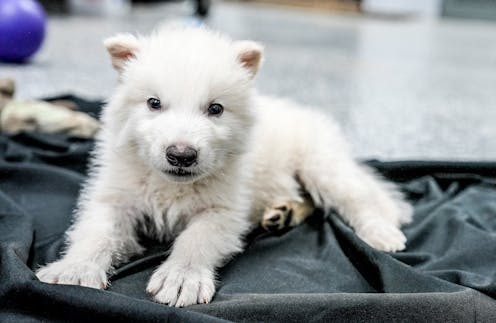
Over the past week, the media have been inundated with news of the “de-extinction” of the dire wolf (Aenocyon dirus) – a species that went extinct about 13,000 years ago.
The breakthrough has been achieved by Colossal Biosciences, a multibillion-dollar United States company that claims their goal is to restore biodiversity through the de-extinction of species.
The project is being celebrated and marketed as a conservation win. But does this technology really have the best interests of conservation in mind?
We argue as ecologists that genetic advancements like these, while they are major scientific and technological feats, still risk minimising the severity of the current extinction crisis.
Importantly, they take away focus from proven conservation efforts that are needed to protect the biodiversity that remains.
High-tech copies of wolves
First, it is important to recognise that Romulus, Remus and Khaleesi, the three “dire wolf” pups created, are not actually dire wolves.
Colossal carried out 20 edits in 14 genes of the grey wolf genome to create their “dire wolves” using a genetic technique called CRISPR-Cas9.
The grey wolf’s genome is 2,447,000,000 individual bases long. Would we consider a chimpanzee, with which we share 98.8% of our genome, to be human after 20 edits?
The reality is that these are three slightly modified grey wolves.
This de-extinction project has had millions of dollars poured into it – amounts of money most conservation programs could only dream of. There are proven solutions to help reverse biodiversity loss: habitat protection and restoration, the control of invasive species and the phasing out of fossil fuels.
However, these solutions are not slickly marketed as shiny, techno-fix packages like de-extinction. Instead, they are heavily underfunded.
Extinction is irreversible
Promoting extinction as reversible risks downplaying its gravity and legacy.
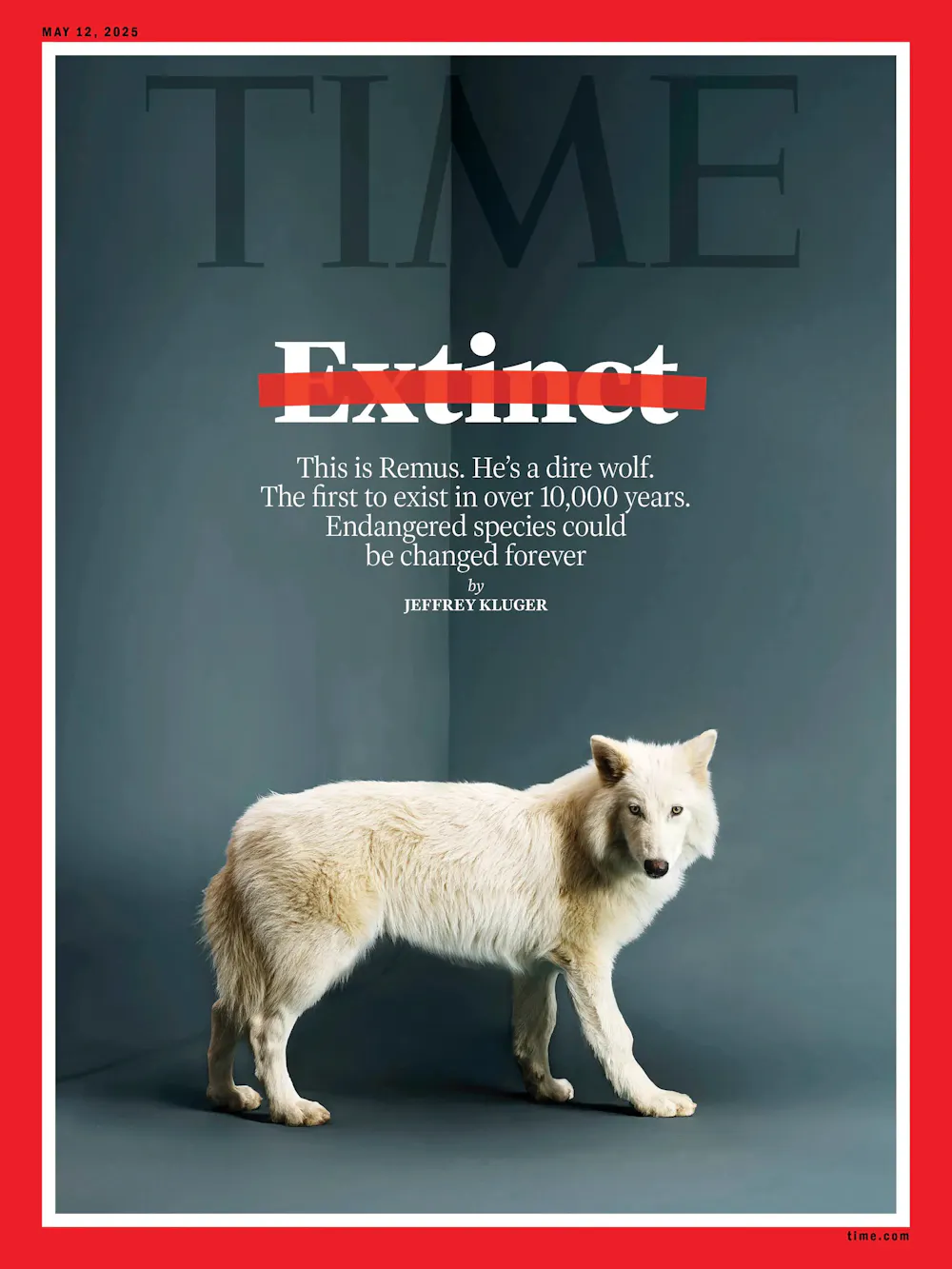
Headlines like the one that appeared on the front cover of TIME magazine – with the word “extinct” crossed out – seed a false hope that no matter what environmental damage is done, species loss can be easily undone.
The risk is that de-extinction will be used as an ultimate offset for any environmental impact.
Humans fear death. It is possibly our most primal instinct. We mourn and feel great sadness for the death of an individual, not only because they are gone, but because it is irreversible and final. Permanent.
That finality is the same for humans or any living animal. It is what makes fighting biodiversity loss such an urgent concern, so much so that people risk their lives to prevent it, with 150 wildlife rangers dying each year around the world in their fight to protect endangered species.

In the conservation movement, raising awareness of “martyr” species – like the northern white rhino and the passenger pigeon – helps underline the argument in favour of protecting current species. Framing extinction as temporary creates false hope and undermines motivation for real conservation action.
We might already be seeing this happen in response to the “de-extinction” of the dire wolf. Interior Secretary of the Trump administration, Doug Burgum, praised the new biotechnology advancement and used it as an argument for the removal of the US Endangered Species Act.
What good is bringing back species if there are no protective laws to address the drivers of their declines?
Would we protect the dire wolf even if it did come back?
It is deeply ironic that while millions are being spent recreating a dire wolf proxy, its cousin, the grey wolf, is heavily persecuted globally. Just last month, the Spanish government voted to overturn the legal protection that prevented wolves from being hunted north of the Duero River.
Other predators are affected, too. In Australia, the dingo, which has been shown to suppress invasive cats and red foxes, helping native biodiversity, is also heavily persecuted – just like the thylacine or Tasmanian tiger was, which Colossal aims to de-extinct as well.
If we can’t safeguard or protect habitat for apex predators today, in ecosystems that are already under immense pressure, what kind of world would we be bringing extinct species back into? Up to 150 species are considered to go extinct every day. No amount of genetic tech will solve this unless we address the root causes: habitat destruction, over-exploitation and climate change.
The de-extinction of the dire wolf may sound like a conservation breakthrough, but it risks distracting us from the protection of our current living species. This approach turns biodiversity conservation into a billionaire’s Jurassic Park fantasy instead of addressing the crisis we already know how to fix.
Authors: Martín Boer-Cueva, Ecologist and Environmental Consultant, Universidad Autónoma de Madrid


















