

Modern Australian
The Times

NZ’s over-reliance on roads for freight means natural disasters hit even harder. But there is a fix

  • Written by Cécile L'Hermitte, Senior Lecturer in Logistics and Supply Chain Management, University of Waikato
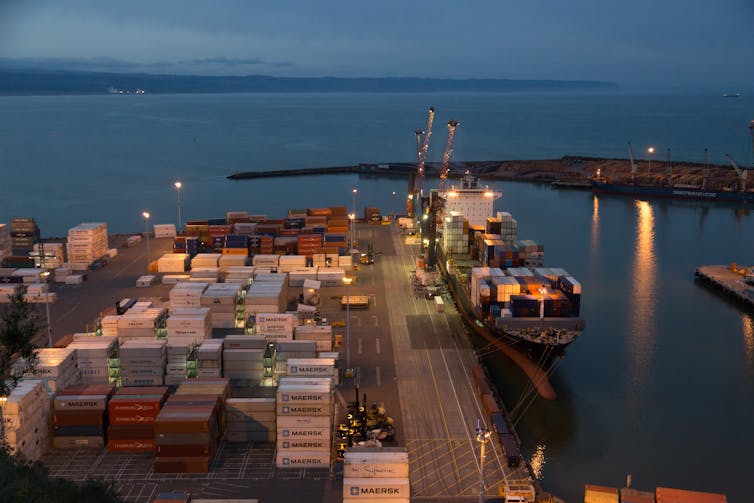
Napier port at night

In the aftermath of Cyclone Gabrielle, the driving time between Napier and Wairoa stretched from 90 minutes to over six hours, causing major supply chain delays. Retail prices rose and shoppers faced empty shelves.

Natural hazards such as earthquakes and flooding can wreak havoc on Aotearoa New Zealand’s freight system. These crises can cause extensive road damage, isolating communities and creating disruptions in supply chain operations.

Cyclone Gabrielle was by no means a one-off. The 2021 flooding in Canterbury, for example, forced trucks to travel nearly 900 extra kilometres between Christchurch and Timaru, extending the travel time from two to 13 hours.

Severe weather events, the pandemic and the ongoing dispute about replacing the Cook Strait ferries have made the fragility of the freight system more apparent than ever.

To be fair, natural hazards are beyond our control. But resilience can be increased. Our new research identified the main vulnerabilities in the country’s freight system and analysed the factors leading to post-disaster disruptions and shortages on shelves.

The key to reducing freight disruptions, we found, is embracing and investing in the different ways goods can be moved around the country. In particular, using the thousands of kilometres of coastline offers another way to get items from one region to another.

Napier port at night
Rather than relying almost exclusively on the road network to move products, the government should invest in shipping infrastructure. Rachel Moon/Shutterstock

Over-reliance on roads

New Zealand’s freight system is heavily reliant on roads, with trucks carrying close to 93% of the domestic freight tonnage.

But as they are currently organised, other potentially useful forms of transport such as rail and coastal shipping are not great alternatives. Non-road options run on timetables, for example, resulting in longer transit times.

And unlike road transport, which can move products directly between two points, rail and coastal shipping require multiple points of contact from where the goods are produced through to where they are sold.

As a result, when a disaster hits, alternative road routes are typically used to maintain freight deliveries. The limited alternatives in the road network and the lack of roads that can withstand heavy freight can cause problems for trucking companies. Both travel distances and transit times can increase.

When this happens, more trucks and drivers are needed, but these are already in short supply. The transport industry has been struggling to fill positions, with an estimated shortfall of thousands of drivers across the country.

This is compounded by the shortage of trucks, particularly specialised vehicles such as refrigerated units, which are essential for transporting perishable goods.

NZ’s long coastlines offer options

Government policy has a key role to play in addressing these problems and the lack of resilience in the national infrastructure system. In a country with long coastlines, reducing reliance on road transport and developing coastal shipping should be considered.

By shifting a portion of freight to coastal shipping, the demand for trucks and drivers can be reduced. This would also ensure reliable freight movements between the North and the South Islands when the ferry services are disrupted.

Finally, investing in coastal shipping would create a more flexible and resilient transport system where goods can shift rapidly from road to sea after a disaster.

Achieving this would require infrastructure improvements at our domestic seaports and additional vessels to increase the frequency of service. There would also need to be operational integration between road, rail and sea, with synchronised timetables for shorter transit times.

There will inevitably be another natural disaster that disrupts the freight system, causing delays, empty shelves and increased prices. Diversifying the transport options would increase resilience and keep those goods moving.

Authors: Cécile L'Hermitte, Senior Lecturer in Logistics and Supply Chain Management, University of Waikato


Read more https://theconversation.com/nzs-over-reliance-on-roads-for-freight-means-natural-disasters-hit-even-harder-but-there-is-a-fix-253008

A Digital Preparation Checklist For International Medical Conferences

An international medical conference compresses many responsibilities into a few days. A delegate may need to present research, move between venues, ...

The Growing Popularity of Lab Grown Diamonds in Sydney and Hong Kong

The diamond industry has changed significantly in recent years as more buyers seek ethical, affordable, and sustainable alternatives to mined diamon...

Modern AI SEO Agency vs Traditional SEO: What’s the Difference

Search engine optimisation has changed dramatically over the past few years. Search engines have become smarter, user behaviour has evolved, and bus...

Caravan Travel for Modern Australian Getaways: Plan a Comfortable Holiday

A family road trip is one of the best ways to explore Australia together. And, travelling by caravan gives you the freedom to take your time, stop a...

Mini Excavator and Trailer Package for Sale: What I Buy as One Deal in 2026

The first client who asked me for a mini excavator and trailer package for sale wasn’t trying to save a few hundred dollars on shipping. They we...

Make Dad a Guest in His Own Home This Father’s Day

Father’s Day can accidentally turn Dad into the unpaid event manager of his own celebration. He lights the barbecue, finds extra chairs, checks wh...

Where to Enjoy Your Off-Road Caravan on the Gold Coast

With a caravan, you can travel anywhere and everywhere without battling the rush of the peak holiday season or last-minute reservations. While the r...

How Osteopathy Supports Recovery from Sciatica and Nerve Pain

Sciatica isn't just annoying. It's genuinely painful. It sits deep in your glute and shoots straight down the back of your leg. It turns something as...

The Winter Jewellery Edit: Five Pieces You'll Wear All Season

As wardrobes shift to cosy knits, tailored coats and rich seasonal textures, jewellery becomes the finishing touch that pulls every winter outfit to...

7 Signs It's Time to Upgrade Your Piston Air Compressor

If you run a workshop, panel shop, or fabrication business anywhere around Perth, you already know what heat and dust do to equipment over a few sum...

How Long Do Bathroom Renovations Melbourne Take? Step-by-Step Process Explained

Planning a bathroom renovation is exciting, but one of the biggest questions homeowners ask is, "How long will it take?" While every project is uniq...

Why Your Skin Breaks Out: The Science of Acne Explained

Acne is the most common skin condition in the world. An estimated 85% of people experience it at some point between the ages of 12 and 24, and a gro...

10 Swimwear Trends Australian Women Are Wearing This Summer

Every Australian summer brings a fresh wave of swimwear trends, but some styles have much greater staying power than others. While fashion constantly ...

Why Regular Skills Updates Are Essential for Licensed Security Officers

A guard at a Brisbane shopping centre gets a call about a shoplifter who's turned aggressive.  They’ve done the job for six years. But their de-...

10 Benefits of Choosing Professional Tutoring Penrith Services

Every student has unique learning strengths, challenges, and academic goals. While classroom teaching provides essential knowledge and structure, so...

Sunshine Coast Baby Classes Prove Big Hit Among First-Time Mums

There's a movement gaining traction on the Sunshine Coast, providing a village of support, socialisation and relief for first-time mothers and babie...

Father's Day Gift Ideas for Men Who Are Hard to Buy For

Some dads are easy to buy for. Others do not want anything, already have everything, or give you the classic "don't worry about me" answer every yea...

Top 5 Mistakes That Wear Out Your Brakes Faster

Brakes don't need frequent replacements like oil changes do.   But a lot of the wear happens quietly, over months, because of habits most drivers...
















