

The Brooke Bellamy accusations join a long tradition of cookbook scandals – from Belle Gibson to bone broth formula
- Written by Lauren Samuelsson, Associate Lecturer in History, University of Wollongong
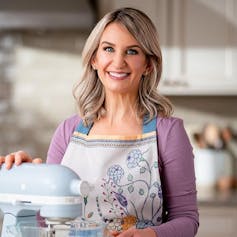
Plagiarism accusations against Brooke Bellamy, first brought to light by Nagi Maehashi on her website RecipeTin Eats, continue to emerge. Today, the Daily Telegraph reported Bellamy has been dropped as an ambassador for the Academy for Enterprising Girls’ program for young girls in business. And a second cookbook author has come forward.

High-profile US baker, food blogger and cookbook author Sally McKenney, of Sally’s Baking Addiction, prides herself on her well-tested recipes (like Maehashi). She claims Bellamy reproduced her recipe for “Best Vanilla Cake” (first published in 2019), both in her cookbook, Bake with Brooki, and on her YouTube channel. Bellamy has denied all allegations, including these latest ones. I’m not suggesting plagiarism has occurred, only that allegations have been made.
While this is the latest cookbook-related scandal to rock the culinary world, there is a long history of plagiarism, fraud and just plain misfortune that has plagued cookbook publishing – from Belle Gibson’s cancer story and Pete Evans’ bone broth formula, to lesser known stories. Here are some others that have made the headlines.
Makan, Masterchef and copied memories
In October 2021, Bloomsbury Absolute announced it was withdrawing Makan, the debut cookbook of Singaporean-born British chef Elizabeth Haigh, “due to rights issues”.

American-Singaporean author Sharon Wee alleged “certain recipes and other content” had been “copied or paraphrased without my consent” from her memoir-cookbook, Growing Up in a Nonya Kitchen, published nearly a decade earlier, in 2012. Haigh, a contestant on UK Masterchef and recipient of a Michelin star, declined media requests for comment.
She was accused of not only reproducing 15 of Wee’s mother’s recipes in her book, but also copying large sections of Wee’s personal memories and family stories.
For example, The Guardian compared this passage from Haigh’s book:
By tradition, Nonya Aunties engaged all their senses when they cooked. It was really important to gauge the smells and colour of the gravy; feel the warmth of the charcoal or wok heat; listen to the sizzle of the rempah, and the best bit, taste constantly. The Aunties cooked by agak agak or ‘guesstimation’.
to this from Wee’s:
Traditionally, the Nonyas engaged all their senses when they cooked – it was important to gauge the colour of the gravy, smell the aroma of the spices, feel the warmth of the charcoal heat, listen to the rhythm of the pounding and most importantly, taste the final product when the cooking is finished. As such, recipes passed down the generations were inexact. Cooking was by estimation or what the Nonyas called agak-agak.
Apart from their single-sentence statement and the withdrawal of Makan from market, Bloomsbury Absolute remained silent about the allegations.
A successful recipe lawsuit
Issues with recipe plagiarism have been around for a long time. In the 1980s, a legal stoush ensued between Richard Olney and Richard Nelson.
 Olney had spent much of his culinary career in France and was the author of two cookbooks, French Menu Cookbook (1970) and Simple French Food (1974).
Nelson, the protégé of American culinary icon James Beard, published his book, American Cooking, in 1983. It copied up to 39 recipes wholesale from Simple French Food, as well as the work of other cookbook authors.
Nelson claimed innocence, stating repeatedly: “recipes don’t belong to anyone”. Olney filed a copyright infringement lawsuit, which was resolved in his favour in 1984.
This set an ethical, if not legal, precedent over the ownership of recipes. Nelson never professionally recovered.
Dangerous misinformation
Issues of plagiarism are one thing, but some cookbooks, like now Netflix-famous Belle Gibson’s The Whole Pantry can risk dangerous consequences.
Gibson was an early Australian “wellness” influencer who fabricated a diagnosis of brain cancer and claimed she cured herself of that cancer by eating a wholefood diet and shunning conventional medicine. In this case, the danger wasn’t with the recipes themselves, but lay in Gibson leading others to believe they could cure themselves with those recipes.
Olney had spent much of his culinary career in France and was the author of two cookbooks, French Menu Cookbook (1970) and Simple French Food (1974).
Nelson, the protégé of American culinary icon James Beard, published his book, American Cooking, in 1983. It copied up to 39 recipes wholesale from Simple French Food, as well as the work of other cookbook authors.
Nelson claimed innocence, stating repeatedly: “recipes don’t belong to anyone”. Olney filed a copyright infringement lawsuit, which was resolved in his favour in 1984.
This set an ethical, if not legal, precedent over the ownership of recipes. Nelson never professionally recovered.
Dangerous misinformation
Issues of plagiarism are one thing, but some cookbooks, like now Netflix-famous Belle Gibson’s The Whole Pantry can risk dangerous consequences.
Gibson was an early Australian “wellness” influencer who fabricated a diagnosis of brain cancer and claimed she cured herself of that cancer by eating a wholefood diet and shunning conventional medicine. In this case, the danger wasn’t with the recipes themselves, but lay in Gibson leading others to believe they could cure themselves with those recipes.
 Kaitlyn Dever as Belle Gibson in Apple Cider Vinegar, the Netflix version of the Whole Pantry scandal.
Netflix
In 2013, Gibson started an Instagram account in order to share her story and “help” others heal through food. She went on to launch an app, The Whole Pantry, in 2013 and its companion cookbook in 2014 – before her empire came crashing down.
A now iconic interview on 60 Minutes Australia followed an Age investigation that uncovered her lies: she never had cancer. Publisher Penguin confessed they hadn’t checked the validity of Gibson’s claims before publishing the book. It was pulled from shelves.
Yet another Australian embroiled in peddling dangerous nutrition information was paleo diet proponent and celebrity chef Pete Evans. In 2015, Evans released his book Bubba Yum Yum: The Paleo Way for New Mums, Babies and Toddlers. It was co-authored with nutritionist Helen Padarin and pro-paleo blogger Charlotte Carr.
Kaitlyn Dever as Belle Gibson in Apple Cider Vinegar, the Netflix version of the Whole Pantry scandal.
Netflix
In 2013, Gibson started an Instagram account in order to share her story and “help” others heal through food. She went on to launch an app, The Whole Pantry, in 2013 and its companion cookbook in 2014 – before her empire came crashing down.
A now iconic interview on 60 Minutes Australia followed an Age investigation that uncovered her lies: she never had cancer. Publisher Penguin confessed they hadn’t checked the validity of Gibson’s claims before publishing the book. It was pulled from shelves.
Yet another Australian embroiled in peddling dangerous nutrition information was paleo diet proponent and celebrity chef Pete Evans. In 2015, Evans released his book Bubba Yum Yum: The Paleo Way for New Mums, Babies and Toddlers. It was co-authored with nutritionist Helen Padarin and pro-paleo blogger Charlotte Carr.
 Pete Evans’ paleo book for babies and toddlers included a formula containing over ten times the safe daily amount of vitamin A for babies.
Steven Saphore/AAP
The book contained a recipe for a homemade baby formula, consisting of bone broth and liver. The recipe was criticised as dangerous.
The president of the Public Health Association of Australia said it contained over ten times the safe daily amount of vitamin A for babies. The book’s publication was delayed – and the recipe modified – before the book was released.
Typos, misprints and mistakes
Not all cookbook errors and controversies are as serious as plagiarism or misinformation. Sometimes, a simple typo can cause a lot of problems.
In 2010, Penguin Australia announced they would be pulping 7,000 copies of its recently released book, The Pasta Bible. They had been made aware of a typo in a recipe for tagliatelle with sardines and prosciutto. Instead of calling for black pepper to finish off the dish, the recipe read “salt and freshly ground black people”.
This was a costly mistake – however, it appears the controversy actually boosted sales of the book. Sales were up 275% the following fortnight.
Whose recipe is it anyway?
Cookbooks are bound to attract these sorts of issues, particularly questions about plagiarism. Recipe copyright is a grey area, recipes are designed to be shared, and often similar dishes can spring up in tandem.
What the accusations against Bellamy, Haigh and Nelson highlight is the potential for well known cookbook authors, celebrity chefs and influencers to profit from the labour of others without acknowledgement. To do so is exploitative. When labour and knowledge is stolen from recipe writers without such a high profile and social capital, who have no access to recourse, it is especially so. (Obviously, that’s not the case with these accusations, which have become public.)
Recipe development is difficult. An excellent cook or chef is not necessarily also an excellent recipe developer. Developing clear, concise, reproducible recipes is a real skill, which recipe developers hone over many years, with plenty of recipe testing.
The current popularity of influencer cookbooks creates a pressure to publish quickly, to profit on short-lived fame or popular gimmicks. We may see more controversies arise.
Authors: Lauren Samuelsson, Associate Lecturer in History, University of Wollongong
Pete Evans’ paleo book for babies and toddlers included a formula containing over ten times the safe daily amount of vitamin A for babies.
Steven Saphore/AAP
The book contained a recipe for a homemade baby formula, consisting of bone broth and liver. The recipe was criticised as dangerous.
The president of the Public Health Association of Australia said it contained over ten times the safe daily amount of vitamin A for babies. The book’s publication was delayed – and the recipe modified – before the book was released.
Typos, misprints and mistakes
Not all cookbook errors and controversies are as serious as plagiarism or misinformation. Sometimes, a simple typo can cause a lot of problems.
In 2010, Penguin Australia announced they would be pulping 7,000 copies of its recently released book, The Pasta Bible. They had been made aware of a typo in a recipe for tagliatelle with sardines and prosciutto. Instead of calling for black pepper to finish off the dish, the recipe read “salt and freshly ground black people”.
This was a costly mistake – however, it appears the controversy actually boosted sales of the book. Sales were up 275% the following fortnight.
Whose recipe is it anyway?
Cookbooks are bound to attract these sorts of issues, particularly questions about plagiarism. Recipe copyright is a grey area, recipes are designed to be shared, and often similar dishes can spring up in tandem.
What the accusations against Bellamy, Haigh and Nelson highlight is the potential for well known cookbook authors, celebrity chefs and influencers to profit from the labour of others without acknowledgement. To do so is exploitative. When labour and knowledge is stolen from recipe writers without such a high profile and social capital, who have no access to recourse, it is especially so. (Obviously, that’s not the case with these accusations, which have become public.)
Recipe development is difficult. An excellent cook or chef is not necessarily also an excellent recipe developer. Developing clear, concise, reproducible recipes is a real skill, which recipe developers hone over many years, with plenty of recipe testing.
The current popularity of influencer cookbooks creates a pressure to publish quickly, to profit on short-lived fame or popular gimmicks. We may see more controversies arise.
Authors: Lauren Samuelsson, Associate Lecturer in History, University of Wollongong 
















