

Locking up legally innocent people before their trial is straining Victoria’s prisons
- Written by: Marilyn McMahon, Deputy Dean, School of Law, Deakin University
Victoria is facing an incarceration crisis. Despite a new prison (Ravenhall) opening in 2017, the state’s prison system is under enormous strain, with the premier recently announcing prefabricated prison cells would be introduced in existing prisons to cope with overcrowding.
Recent research by Federal MP Andrew Leigh argues we are now in a “second convict age”, imprisoning a greater proportion of the adult population than at any point since 1899. Imprisoning people before their trial contributes to this startling situation.
In fact, a key driver of the increasing prison population is the unprecedented increase in the number of people imprisoned before trial. These are people who aren’t granted bail and are being held in prison “on remand” (pending trial). In fact, nearly two in five prisoners are currently on remand.
There are now more legally innocent people in jail in Victoria than there were convicted prisoners in 2005.
But Victoria is not unique. A growth in the remand population has been taking place in other Australian states and territories, with even higher proportions of prisoners being held on remand in South Australia and the Australian Capital Territory.
The changing function of bail
The increase in the number of people being held in prison before their trial is due to a change in the function of bail.
Traditionally, decisions were primarily based on an assessment of whether the person seeking bail would, if released back into the community, then turn up at court for the hearing of their case. Anyone deemed to be unlikely to do so would be held in prison until their trial.
Recent Victorian parliamentary debates make it clear that decisions about bail now focus on protecting the community from crimes that might be committed if people are released on bail.
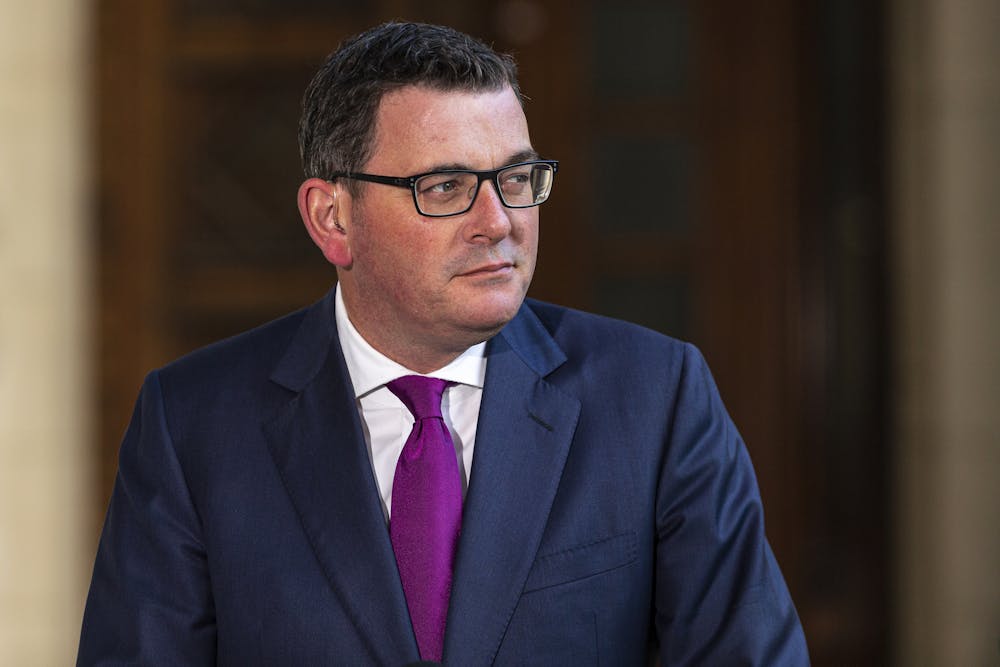 Victoria Premier Daniel Andrews recently announced prefabricated prison cells would be used to cope with the overcrowding.
Daniel Pockett/AAP
Victoria Premier Daniel Andrews recently announced prefabricated prison cells would be used to cope with the overcrowding.
Daniel Pockett/AAP
This means that bail now essentially functions as a means of crime prevention.
And legislative changes have made it harder to get bail in Victoria. There are now more than 100 offences where the person applying for bail must establish why they should not be detained in custody. These offences include murder but also many drug and assault offences.
This “reverse onus” is contrary to established legal principles that presume innocence and place responsibility on the prosecution to establish the case against an accused person.
The exception, not the rule
Several high profile crimes underpin the concerns about people on bail committing offences. Adrian Bayley was on bail when he raped and murdered Jill Meagher in 2012. Sean Price was on bail and a supervision order when he killed Masa Vukotic in 2015.
Read more: After Bourke St, Victoria should not rush in on bail reform
And community outrage was amplified when it became known that James Gargasoulas was on bail when he killed six people and injured 27 more in Bourke Street in January 2017.
With such terrible crimes dominating parliamentary debates and media reporting, it is hard to remember that violent offending by those released on bail is the exception rather than the rule.
Most people do not commit an offence while on bail. If they do, the most likely offences are property, traffic and justice offences.
In Victoria, we are imprisoning far too many people as a way of dealing with serious problems created by a small number of offenders.
Read more: The folly of writing legislation in response to sensational crimes
The downside of imprisoning people before trial
We spend a lot of money putting a large number of people in prison before their trial. But the benefits aren’t clear.
Imprisoning those charged with, but not convicted of, a crime breaches the right to liberty and the presumption of innocence.
Being imprisoned disrupts family relationships, can lead to the loss of employment, makes preparing for trial more difficult and exposes people to the dangers of a prison environment.
Women and Indigenous Australians are particularly disadvantaged, with more Indigenous Australians dying on remand than after being sentenced.
Read more: Legal and welfare checks should be extended to save Aboriginal lives in custody
And women are more likely to be denied bail than men. Yet most women who are being held on remand in Victoria have not been charged with violent crimes but are accused of drug, burglary and other property offences. Just over half of them don’t even apply for bail.
There are more disadvantages associated with imprisonment before trial. Some people will be found not guilty when their trial takes place or, if convicted, given a non-custodial sentence, such as a community corrections order or a fine. These people receive no compensation for the time they have spent in prison.
Troublingly, there is also emerging evidence that denying bail and imprisoning people makes it more likely they will commit a criminal offence in the future.
Read more: Babies and toddlers are living with their mums in prison. We need to look after them better
Carefully controlled research from the United States indicates pre-trial imprisonment itself has this “downstream” effect. It’s a sad irony that imprisoning people before trial to increase community safety may actually contribute to later offending that places the community at risk.
Collectively, this information suggests we need to more accurately identify those who present a serious risk to community safety and abandon the current broad approach that is resulting in too many people being detained.
We should then re-invest the money being spent on imprisoning people before trial into more productive activities, such as housing and drug and alcohol services.
This greater support would enable more people to be released on bail and get the services they need, contributing to their rehabilitation - the best form of community protection.
Authors: Marilyn McMahon, Deputy Dean, School of Law, Deakin University


















