

Ice baths are booming in popularity – but they come with health risks
- Written by Samuel Cornell, PhD Candidate in Public Health & Community Medicine, School of Population Health, UNSW Sydney
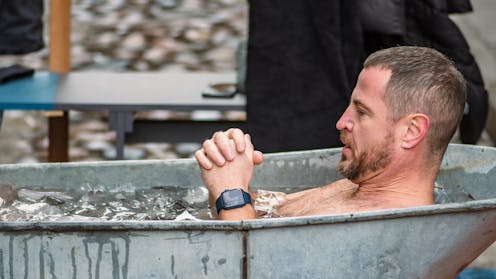
Walk through any trendy suburb and you might find a new “wellness” studio offering ice baths or “contrast therapy” (a sauna and ice bath combo).
Scroll social media, and you’re likely to come across influencers preaching the cold plunge gospel with cult-like zeal.
Ice baths have gone mainstream. Initially practised mainly among high-performance athletes, cold water immersion is now a booming business model: sold as recovery, discipline and therapy all in one.
But the benefits are questionable and, importantly, ice baths can have health risks – particularly for people who have limited experience using them.
From Roman times to today
Cold water immersion isn’t a new concept.
The “frigidarium” – a room with a cold plunge pool or bath – was a feature in most Roman bathhouses.
For decades, athletes have used cold water immersion, such as swims in cold water, for recovery.
But in recent years, with the proliferation of commercial cold plunge centres, there’s been an explosion in people using ice baths recreationally.
Many people are even setting up their own ice baths at home. The global cold plunge tub market was valued at close to US$338 million in 2024 and is projected to reach nearly $483 million by 2033.
Social media shows serene influencers meditating through the pain, claiming it boosts mental health, serotonin, testosterone, and their metabolism. But does the evidence stack up?
Ice baths can reduce muscle soreness after intense training, however the effect is modest and short-lived.
Some research shows cold water immersion can improve mood after a single exposure in young, healthy people, but other research doesn’t find these benefits.
Most claims about mental health, testosterone and weight loss aren’t backed by strong evidence. Rather, they’re anecdotal and amplified by influencers.
What does an ice bath involve?
At commercial establishments, patrons can often use the ice baths as they please during a booked session. Ice bath temperatures often range anywhere from 3°C to 15°C. There normally isn’t actual ice in the bath, but some people add blocks of ice to their ice baths at home.
Businesses offering ice baths don’t always actively supervise patrons or monitor a person’s time in the ice bath. They may leave their customers to self-regulate, assuming people will know to get out of the water before they pass their body’s limits.
So what are the risks?
Cold water immersion triggers a powerful physiological response. When you hit cold water below 15°C, your body launches into cold shock. Gasping occurs and breathing becomes rapid and uncontrollable. Heart rate spikes. Blood pressure rises.
Staying in the water for too long can lead to hypothermia, a condition where a person’s core body temperature drops dangerously low.
Shivering may begin within minutes in cold water. Confusion or fainting are more serious signs that hypothermia may be developing.
Occasionally, this “cold shock” response can lead to a heart attack or stroke – especially if you have an undiagnosed condition affecting your heart, blood vessels or brain.
As far back as 1969, researchers found even experienced swimmers could struggle after just a few minutes in cold water. Participants were immersed in water at 4.7°C while fully clothed and asked to swim as if trying to reach safety. Some developed serious respiratory distress and had to stop swimming within as little as 90 seconds, well before any measurable drop in core body temperature.
Even after you get out, your core temperature can continue to fall – a phenomenon known as afterdrop. So you can encounter problems, such as collapse, even after leaving the water.
And even young, healthy people can be caught off guard. The body isn’t designed to endure freezing water for extended periods.
Recently one of us (Sam Cornell) had to provide first aid at an ice bath venue in Sydney. A young man collapsed after staying in an ice bath for ten minutes. He was shivering uncontrollably and clearly suffering from cold shock.
Cold exposure can also cause long-term damage to nerves and blood vessels in the hands and feet, known as non-freezing cold injury. This is more likely if someone spends an extended period immersed in cold water. Symptoms such as numbness, pain and sensitivity to cold can persist for years.
6 tips for safer recreational ice bath use
The ice bath trend is part of a broader wellness movement, promoted to young men in particular, where discomfort is repackaged as discipline. Push through the pain. Master your body. If you feel terrible, you must be doing it right.
But behind the hype lies a less appealing truth. Ice baths can be dangerous.
We advise caution, but if you do choose to try an ice bath, treat it seriously and follow these tips to reduce the risk of harm.
1. Talk to your doctor: get checked out first. If you or your family have any heart, stroke or respiratory risk, skip it
2. Know your limits: being fit doesn’t protect you from cold shock
3. Start gradually: begin with short warm to cold showers before full immersion
4. Never go alone: always have someone with you, especially if you’re new to ice baths
5. Keep it short and watch the temperature: limit sessions to 3–5 minutes and remember, problems can still occur after you get out
6. Recognise the signs of danger: symptoms such as shivering, numbness and confusion can all seem like part of the experience to someone bent on pushing themselves. But these can be signs of hypothermia.
Authors: Samuel Cornell, PhD Candidate in Public Health & Community Medicine, School of Population Health, UNSW Sydney

















