

6 ways to stop daylight saving derailing your child’s sleep
- Written by Julie Green, Principal Fellow, Murdoch Children's Research Institute
Daylight saving will begin this weekend across most of Australia, signalling warmer weather, longer days and new opportunities for children to make the most of time outside.
It can also mark the start of a rough patch in the sleep department. Children’s body clocks can struggle to adjust as the hour shift forwards means they aren’t tired until later.
There are things parents can do to ease the transition to daylight saving and planning ahead is key. And if things get wobbly, there are also strategies to get them back on track.
But first, let’s look at where the problem starts.
Read more: Spring forward, fall back: how daylight saving affects our sleep
Children’s body clocks
The body clock – also known as our circadian rhythm – controls when we sleep and wake.
Several environmental cues affect our body clock, the most common of which is the light-dark cycle. When it’s dark, our bodies produce more of the hormone melatonin, which helps bring on sleep. And when it’s light, our bodies produce less, so we feel more awake.
When daylight saving begins, children’s bodies aren’t getting the usual environmental signals to sleep at their regular time.
But a later bedtime means getting less sleep overall, which can impact on their concentration, memory, behaviour and ability to learn.
So, how do you plan for the daylight saving switchover?
1. Take a sleep health check
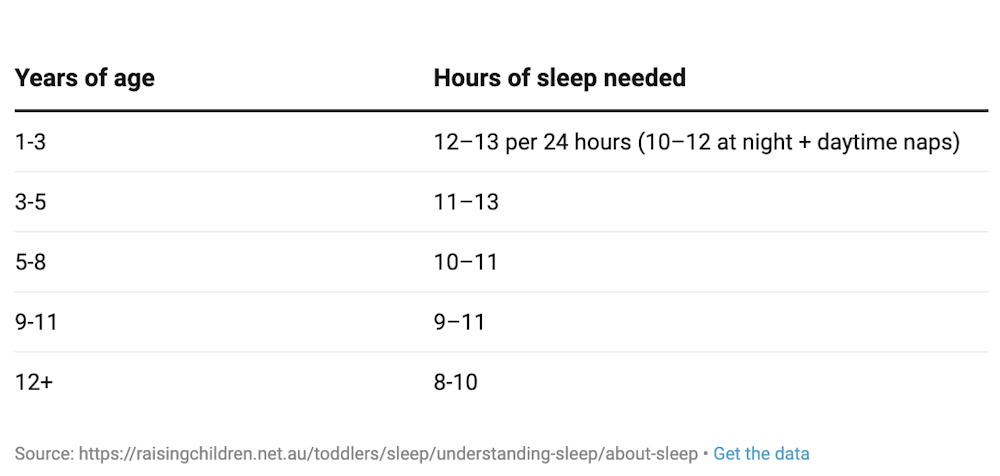
This is a good opportunity to look at how your child is sleeping and whether they’re getting enough sleep overall. Individual needs will vary but as a guide, here’s what you should aim for:
 Most children wake themselves in the morning, or wake easily with a gentle prompt, if they’re getting enough good-quality sleep.
But sleep problems such as trouble getting to sleep and staying asleep are common and persistent. Around 50% of problems that begin before a child starts school continue into the early school years. So, early intervention makes a difference.
Read more:
Sleep problems that persist could affect children's emotional development
2. Review the bedtime routine
As well as the light-dark cycle, children’s circadian rhythms are synchronised with other environmental cues, such as timing around bath and dinner. A positive routine in the hour before bed creates consistency the body recognises, helping children wind down in preparation for sleep.
Bedtime routines work best when the atmosphere is calm and positive. They include a bath, brushing teeth and quiet play – like reading with you – some quiet chat time, and relaxing music.
Most children wake themselves in the morning, or wake easily with a gentle prompt, if they’re getting enough good-quality sleep.
But sleep problems such as trouble getting to sleep and staying asleep are common and persistent. Around 50% of problems that begin before a child starts school continue into the early school years. So, early intervention makes a difference.
Read more:
Sleep problems that persist could affect children's emotional development
2. Review the bedtime routine
As well as the light-dark cycle, children’s circadian rhythms are synchronised with other environmental cues, such as timing around bath and dinner. A positive routine in the hour before bed creates consistency the body recognises, helping children wind down in preparation for sleep.
Bedtime routines work best when the atmosphere is calm and positive. They include a bath, brushing teeth and quiet play – like reading with you – some quiet chat time, and relaxing music.
 Reading stories before bed is calming and helps create a predicable routine.
Shutterstock
Keeping quiet time consistent makes it easier to say goodnight and lights out. Doing a quick check on whether they’ve had a drink, been to the toilet and so on can help address things they might call out for later.
Gently reminding children what you expect and quiet praise for staying in bed helps too.
3. Keep regular sleep and wake times
Sticking to similar daily bedtimes and wake times keeps children’s circadian rhythms in a regular pattern.
Read more:
Regular bed times as important for kids as getting enough sleep
It’s best to keep this routine during weekends and holidays – even though these are times when older children in particular are eager for later nights. This is worth remembering to avoid a double whammy of sleep disruption as daylight saving and the school holidays coincide.
If your child is not tiring until later, try making bedtime 15 minutes earlier each day until you reach your bedtime target.
4. Control the sleep environment
Darkening the room is an important cue to stimulate melatonin production. This can be challenging during daylight saving, depending on your home. Trying to block out light – say, with thicker curtains – is a good strategy. Keeping the amount of light in the room consistent will also make for better sleep.
Research suggests the blue light emitted by screens from digital devices might suppress melatonin and delay sleepiness. It’s advisable to turn screens off at least an hour before bed and to keep them out of the bedroom at night.
Reading stories before bed is calming and helps create a predicable routine.
Shutterstock
Keeping quiet time consistent makes it easier to say goodnight and lights out. Doing a quick check on whether they’ve had a drink, been to the toilet and so on can help address things they might call out for later.
Gently reminding children what you expect and quiet praise for staying in bed helps too.
3. Keep regular sleep and wake times
Sticking to similar daily bedtimes and wake times keeps children’s circadian rhythms in a regular pattern.
Read more:
Regular bed times as important for kids as getting enough sleep
It’s best to keep this routine during weekends and holidays – even though these are times when older children in particular are eager for later nights. This is worth remembering to avoid a double whammy of sleep disruption as daylight saving and the school holidays coincide.
If your child is not tiring until later, try making bedtime 15 minutes earlier each day until you reach your bedtime target.
4. Control the sleep environment
Darkening the room is an important cue to stimulate melatonin production. This can be challenging during daylight saving, depending on your home. Trying to block out light – say, with thicker curtains – is a good strategy. Keeping the amount of light in the room consistent will also make for better sleep.
Research suggests the blue light emitted by screens from digital devices might suppress melatonin and delay sleepiness. It’s advisable to turn screens off at least an hour before bed and to keep them out of the bedroom at night.
 Turn screens off an hour before bed.
Ternavskaia Olga Alibec/Shutterstock
Read more:
Wired and tired: why parents should take technology out of their kid's bedroom
Temperature plays a role in priming children for sleep, as core body temperature decreases in sync with the body clock. So, check the room, bedding or clothing aren’t too hot. Between 18℃ and 21℃ is the ideal temperature range for a child’s bedroom.
5. Consider what happens during the day
Making sure your child gets plenty of natural daylight, especially in the morning, keeps them alert during the day and sleepy in the evening.
Daytime physical activity also makes children tired and ready for a good night’s sleep.
For children over five, keep naps early and short (20 minutes or less) because longer and later naps make night sleep harder.
For younger children, too little daytime sleep can make them overtired and therefore harder to settle into bed.
6. Focus on food and drink
Think about dinner timing because feeling hungry or full before bedtime can delay sleep by making children too alert or uncomfortable.
It’s also important to avoid caffeine in the late afternoon and evening. Caffeine is in chocolate, energy drinks, coffee, tea and cola.
Read more:
Kids' diets and screen time: to set up good habits, make healthy choices the default at home
In the morning, a healthy breakfast helps kick-start your child’s body clock at the right time.
Finally, worries, anxiety, and common illnesses can also cause sleep problems. If problems last beyond two to four weeks, or you’re worried, see your GP.
Turn screens off an hour before bed.
Ternavskaia Olga Alibec/Shutterstock
Read more:
Wired and tired: why parents should take technology out of their kid's bedroom
Temperature plays a role in priming children for sleep, as core body temperature decreases in sync with the body clock. So, check the room, bedding or clothing aren’t too hot. Between 18℃ and 21℃ is the ideal temperature range for a child’s bedroom.
5. Consider what happens during the day
Making sure your child gets plenty of natural daylight, especially in the morning, keeps them alert during the day and sleepy in the evening.
Daytime physical activity also makes children tired and ready for a good night’s sleep.
For children over five, keep naps early and short (20 minutes or less) because longer and later naps make night sleep harder.
For younger children, too little daytime sleep can make them overtired and therefore harder to settle into bed.
6. Focus on food and drink
Think about dinner timing because feeling hungry or full before bedtime can delay sleep by making children too alert or uncomfortable.
It’s also important to avoid caffeine in the late afternoon and evening. Caffeine is in chocolate, energy drinks, coffee, tea and cola.
Read more:
Kids' diets and screen time: to set up good habits, make healthy choices the default at home
In the morning, a healthy breakfast helps kick-start your child’s body clock at the right time.
Finally, worries, anxiety, and common illnesses can also cause sleep problems. If problems last beyond two to four weeks, or you’re worried, see your GP.
Authors: Julie Green, Principal Fellow, Murdoch Children's Research Institute
Read more http://theconversation.com/6-ways-to-stop-daylight-saving-derailing-your-childs-sleep-123871

















