
Ultrafast fashion brand Princess Polly has been certified as ‘sustainable’. Is that an oxymoron?
- Written by: Harriette Richards, Senior Lecturer, School of Fashion and Textiles, RMIT University
Last week, the ultrafast fashion brand Princess Polly received B Corp certification. This certification is designed to accredit for-profit businesses that provide social impact and environmental benefit.
Established on the Gold Coast in 2010, a 50% stake in Princess Polly was acquired by United States-based A.K.A. Brands in 2018.
Since then, it has grown its global reach as a low-cost, high-turnover online retailer.
So can ultrafast fashion ever be sustainable?
Who is Princess Polly?
Princess Polly distinguishes itself from other fast fashion retailers through a mission to “make on-trend, sustainable fashion accessible to everyone”.
As part of this mission, Princess Polly is a participant of the United Nations Global Compact, which commits them to sustainable procurement. The 2024 Baptist World Aid Ethical Fashion Report placed them in the top 20% of 460 global brands assessed.
Yet, on the sustainability rating website Good On You, Princess Polly receives a “Not Good Enough” grade, due to their lack of action on reducing plastic and textile waste or protecting biodiversity in their supply chains, and the absence of evidence that they pay their workers a living wage.
Regardless of how they make their clothes, Princess Polly produces a lot. At the time of writing, the brand has 3,920 different styles available on their website (excluding shoes and accessories).
Of those, 34% (1,355 styles) are listed as “lower impact,” which means items are made using materials such as organic cotton and linen, recycled polyester and cellulose fabrics. There are also 720 items on the website currently listed as “new”: their daily new arrivals means they are constantly adding fresh items for sale.
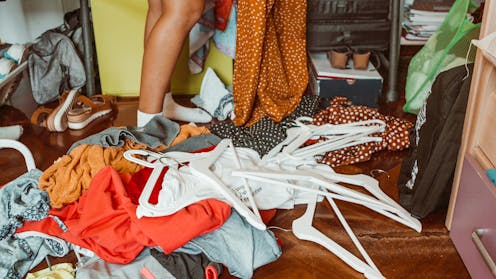
Overproduction, no matter what the garments are made from, is inherently wasteful. Even when clothes are purchased (and 10–40% of the clothing produced each year is not sold), the poor quality of fast fashion items means that they end up in landfill faster and stay there for longer, contributing to the ongoing environmental disaster.
Sustainability communication
In Australia, 1,096 companies are accredited with B Corp status, including 152 fashion businesses.
B Corp assesses the practices of a company as a whole, rather than focusing on one single social or environmental issue. Businesses must score at least 80 out of a possible 250+ points in the B Impact Assessment to achieve accreditation.
Organisations are assessed in five key areas – community, customers, environment, governance and workers – and must meet high standards of social and environmental performance, transparency and accountability.
Third-party accreditations such as B Corp, Fairtrade and Global Organic Textile Standard are often used by brands as a marketing tool.
These certifications can enhance consumer trust without the need for detailed explanations. For fashion brands, accreditation can help them stand out in a crowded market. They can provide legitimacy, attract ethical fashion consumers and reduce consumer scepticism.
While B Corp aims to provide assurance to consumers, activists have accused it of greenwashing. In 2022, the organisation came under fire for accrediting Nespresso, a brand owned by Nestlé, which has a reputation for poor worker rights and sourcing policies.
B Corp is now facing renewed condemnation for issuing certification to Princess Polly.
Who needs certification?
Other B Corp certified Australian fashion brands such as Clothing the Gaps and Outland Denim have built their reputations on their ethical credentials. For values-driven fashion-based social enterprises such as these, accreditations can provide valuable guarantees regarding ethical processes.
According to our research, however, there are several barriers fashion-based social enterprises face when pursuing ethical accreditation.
The cost of accreditation, both financial and in terms of time, skills and resourcing, is a significant challenge. And there is no certification that covers all aspects of environmental sustainability and ethical production. As a result, fashion-based social enterprises often require multiple accreditations to fully communicate the breadth of their ethical commitments.
Despite the costs involved, if fashion-based social enterprises don’t acquire certain certifications they risk being ineligible for government grants and tenders, such as social procurement contracts.
Differences between fashion-based social enterprises and fast fashion brands are stark. While Clothing the Gaps, Outland Denim and Princess Polly now all hold B Corp certification, the former score much more highly on the B Impact Assessment. The value and credibility of the certification is diminished when it extends to unsustainable ultrafast fashion.
Is it possible for fast fashion to ever be sustainable?
The question of whether fast fashion can ever be sustainable has become increasingly heated since the advent of ultrafast fashion, where brands produce on demand and sell directly online.
Fast fashion took seasonal trends from high fashion runways and made them available to consumers at low costs within weeks. Ultrafast fashion takes trends from social media and reproduces them extremely cheaply for mass consumption within days.
Both fast and ultrafast fashion’s low-cost, high-volume models encourage consumers to value quantity over quality. Using permanent sales and discounts, these brands incentivise multiple purchases of items that may never actually be worn. Online “micro trends” and “haul” videos further spur this overconsumption.

Princess Polly may be using more sustainable textiles and engaging in more ethical forms of production than some of its ultrafast fashion counterparts. But this is not enough when the business model itself is unsustainable. Accreditations such as B Corp are unable to account for this nuance.
Princess Polly claims to make sustainable fashion, yet it is also proudly trend driven. As an ultrafast fashion brand, it relies on overproduction and overconsumption. The idea that this can ever be “sustainable” is simply an oxymoron.
Authors: Harriette Richards, Senior Lecturer, School of Fashion and Textiles, RMIT University


















