

Can I eat instant noodles every day? What does it do to my health?
- Written by: Lauren Ball, Professor of Community Health and Wellbeing, The University of Queensland
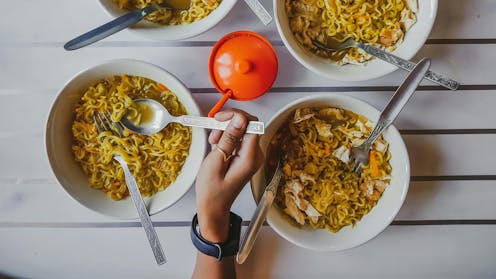
Instant noodles are cheap, quick and comforting – often a go-to snack or meal for students, busy workers, families and anyone trying to stretch their grocery budget.
In Australia, the instant noodle market continues to grow, as food costs rise and the popularity of Asian cuisines soars.
But what happens if they become an everyday meal? Can you survive, and thrive, on a daily diet of instant noodles?
Let’s explore what’s in an average pack, what that means for our health, and how to make noodles part of a more balanced meal.
Affordable, versatile, and culturally important
Instant noodles are incredibly accessible. A single serving is very cheap, can take just a few minutes to prepare and fill you up. They’re easy to store, have a long shelf life, and are available in almost every supermarket or corner shop.
Noodles also carry cultural significance.
For many international students and migrants, they’re a familiar taste in an unfamiliar place. A packet of Maggi mi goreng, a bowl of Shin Ramyun, or a serving of Indomie can instantly transport someone back to a childhood kitchen, a bustling night market, or a late-night supper with friends.
These dishes aren’t just quick meals – they hold memory, identity, and belonging. In a new environment, they offer both a full belly and a sense of home.
But what’s actually in a typical pack?
While instant noodles offer comfort and familiarity, their nutritional profile has room for improvement.
A standard packet of instant noodles is made from wheat flour noodles and a packet of flavour enhancers. Some fancier versions also include dried vegetables or crispy fried garlic.
On average, though, most packets are very high in salt: a typical serving can contain 600–1,500mg of sodium, which is close to or even above your recommended daily intake (the World Health Organization recommends less than 2,000mg sodium/day).
Over time, high sodium intake can strain the heart and kidneys.
Because they’re usually made from refined wheat (not wholegrains), instant noodles typically do not contain much fibre. Dietary fibre is important to help keep your digestion regular and support a healthy gut.
Instant noodles are also low in protein. You will feel full right after eating instant noodles because of the refined carbohydrates, but without added eggs, tofu or meat as a source of protein, that fullness will be short-lived. You will be hungry again soon after.
They are also low in nutrients such as vitamins and minerals. These matter because they help your body function properly and stay healthy.

What are the health risks of daily instant noodles?
Occasional instant noodles won’t harm you. But if they become your main source of nutrition, research suggests some potential longer-term concerns.
A study of South Korean adults found that frequent instant noodle consumption (more than twice a week) was associated with a higher risk of metabolic syndrome, especially among women. Metabolic syndrome is a group of conditions that together raise your risk of heart disease, diabetes and other health issues.
While this study doesn’t prove that instant noodles directly cause health concerns, it suggests that what we eat regularly can affect our health over time.
High sodium intake is linked to increased risk of high blood pressure, heart disease and stroke. Noodles have been linked to higher rates of metabolic syndrome, likely because of the sodium content. Most Australians already exceed recommended sodium limits, with processed foods as the main contributor.
Low fibre diets are also associated with poor gut health, constipation, and higher risk of type 2 diabetes and bowel cancer.
A lack of variety in meals can mean missing out on important nutrients found in vegetables, legumes, fruits and wholegrains.
These nutrients help protect your health in the long term.
How to make instant noodles healthier (and still tasty)
If noodles are on high rotation in your kitchen, there’s no need to toss them out completely.
Instead, you can upgrade your bowl with a few easy additions, by:
adding vegetables (toss in a handful of frozen peas, spinach, broccoli, carrots or whatever’s on hand to bump up your fibre, vitamins and texture)
including protein (add a boiled or fried egg, tofu cubes, edamame beans, shredded chicken or tinned beans to help you stay full longer and support muscle and immune health)
cutting back on the flavour sachet (these are often the main source of salt, so try using half or less of the sachet or mixing in low-sodium stock, garlic, ginger, herbs or chilli instead)
trying wholegrain or air-dried noodles (some brands now offer higher-fibre options made with buckwheat, brown rice or millet, so check the ingredients on the back of the packet to see the main source of grain).

So, should we ditch the noodles?
Not at all.
Like most foods, instant noodles can fit into a healthy diet, just not as the main event every day.
Think of your body like a car. Instant noodles are like fuel which can give you enough to get you moving, but not enough to keep the engine running smoothly over time.
Noodles definitely have a place in busy lives and diverse kitchens.
With a few pantry staples and simple tweaks, you can keep the comfort and convenience, while also adding a whole lot more nourishment.
Authors: Lauren Ball, Professor of Community Health and Wellbeing, The University of Queensland
Read more https://theconversation.com/can-i-eat-instant-noodles-every-day-what-does-it-do-to-my-health-262507


















