

How could we clean up the algal bloom?
- Written by: Dominic McAfee, Postdoctoral researcher, marine ecology, University of Adelaide
South Australia’s catastrophic harmful algal bloom now affects almost 30% of the state’s coastline, stretching from the Coorong in the state’s southeast to the seafood-rich Spencer Gulf to the west.
With no end in sight, many South Australians are searching for solutions.
Trials of physical, chemical and biological solutions have been run around the world at much smaller scale, usually in aquaculture fish pens and leases.
Unfortunately, the enormous Karenia mikimotoi bloom in SA is far too big for any of these technologies. But they could provide temporary relief at high-risk sites, such as vital breeding grounds for vulnerable species such as the giant Australian cuttlefish.
How can algae be managed at smaller scales?
This disaster arose from a triple threat: marine heatwaves linked to climate change, floodwaters and cold upwellings carrying nutrients algae need, and marine habitat loss leaving coasts extra vulnerable. Prevention is the best cure – so we need to tackle each of these threats.
In the meantime, the bloom’s persistence presents an opportunity to experiment with potential solutions.
Chemical
Anyone who has managed a pool knows how effective chemicals are in removing unwanted algae. But in the sea, chemicals can have unintended impacts. There’s more than one type of algae out there and we don’t want to kill the good guys.
In response to algal blooms at sea, researchers have even tried chemical crop-dusting by planes.
Clay has been used against marine algal blooms for more than 50 years in China and Japan. The clay particles bind to algal cells in surface waters, causing them to settle to the bottom where they stop growing or die. But to date, it has required a huge amount of clay to be effective.
Modified clay technology is a promising environmentally friendly solution. Released as a slurry, the clay binds and removes phosphorus, essentially removing the bloom’s fuel source.
Physical
Physical solutions often involve mixing the water column to break up the warm surface layers suitable for algal growth.
Other solutions physically block and disturb algae. Pumping air through tubes to create “bubble curtains” can stop algae from passing through.
This technology is useful in aquaculture pens. But bubble curtains can do little against intense algal blooms, forcing fish farmers to simply drag their pens out of harms’ way. So they’re never going to work at scale.
Biological
Natural systems have their own checks and balances. The oceans are full of microorganisms that naturally prey on algae – such as single-celled organisms (ciliates and flagellates) – or suppress it, including bacteria and viruses.
Such natural microbial warfare may help solve the SA bloom, with promising signs of bioluminescent “sea sparkle” algae dining on Karenia.
Scientists in the United States are working to extract natural algicides produced by algae-killing marine bacteria to combat Red Tide blooms in Florida.
Some bacterial algicides only kill specific harmful algae species, offering promise for low-risk application. To date, these solutions have largely been used at small, experimental scale.
By contrast, algicidal bacteria are found in abundance on common seagrasses around the world, providing healthy seagrass meadows with natural immunity. Conserving and restoring seagrass offers one way to tackle the problem longer term.
Underwater evidence of SA’s harmful algal bloom (Great Southern Reef)Helping nature to help itself
SA was once home to 1,500km of shellfish reefs, formed by billions of native oysters. These ecosystems served as the natural kidneys of our coastline. A single oyster is capable of filtering a bathtub of water a day, removing excess nutrients and algae.
Within a century of European settlement, these natural reefs were all but destroyed by overharvesting. The good news: they can be restored. For example, restoring two hectares of shellfish reef at Adelaide’s Glenelg Beach saw oysters filtering over 12 million litres of water a day within 1.5 years of reef construction.
These figures suggest SA’s lost shellfish reefs would have been filtering over half a trillion litres of seawater daily. This natural wastewater treatment system could have removed nutrients washed into our coastal seas before they could feed a bloom.
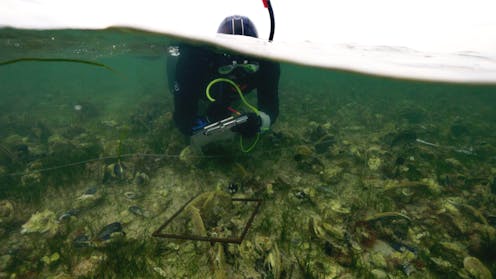
Diving on the restored shellfish reef during the algal bloom has given us some hope. Despite the soupy green water, the native oysters appear to be doing well. Similarly, oysters on leases in the affected areas are thriving as they feed on the highly nutritious Karenia algae.
By contrast, many filter-feeding bivalves have been devastated by the bloom, notably the habitat-forming razorfish (pen shells) and cockles.
Earlier this month, Premier Peter Malinauskas announced plans to restore a total of 15 hectares of shellfish reef alongside community groups across 15 locations. This provides an opportunity to learn whether larger-scale oyster restoration can help future-proof SA seas against harmful algae.
Efforts to restore Coffin Bay’s lost oyster reefs through community-based restoration (eyrelab)Rebuildling resilient ecosystems
This devastating algal bloom will eventually dissipate. Once the harmful algae have fallen back to normal levels, nature can rebuild.
But future blooms are likely as the climate warms and strengthens heavy downpours that flush nutrients out to sea. To prepare, we should explore ways of restoring ecosystems able to hasten recovery and rebuild natural resilience.
Investing in scaling up conservation and restoration of filter-feeding shellfish reefs and bacteria-harbouring seagrass meadows – the sea’s kidneys and immune system – will be necessary alongside long-term underwater monitoring.
If we continue with a reactive, fragmented approach to climate, nutrient pollution, and biodiversity loss, we’re guaranteed to face more costly catastrophes. We need to act to build long-term ecological and socio-economic resilience.
Authors: Dominic McAfee, Postdoctoral researcher, marine ecology, University of Adelaide
Read more https://theconversation.com/how-could-we-clean-up-the-algal-bloom-262749


















