

Want to see Australia’s rare and remarkable species for yourself? Here are 10 standout spots
- Written by: Patrick Finnerty, Postdoctoral Research Fellow in Conservation and Wildlife Management, University of Sydney
Australia is home to an extraordinary variety of wildlife, ranging from striking palm cockatoos to elusive mountain pygmy-possums and remarkable rat-kangaroos.
Most of us never get to see these creatures in real life – and that’s a real shame. Spending time in nature looking for wildlife is more than just a hobby – it’s a way to reconnect with the natural world and remember why it matters.
But how do you actually see these creatures for yourself? It’s often easier than you think.
As wildlife researchers, we’ve spent a long time in the field looking for wildlife. Here are ten standout locations where you have a good chance of seeing some genuinely remarkable Australian creatures – and tips on doing so without causing them stress or harming the environment.
1. Kutini-Payamu/Iron Range National Park, Queensland
Located in far north Queensland, Iron Range is renowned for lush rainforests and rich wildlife. Here, you can spot majestic palm cockatoos, secretive green pythons, the striking green, red and blue hues of eclectus parrots and the adorable common spotted cuscus, a species of possum. These species also occur in Papua New Guinea, but the Cape York region is the only place to spot them in Australia.
Spotting tips: Walk the trails with binoculars during peak times for bird activity, early morning or late afternoon. At night, use a head torch to spot pythons, frogs, death adders, geckoes, rufous owls, cuscus and other nocturnal fauna.

2. Atherton Tablelands, Queensland
Inland from Cairns lies the Atherton Tablelands, an elevated region with a cooler climate and abundant and diverse wildlife. Here, you can spot vibrant Ulysses butterflies, shy platypuses and rare marsupials. Australia’s largest snake, the scrub python, can block entire roads as it warms itself up before the night’s hunt. Rare waterfall frogs can be spotted in fast-flowing falls.
Lumholtz’s tree kangaroos can be spotted hopping along limbs at Curtain Fig National Park and Mount Hypipamee National Park, alongside green ringtail possums and striped possums with elongated fingers to ferret out grubs.
Meanwhile, musky rat-kangaroos can be seen “gardening” on the forest floor at Lake Eacham and Lake Barrine. These are the smallest kangaroos and the only non-hopping species. Your best chance of sighting an elusive northern quoll or northern bettong is at Davies Creek National Park.
Spotting tips: Take guided night walks to glimpse nocturnal wildlife. Use a head torch with a red filter. Move quietly and regularly stop to listen for movement and animal calls. Binoculars are a must for spotting creatures high in the canopy.
3. Western Treatment Plant, Victoria
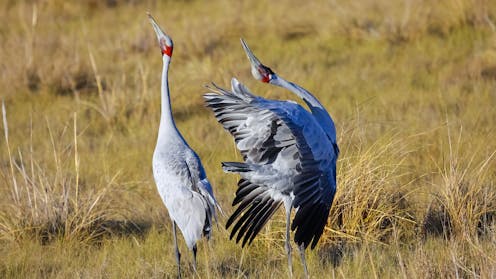
Surprisingly, Melbourne’s Western Treatment Plant is a mecca for birdwatchers. The huge wastewater facility is recognised as a wetland of international importance. Migratory birds such as sharp-tailed sandpipers and red-necked stints can be seen, while well-hidden bitterns, rare orange-bellied parrots and Australia’s dancing crane, the brolga, can be glimpsed feeding in dense heath during cooler months. Almost 300 species have been recorded here.
Spotting tips: Visit during migration seasons (spring and autumn) for the best birdwatching opportunities. Use binoculars, telescopes, or telephoto lenses for close-up views without disturbance. Visitors need a permit.
4. Lunawanna-allonah/Bruny Island and Wukaluwikiwayna/Maria Island, Tasmania
South of Hobart lies Bruny Island, a sanctuary for endangered species such as eastern and spotted-tailed quolls. Most of Tasmania’s endemic bird species are found here, such as green rosellas and forty-spotted pardalotes. Rare swift parrots can also be seen.
North of Hobart is Maria Island, an island national park where no cars are allowed – and where Tasmanian devils, bandicoots and wombats can readily be seen.
Spotting tips: Join guided tours to see nocturnal wildlife or birds in Bruny Island’s tall forests. Eastern quolls can often be seen at night on the main road when heading north from the island’s isthmus. Tasmanian devils and bandicoots can be seen around campsites at Maria Island at night.
5. Flinders, Portsea and Blairgowrie piers, Victoria
Snorkelling the cool waters beneath Flinders, Portsea and Blairgowrie piers is a revelation. Here live spectacular weedy sea dragons, sand octopuses, big-belly seahorses, ornate cowfish, smooth and eagle rays, Port Jackson and banjo sharks and vividly coloured nudibranchs.
Spotting tips: Snorkel or dive during calm weather for best visibility. Keep your distance from marine life for their safety (and yours).

6. Sydney Harbour and cliff tops, New South Wales
Sydney’s iconic harbour and surrounding cliffs are well suited for marine life enthusiasts. Every winter, humpback and southern right whales migrate past the headlands, while pods of bottlenose dolphins can be seen year-round. White-bellied sea eagles, Australasian gannets and short-tailed shearwaters add to the spectacle in the skies.
Spotting tips: Join whale-watching cruises between May and November for the best chance. Clifftop spotting is best done with binoculars from Royal National Park, North Head, Clovelly and The Gap.
7. Binybara/Lee Point, Northern Territory
Just north of Darwin is Lee Point, one of the best places to glimpse the elusive black-footed tree-rat. Weighing almost a kilo, this threatened native rodent is an expert climber and lives in tree hollows.
Around 200 bird species have also been recorded here. Flocks of great knots, eastern curlews and grey-tailed tattlers feed on the mudflats, while the woodlands are home to the dazzling colour of Gouldian finches and the charismatic blue-winged kookaburra.
Spotting tips: Visit at night to see the tree-rat moving between trees, or come at low tide to watch thousands of shorebirds feeding. Binoculars will be invaluable.
 The black-footed tree-rat (Mesembriomys gouldii) is a clever native rodent with a knack for life in the trees.
François Brassard, CC BY-NC-ND
The black-footed tree-rat (Mesembriomys gouldii) is a clever native rodent with a knack for life in the trees.
François Brassard, CC BY-NC-ND
8. Wadjemup/Rottnest Island, Western Australia
Offshore from Perth, Rottnest Island is rightly famous for its smiling quokkas. But other unique species such as King’s skink and venomous dugites can be seen here too, while osprey nests occupied for decades can be seen on rock stacks. The reefs around the island have WA’s southernmost coral.
Spotting tips: Cycling is the best way to explore different habitats on the largely car-free island. Keep your distance from quokkas and other wildlife to ensure they stay wild.
 The
Posnov/Getty
The
Posnov/Getty
9. Kunama Namadgi/Kosciuszko National Park, New South Wales
Australia’s highest peaks are home to the nation’s most remarkable alpine wildlife. Birdwatchers can spot gang-gang cockatoos feeding in eucalypts, while lucky hikers might glimpse an alpine dingo crossing a snow-dusted plain, or see a strikingly coloured Corroborree frog in a bog or fen.
This is the only place in the world where you can encounter a critically endangered mountain pygmy-possum. These tiny marsupials hibernate under winter snow and emerge to feed on bogong moths in spring.
Kosciuszko is also home to the native smoky mouse and – remarkably – to Leadbeater’s possum, long thought to be confined to Victoria’s Central Highlands.
Spotting tips: For the best chance of spotting a mountain pygmy-possum, visit between late spring and early summer when the snow has melted. Stick to alpine boulder fields such as those around Charlotte Pass and Mount Kosciuszko. You may need to camp overnight to see nocturnal possums and the smoky mouse. Binoculars and patience are essential to glimpse these shy species.
 Mountain pygmy possums (Burramys parvus) are hard to spot – but the thrill of seeing these tiny, secretive marsupials is hard to beat.
Jason Edwards/Getty
Mountain pygmy possums (Burramys parvus) are hard to spot – but the thrill of seeing these tiny, secretive marsupials is hard to beat.
Jason Edwards/Getty
10. Karta Pintingga/Kangaroo Island, South Australia
Southwest of Adelaide lies the large Kangaroo Island, home to echidnas, tammar wallabies, a rare subspecies of the glossy black-cockatoo and Kangaroo Island dunnarts. Koalas are common. While the island’s isolation has protected these species, the 2020 megafires caused much damage. Wildlife is now bouncing back.
Spotting tips: Explore national parks and conservation areas with a local guide. Observe from a distance.
Take care of wildlife
Wildlife spotting has to be done with care. Think of yourself as a guest in someone else’s home.
Keep a respectful distance, don’t touch wildlife, move quietly and use binoculars or a zoom lens for a closer look rather than creeping closer.
If you’re out after dark, make sure your head torch has a red light option. This light is vastly less damaging to animal eyes optimised for the dark.
When snorkelling or diving, avoid hitting corals and sponges with your fins.
It can be tempting to use playback of calls to attract birds such as owls. But this is very disruptive and can do real damage.
Avoid moving logs, bark, stones and other habitat in your effort to see animals. This is disruptive and risks bites from venomous creatures.
Clean and disinfect your boots before moving between areas to avoid spreading soil-borne pathogens such as cinnamon fungus and chytrid fungus.
Whatever you do, don’t feed wildlife. It might seem harmless, but it can change their natural behaviour, make them ill and even make them dependent on people.
Posting sightings on citizen science apps such as iNaturalist and FrogID can help scientists learn more about these species and aid their conservation.
Enjoy the journey
As wildlife researchers, we often seek out species in their natural habitat. These moments never lose their impact.
It’s a remarkable thing to see a creature in its natural habitat. A successful sighting gives a sense of awe and joy. At a time when many people are cut off from nature, deliberately seeking out these species is a powerful and rewarding act.
Authors: Patrick Finnerty, Postdoctoral Research Fellow in Conservation and Wildlife Management, University of Sydney


















