

Google AI


Modern Australian

Joseph Conrad’s Lord Jim sees humanity’s darkness

  • Written by: Jamie Q. Roberts, Lecturer in Politics and International Relations, University of Sydney
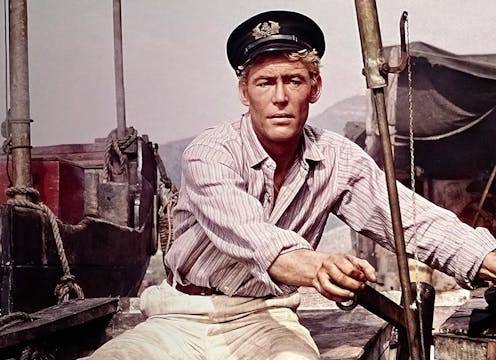
Joseph Conrad’s Lord Jim sees humanity’s darkness

In our guide to the classics series, experts explain key works of literature

For me, no novel provides a better account of what we humans are up against in our pursuit of the true and the good than Joseph Conrad’s Lord Jim (1900). It does this alongside Conrad’s other great works, Heart of Darkness (1899) and Nostromo (1904).

Lord Jim reveals that, even in our secular age, we remain creatures of ineluctable faith. Our sense of being good derives from this faith. But the kicker is that, perhaps inevitably, it is a bad faith, because what we do for it – how we reaffirm our faith – is all too often not good.

Conrad scholar Royal Roussel provides the best articulation of this when he says that Conrad’s novels are concerned with “the self’s alienation from the source of its own existence”.

Once we grasp the form of this alienation, we have a key for understanding much that is dark within humanity, from the atrocities of colonisation that Conrad writes about, to the dubious nationalisms and identity politics of our own time. It provides insight into the inability many of us have to scrutinise our own devotions and failings.

Biography and legacy

Józef Teodor Konrad Korzeniowski was born in 1857 in Berdychiv, which is now in Ukraine. At the time, Berdychiv was part of the Russian empire.

Conrad’s parents were intellectuals of noble heritage. They were involved in the Polish nationalist movement, which aimed to preserve Polish heritage in the face of Russification. They were exiled to Russia and died there as a result of the harsh conditions, leaving 11 year old Józef an orphan.

Joseph Conrad in 1904. George Charles Beresford. Public domain, via Wikimedia Commons

When he was 16, Conrad moved to France and became a sailor. Several years later, he joined the British Merchant Navy, where he rose to the rank of captain. The sea often features in Conrad’s novels, where its vastness stands for many things, including human insignificance, limitless adventure and globalisation.

Conrad, who is one of the very best English prose stylists, only began to seriously study English, his third language, in his 20s. He started writing in his 30s and, in 1894, he gave up sailing and settled in England.

The legacy of Conrad’s writing is immense. As literary critic John Marx puts it, Conrad’s work “announces that the modernist break has occurred”. In his writing, we see the shift to complex narrative structures, unreliable narrators – narrators who are themselves, like Marlow in Lord Jim, characters in the story – and a focus on the psychological and the existential.

Heart of Darkness regularly appears in top-novel lists (it is number 31 in this one); its critique of European colonialism has become foundational to how we view the colonial enterprise. The novel was remade as the film Apocalypse Now, which presents the Vietnam War in the same dark light. My favourite homage to Conrad is that the ship names in the Alien franchise – the Nostromo, the Sulaco and the Patna – are drawn from Conrad’s novels.

An overview

The title of Lord Jim is ironic, even mocking to a degree. Tragically so.

Jim – that’s all we know of his name – is a competent young sailor from solid English stock. His father is a parson: a dispenser of “easy morality”, as Marlow tellingly observes.

Jim’s great test comes when he is first mate – second in command – on the steam ship Patna. The dilapidated Patna, which is carrying 800 Muslim pilgrims to a Red Sea port, strikes something and the front section fills with water. A rusty bulkhead, which seems like it will give way at any moment, is all that stops the ship from sinking.

Certain the ship will go down and knowing that there are not enough lifeboats for the passengers, the crew, other than Jim, abandons ship. At the last minute, Jim, in a moment of cowardice, leaps from the Patna to join the crew. Miraculously, the Patna doesn’t sink, and Jim and the crew must face the Marine Court of Inquiry. All but Jim abscond – they are lesser men. Jim loses his Certificate of Competency and cannot continue as a sailor. Marlow helps Jim find employment elsewhere. But the notorious story of the Patna, which has become known around the maritime world, follows him wherever he goes. He eventually seeks refuge in a remote village in the Malay archipelago, where he gains redemption by becoming a leader. Yet the Patna episode continues to govern his destiny. The knitting machine and moral solitude Conrad lays out his philosophy in his many letters. A key letter was written to Scottish radical R.B. Cunninghame Graham on December 20, 1897, not long before Conrad produced his most important works. In the letter, Conrad bleakly imagines society as a metaphorical “knitting machine” that knits “time, space, pain, death, corruption, despair and all the illusions”, such that “nothing matters”. The machine is remorseless, incapable of being influenced – “you can’t even smash it”. Conrad’s inhuman knitting machine, which “knits us in and knits us out”, is very different from the cheery, liberal social contract, in which society is constituted by rational individuals giving up some freedoms, such as the freedom to kill or rob, in return for other freedoms, such as the freedom from being killed or robbed. In Lord Jim, the knitting machine appears as the “sovereign power” and “the spirit of the land” – Marlow speaks about both. These concepts have nationalist overtones, and this is understandable, seeing as the nation is something to which people belong. But ultimately, for Conrad, the knitting machine is less tangible than the nation. It is the seemingly upright world of industry and work and public life to which Marlow and Jim himself belong. The crux of Conrad’s philosophy is that our relationship with this knitting machine is existential. The best account of this appears in Under Western Eyes (1911), where we read: Who knows what true loneliness is – not the conventional word, but the naked terror? To the lonely themselves it wears a mask. The most miserable outcast hugs some memory or some illusion. Now and then a fatal conjunction of events may lift the veil for an instant. For an instant only. No human being could bear a steady view of moral solitude without going mad. In my arrogant opinion, no concept is more important than moral solitude. The short of it is that if we are removed from our world – from the knitting machine or the sovereign power or the spirit of the land (or whatever we want to call it) – we psychologically disintegrate. But why does all this matter? It matters, once again, because our sense of being good derives from our belonging, yet that to which we belong is not necessarily good when measured from the perspective of reason – or even, dare I say, conscience. Marlow, who is a man of reason and conscience, speaks of “the doubt of the sovereign power enthroned in a fixed standard of conduct”. About this doubt he says: It is the hardest thing to stumble against; it is the thing that breeds yelling panics and good little quiet villanies; it’s the true shadow of calamity. Jim never doubts the knitting machine. As Marlow says, Jim is “a straggler yearning inconsolably for his humble place in the ranks”. It is those who observe Jim who doubt. And Marlow’s doubt is central; it roils on for hundreds of pages. He sees the truth, which includes the corruption that can come with pursuing truth: And yet is not mankind itself, pushing on its blind way, driven by a dream of its greatness and its power upon the dark paths of excessive cruelty and of excessive devotion? And what is the pursuit of truth, after all? However, he cannot leave the ranks: For a moment I had a view of a world that seemed to wear a vast and dismal aspect of disorder, while, in truth, thanks to our unwearied efforts, it is as sunny an arrangement of small conveniences as the mind of man can conceive. But still it was only a moment: I went back into my shell directly. One must – don’t you know? – though I seemed to have lost all my words in the chaos of dark thoughts I had contemplated for a second or two beyond the pale. These came back, too, very soon, for words also belong to the sheltering conception of light and order which is our refuge. The failure of human connection Lord Jim, like quite a few major works of literature and film, explores what occurs when a masculine public realm, characterised by work, status and brutality, intersects with the feminine. Hamlet, Catch-22, and The Godfather all come to mind. The first two thirds of Lord Jim are almost entirely about this male world. The last third is dominated – conceptually at least – by Jim’s relationship with Jewel, the daughter of a Dutch trader and a Malay woman, who lives in the remote village of Patusan. Jewel is entirely devoted to Jim and Jim is entirely devoted to Jewel – almost. She is unworldly, but she nonetheless grasps the truth of men and women (which in our contemporary world, reconfigured by postmodern relativism, is unspeakable). She senses that Jim serves some power that exceeds their relationship. She asks Marlow: What is this thing? Is it alive? – is it dead? I hate it. It is cruel. Has it got a face and a voice – this calamity? And she believes that Jim’s devotion to this power will separate them: “They [men] always leave us [women].” In response Marlow lies – as he does to Kurtz’s betrothed at the end of Heart of Darkness – saying that nothing could separate Jim from her. Jim does leave Jewel. He allows himself to be killed – sacrificed – to retain his honour. It is ridiculous. In the novel’s penultimate paragraph, Marlow reflects: He goes away from a living woman to celebrate his pitiless wedding with a shadowy ideal of conduct. Is he satisfied – quite, now, I wonder? We ought to know. He is one of us – and have I not stood up once, like an evoked ghost, to answer for his eternal constancy? Was I so very wrong after all? Marlow’s refrain throughout Lord Jim is that Jim is “one of us”. This elevates Jim’s story to the level of archetype. It impels us all to ask: what aspects of our humanity do we sacrifice to the implacable knitting machine? Authors: Jamie Q. Roberts, Lecturer in Politics and International Relations, University of Sydney

Read more https://theconversation.com/the-true-shadow-of-calamity-joseph-conrads-lord-jim-sees-humanitys-darkness-247565

What to Do When an Older Car Is No Longer Worth Keeping in Melbourne

Ever looked at another repair quote and wondered whether your old car is still worth the trouble? It is a common turning point for Melbourne motoris...

Your Baby's First Year: A Local Guide to Feeding, Sleep, and When to Get Extra Support

Ask ten parents in a Brisbane mothers' group how their baby is feeding or sleeping, and expect ten different answers.  Someone's baby sleeps throug...

Kitchen and Laundry Makeover Ideas That Don't Require a Full Renovation

Full kitchen renos are expensive — and most people don't actually need one.  They need the kitchen to stop looking like it's stuck in 2009, or they...

How Technology Is Reshaping the Modern Australian Commercial Kitchen

The commercial kitchen has always been shaped by technology. Refrigeration changed how ingredients could be stored, modern ventilation transformed k...

The Number on a Roller Blind Fabric That Nobody Explains

Somewhere in the fabric book, next to the colour name, there is a percentage. Three per cent. Five per cent. Ten per cent. Nobody explains it, most c...

What’s Trending in Men’s Jewellery This Father’s Day!

Finding a Father’s Day gift that feels personal, stylish and genuinely wearable is not always easy. While socks and novelty mugs have traditionally ...

Road Signs: Understanding Their Role in Clear and Effective Signage

Effective signage and display hardware can help businesses communicate information, promote products and organise customer or visitor movement. Road...

Bottle Label Printing: Key Factors to Consider Before Your Next Packaging Run

Effective packaging begins with understanding the product, bottle material, artwork and production requirements when planning bottle label printing. H...

Planning a Long-Distance Move With Interstate Movers Melbourne

Moving between states involves more planning than a typical local relocation. Along with packing and transporting household belongings, you need to...

Understanding the Role of an I/O Controller in Industrial Automation

Modern industrial systems depend on accurate communication between sensors, machines and control systems. An I/O controller can help manage this commu...

How the Right Mining Hose Supports Demanding Operations

Mining environments place considerable demands on equipment used for material transfer, water management and processing. Hoses operating in these co...

Simple Ideas for Making Social Gatherings More Memorable

We have all been to those parties where everyone just stands around the kitchen island, staring at their phones, waiting for someone else to make a mo...

Outdoor Wall Lights: Improving Exterior Lighting Around Your Home

Lighting can influence how a room looks, feels and functions, so the right fitting should be selected according to both appearance and practical req...

Commercial Office Cleaning: Combining Routine Office Cleaning With Melbourne Service

Keeping a workplace clean requires a service that can accommodate everyday tasks as well as the particular needs of the business. Professional comme...

Caravan Sales in Queensland: How to Find the Right Caravan for Sale QLD

Caravan ownership is about more than having somewhere to sleep while travelling. For many Queenslanders, it is one of the best ways to explore regio...

What Sir Walter Buffalo Turf Actually Costs in 2026 (And Why Quotes Vary So Much)

Two quotes landed on a Hills District homeowner's kitchen table last spring for the exact same 80-square-metre backyard. One said $12 a metre. The o...

Nearly 1,300 NSW Hospital Beds Are Occupied By People Who Are Ready To Go Home

1,276 people in NSW hospitals have been medically cleared for discharge but remain in hospital because they're still waiting for NDIS or aged care sup...

National Survey Launched to Measure Operational Impacts of Federal NDIS Policy Reforms

The effects of recent NDIS reforms are beginning to move beyond policy papers and into day to day service delivery. A new national survey is asking ...
















