

We’re still not measuring our reliance on nature as we rush to boost productivity
- Written by: Michael Vardon, Associate Professor at the Fenner School, Australian National University
Human economies are made possible through natural capital – stocks of land, fresh water, oceans, biodiversity and soils, among others. Farming isn’t possible without soil or water. Manufacturing isn’t possible without raw materials to convert into products. Service industries aren’t possible without reliable food.
This may seem like stating the obvious. But what’s obvious isn’t always acted upon. At last week’s high-profile Economic Reform Roundtable, natural capital was conspicuously absent. At the table were bankers, unionists, housing experts and business groups – but only one environmental advocate, former treasury secretary Ken Henry.
The government’s goals were to make the economy more productive and resilient and the budget more sustainable. The health of our natural capital underpins all of these.
This missed opportunity is symptomatic of a wider challenge. The very real risks we face if natural capital degrades are mostly ignored, virtually unmonitored and not part of mainstream economic discussions. Small wonder environment groups launched their own alternative roundtable to make the economic case for nature.
In the mid-20th century, economists and policymakers commonly assumed nature had no limits. By the end of the century, it was abundantly clear this wasn’t true. In the 21st century, this view is patently absurd. Nature has hard limits. Water can be used up. Fisheries can be fished out. Pollinators can die out. The environment and the economy are not separate – one enables the other.
Natural capital underpins the economy
Other countries have moved faster in recognising how fundamental natural capital is to a thriving economy. The United Kingdom’s 2021 Dasgupta Report is one of the best-known explanations. Many businesses recognise the risks of declining natural capital through taskforces on nature-related and climate-related financial disclosures.
Integrating the environment into economic thinking is crucial. It lets us think about these limited resources and ecological systems alongside other factors such as factories, roads, financial capital, labour and knowledge.
Natural capital matters for productivity in many ways, some obvious and others less so. In cities, trees reduce temperatures and cut air pollution. This in turn helps human health, increases productivity and reduces the need for air conditioners and hospitals, lowering energy costs and boosting public finances.
Human wellbeing is improved by access to nature and the services it delivers. When we’re well and happy, we’re more productive at work and take less time off.
We need data on nature
When making economic decisions, properly accounting for the value of functioning natural systems requires starting with good information.
The Bureau of Statistics provides voluminous economic data, from GDP to jobs to building approvals to inflation and more. But these are no longer enough.
What’s needed is “natural capital accounting” – tracking the health of natural systems and the size of the stocks. It shows how much is in our natural capital bank, how it is being used, and what value we derive from it. Many examples exist in projects in Australia and internationally, such as in water and forests.
In 2018, the Australian government adopted this approach, using the internationally agreed System of Environmental-Economic Accounting.
In 2020, the approach was backed by the sweeping Samuel Review into Australia’s main environment laws, and in 2022, the government’s Nature Positive Plan adopted it.
While several natural capital accounts have been produced, their potential has gone largely unrealised.
Faster approvals may boost productivity – but damage nature faster
One widely publicised outcome from the roundtable is a focus on faster approvals for developments. This week, Federal Environment Minister Murray Watt announced updated environment laws will be brought to parliament before the end of the year.
This is welcome. Linking revised laws to boosted economic productivity may be worthwhile. But without natural capital accounting, there’s no guarantee it will work.
If we relied on 20th-century thinking to assess productivity, it would be simple to assume speeding up approvals by cutting red and green tape would be a step forward. But this century is one of environmental consequences.
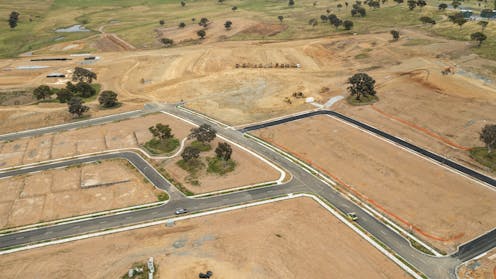
At present, environmental approvals for big developments allow companies to make natural capital withdrawals – such as converting habitat to a warehouse – even if nature is approaching thresholds of no return, such as the extinction of species or the disappearance of ecosystems. This is a key reason why box-gum grassy woodlands remain critically endangered.
We could avoid this by using natural capital accounting. If the stocks of natural capital are known, developers can avoid wasting time applying for approvals where stocks are too low, while regulators can make faster assessments if the development will consume too much. What defines “too much” would be set in the planned national environmental standards.
This would flip the development process from reactive to proactive. Need more homes? Let’s identify areas with enough natural capital to build them and avoid areas that don’t, such as threatened woodland ecosystems or grasslands. This would save time and money for everyone.
Policymakers already use this approach in banking. Banks have to keep some funds to buffer against unexpected losses, under the Australian Prudential Regulation Authority’s requirements. Surely we can imagine similar requirements for natural capital.
The age of environmental consequences
If we draw down on natural capital without knowing how much we have, how much is needed, or how it contributes to the economy or wellbeing, we risk what Henry calls “intergenerational bastardry” – worsening the lives of future generations through our actions today.
To achieve productivity in a sustainable way, we need 21st-century thinking, better information and long-term reform based on a clear understanding of how the natural environment and the human economy intersect. Let’s hope policymakers are up to the challenge.
Acknowledgements: Carl Obst contributed to this article.
Authors: Michael Vardon, Associate Professor at the Fenner School, Australian National University


















