

Australia faces a home insurance reckoning – and we can learn from California’s bold move
- Written by: Ehsan Noroozinejad, Senior Researcher and Sustainable Future Lead, Urban Transformations Research Centre, Western Sydney University
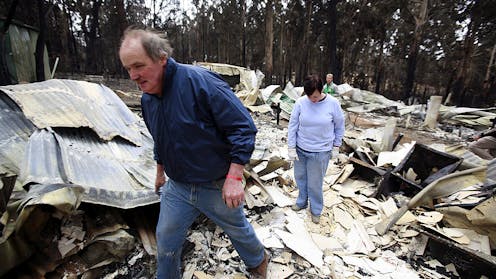
Climate change is making home insurance costlier and, for some, harder to secure. According to one analysis, one in ten Australian properties will be uninsurable within a decade.
Insurance is vital to help people recover after a disaster damages or destroys their home – enabling them to replace personal belongings and rebuild their homes and lives.
Historically, insurers have been required to determine risk – and set premiums – according to losses from past disasters. It has meant insurers cannot account for worsening climate-fuelled disasters, which are causing more damage to homes and triggering more insurance payouts.
In response, insurers around the world have generally raised premiums to cover their losses, excluded some risks from policies or withdrawn coverage from some high-risk locations entirely.
California has just taken a novel approach to this problem. There, insurers are now permitted to use forward-looking computer models of climate change and disasters when setting premiums – as long as they expand coverage in higher-risk areas.
Australia should explore this approach. It has the potential to keep home insurance prices stable, ensure coverage in risky areas, and make homes safer over time.
What’s happened in California?
Even before the devastating LA wildfires in January this year, California’s home-insurance market was buckling after severe disasters and rising costs.
The increasing costs included “reinsurance”, which is insurance one insurance company purchases from another to protect itself, at least partially, if it’s inundated with claims following a disaster.
According to CNN, insurance companies declined to renew 2.8 million homeowner policies in California between 2020 and 2022.
Insurers argued they would cover more homes if they were allowed to use forward-looking climate and catastrophe models – and pass on some reinsurance costs in premiums charged to customers. Californian authorities adopted the changes, which began earlier this year.
Insurers in most US states, and in many other countries, already use forward-looking catastrophe models. The California approach is new because it legally requires insurers using the models to expand coverage in high-risk areas.
The change is expected to make insurance prices more stable from year to year.
Under the previous system, major disasters such as wildfires meant insurers often stopped taking on new policies or did not renew policies in high-risk areas. This pushed more people onto often costlier, more limited state-managed property insurance plans. Meanwhile, remaining customers of private insurers faced hikes in premiums.
Under the new system, premiums are expected to fluctuate less following disasters. This is because future risk would already be built into premiums.
In exchange, insurance companies must expand cover in high-risk areas to at least 85% of their marketshare across California. Those meeting this quota may pass some reinsurance costs to consumers.
Last month, Californian authorities green-lit the model insurers will apply to wildfires. More models for other types of disasters will follow.
The wildfire model was produced by a private firm. California is also exploring a public wildfire model built by universities, to increase transparency and trust in the system.
Where Australia stands
In Australia, the problem of home insurance under climate change has already emerged.
Worsening and more frequent floods, bushfires and storms are pushing up average home insurance premiums. An estimated 1.6 million households are suffering insurance affordability stress.
The problem has prompted some government action. In 2022, for example, the federal government introduced a scheme that provides reinsurance to insurers for cyclone-related damage on eligible policies, including home and contents insurance. It lowers reinsurance costs for insurers, helping retain coverage in cyclone-prone Northern Australia.
In another initiative, the Australian Prudential Regulation Authority is assessing how climate change could affect household insurance affordability by 2050.
And from July 2025, most large Australian entities, including some insurers, were required to begin annual climate-risk reporting, providing more consistent information across the economy.
But as premiums continue to climb, more must be done.
Lessons for Australia
Australia should consider following California’s lead. Insurers should be permitted to use forward-looking climate and catastrophe models to assess risk, as long as they maintain or expand coverage in higher-risk postcodes.
Both private firms and universities should be used to develop the models. This provides choice for insurers and a robust cross-check for regulators and the public.
The models should be independently audited and use open data accessible by the general public. This would enable communities and local councils see how risk is calculated and how mitigation efforts lower it. It would mean those who reduce risk – perhaps by clearing vegetation around a home to prevent fire spreading, or raising electrical components above flood height – could be rewarded with lower premiums.
It’s important to note, however, that this approach will not make insurance cheap. In the age of climate-fuelled disasters, those days are over – especially in high-risk areas.
But in the long-term it can keep insurance cover available, temper sharp price spikes, and reward safer homes. That is the realistic goal.
Authors: Ehsan Noroozinejad, Senior Researcher and Sustainable Future Lead, Urban Transformations Research Centre, Western Sydney University


















