

The thousand-year story of how the fork crossed Europe, and onto your plate today
- Written by: Darius von Guttner Sporzynski, Historian, Australian Catholic University
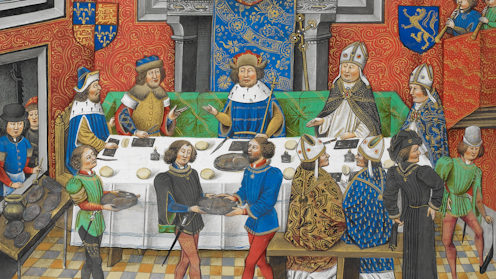
In today’s world, we barely think about picking up a fork. It is part of a standard cutlery set, as essential as the plate itself. But not that long ago, this now-ordinary utensil was viewed with suspicion, derision and even moral outrage.
It took centuries, royal marriages and a bit of cultural rebellion to get the fork from the kitchens of Constantinople (today’s Istanbul) onto the dining tables of Europe.
A scandalous utensil
Early versions of forks have been found in Bronze Age China and Ancient Egypt, though they were likely used for cooking and serving.
The Romans had elegant forks made of bronze and silver, but again, mainly for food preparation.
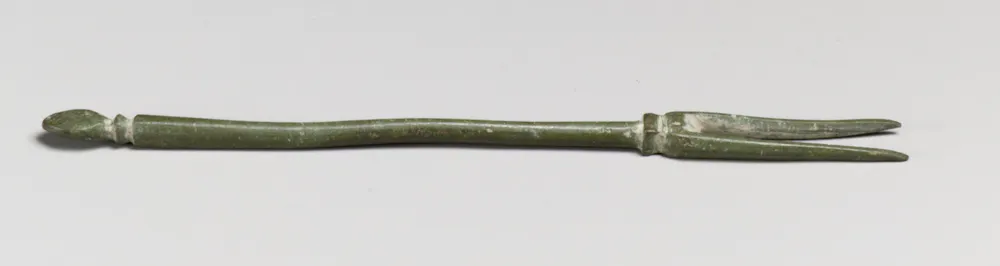
Eating with a fork – especially a small, personal one – was rare.
By the 10th century, Byzantine elites used them freely, shocking guests from western Europe. And by around the 11th century, the table fork began to make regular appearances at mealtimes across the Byzantine empire.
In 1004, the Byzantine Maria Argyropoulina (985–1007), sister of Emperor Romanos III Argyros, married the son of the Doge of Venice and scandalised the city by refusing to eat with her fingers. She used a golden fork instead.
Later, the theologian Peter Damian (1007–72) declared Maria’s vanity in eating with “artificial metal forks” instead of using the fingers God had given her was what brought about divine punishment in the form of her premature death in her 20s.
Yet by the 14th century, forks had become common in Italy, thanks in part to the rise of pasta.
It was far easier to eat slippery strands with a pronged instrument than with a spoon or knife. Italian etiquette soon embraced the fork, especially among the wealthy merchant classes.
And it was through this wealthy class that the fork would be introduced to the rest of Europe in the 16th century by two women.
Enter Bona Sforza
Born in into the powerful families Sforza of Milan and Aragon of Naples, Bona Sforza (1494–1557) grew up in a world where forks were in use; more, they were in fashion.
Her family was used to the refinements of Renaissance Italy: court etiquette, art patronage, ostentatious dress for women and men, and elegant dining.
When she married Sigismund I, king of Poland and grand duke of Lithuania in 1518, becoming queen, she arrived in a region where dining customs were different. The use of forks was largely unknown.

At courts in Lithuania and Poland, cutlery use was practical and limited. Spoons and knives were common for eating soups and stews, and the cutting of meat, but most food was eaten with the hands, using bread or trenchers – thick slices of stale bread that soaked up the juices from the food – for assistance.
This method was not only economical but also deeply embedded in courtly and noble dining traditions, reflecting a social etiquette in which communal dishes and shared eating were the norm.
Bona’s court brought Italian manners to the region, introducing more vegetables, Italian wine and, most unusually, the table fork.
Though her use of it was likely restricted at first to formal or court settings, it made an impression. Over time, especially from the 17th century onwards, forks became more common among the nobility of Lithuania and Poland.
Catherine de’ Medici comes to France
Catherine de’ Medici (1519–89) was born into the powerful Florentine Medici family, niece of Pope Clement VII. In 1533, aged 14, she married the future King Henry II of France as part of a political alliance between France and the Papacy, bringing her from Italy to France.
Catherine de’ Medici, introduced silver forks and Italian dining customs to the French court.
Like in the case of Bona Sforza, these arrived in Catherine’s trousseau. Her retinue also included chefs, pastry cooks, and perfumers, along with artichokes, truffles and elegant tableware.
Her culinary flair helped turn court meals into theatre.
While legends exaggerate her influence, many dishes now claimed as French, trace their roots to her Italian table: onion soup, duck à l’orange and even sorbet.
The ‘right’ way to eat
Like many travellers, the curious Englishman Thomas Coryat (1577–1617) in the early 1600s brought tales of fork-using Italians back home, where the idea still seemed laughably affected.
In England, using a fork in the early 1600s was a sign of pretension. Even into the 18th century, it was considered more masculine and more honest to eat with a knife and fingers.
But across Europe, change was underway. Forks began to be seen not just as tools of convenience, but symbols of cleanliness and refinement.
In France, they came to reflect courtly civility. In Germany, specialised forks multiplied in the 18th and 19th centuries: for bread, pickles, ice cream and fish.
And in England, the fork’s use eventually became a class marker: the “right” way to hold it distinguished the polite from the uncouth.
 An etching of an old man and a fork from 1888.
Rijksmuseum
An etching of an old man and a fork from 1888.
Rijksmuseum
As mass production took off in the 19th century, stainless steel made cutlery affordable, and the fork became ubiquitous. By then, the battle had shifted from whether to use a fork to how to use it properly.
Table manners manuals now offered guidance on fork etiquette. No scooping, no stabbing, and always hold it tines down.
It took scandal, royal taste, and centuries of resistance for the fork to win its place at the table. Now it’s hard to imagine eating without it.
Authors: Darius von Guttner Sporzynski, Historian, Australian Catholic University



















