

From the manosphere to tradwives
- Written by Linda Peach, Psychology Lecturer, Charles Sturt University
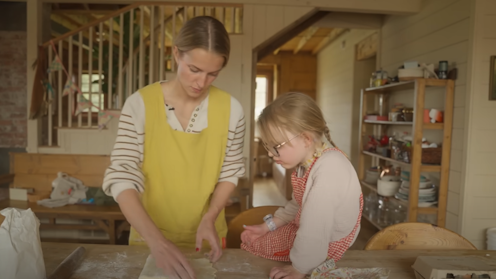
For decades, research and activism have highlighted the pitfalls for women when stereotypical gendered roles are prioritised in heterosexual relationships.
But recent signs suggest young adults may once again be embracing the idea that men should be dominant, while women play a supporting role.
In our research, we wanted to know whether young Australian adults were embracing traditional gender roles to a greater or lesser degree in 2024 compared to 2010.
We compared data at these two time points and found young women are more likely to support traditional roles now than they were 14 years prior.
What is benevolent sexism?
Our research explored a concept called benevolent sexism - a set of patronising attitudes that appear positive while reinforcing women’s subordinate status.
It’s part of the Ambivalent Sexism Inventory: one of the most widely used measures of sexist attitudes around the globe.
This type of sexism is “benevolent” because it offers praise and protection to women who support traditional gender roles, while protecting patriarchal dominance as the status quo.
Our research, not yet peer reviewed, looked at two aspects of benevolent sexism.
1. Protective paternalism (“paternalism”): the belief that women need men’s protection
2. Complementary gender differentiation (“gendered roles”): the belief that men are naturally providers and protectors and women are naturally best suited to looking after home and family.
Our research
We analysed two sets of benevolent sexism data collected anonymously from young Australian adults aged 17 to 24.
The first data set was collected in 2010 from 573 participants, 72% of which were women.
The second data set was collected in 2024 from 301 participants, also made up of 72% women.
Young men showed no change in their support for paternalism or gendered roles.
Young women showed no change on paternalism, but increased their support for gendered roles.
In the 2010 cohort, 57% of women disagreed with gendered roles, compared to 43% in 2024. In the intervening years, the dial shifted from “no” to “yes”.

What might be behind this?
In 2005, feminist icon and researcher, bell hooks, spoke of the ways in which women are “trained” to support male dominance and conform to the system.
This, she explained, is why change in these attitudes to gendered roles is slow and inconsistent.
Australian research at the time supported this view, finding more conservative gender attitudes appearing around the mid-1990s, following a long period of growth towards gender equality.
In my 2010 focus groups, many young Australian women believed their male partners would be unlikely to share household and caring duties with them. As a result, they (reluctantly) expected to give up or reduce investment in their careers once they were partnered and had children.
Why do young women seem to expect even more conservative outcomes in their relationships 14 years later?
Some insight may be gained from two online trends that actively promote a return to traditional gender roles: the manosphere and the tradwives movement.
The manosphere
The manosphere is a loose collection of online forums where misogyny and the harassment of women are openly promoted. Denizens of the manosphere are loud and aggressive in expressing their criticisms of women.
One criticism has been gaining prominence: that men’s wellbeing is suffering as a result of women becoming more independent.
It’s possible young women are supporting traditional gender roles as a reaction to some of this public criticism.
Misusing ideas from evolutionary psychology, the manosphere promotes the view that women and men are “naturally” suited to different roles.
In this view, women are natural nurturers and carers, mothers and housekeepers, while men are natural protectors and providers. Successful relationships, in the manosphere view, happen when both partners stick to these roles.
This view represents a danger to women, particularly in light of recent research showing young adults excused intimate partner violence from a man to a woman if a woman did not conform to her designated role.
Young women may believe supporting traditional gender roles will help them avoid potentially harmful conflict with partners.
Tradwives
The female equivalent to the manosphere is a collection of online female influencers. Many of these are “tradwives”, short for traditional wives.
Tradwives mirror the ideals of the manosphere, encouraging women to focus solely on looking after the home, the man and the family.
A key message of the tradwives movement is that “having it all” is too hard and women should allow themselves the freedom to focus on home and family.
This may appeal to young women feeling pressured to achieve in a world where the system is stacked against them.
But in romanticising the homemaker role, the tradwives movement wilfully ignores the risks in these traditional arrangements for women. One such risk is women who are financially dependent on their partners may find it harder to leave abusive relationships.
Where to next?
Returning to traditional gender roles is mired in potential pitfalls for women, including vulnerability to abuse and control.
What might it mean for young men? They did not show increased support for traditional gender roles in our data. This suggests that, despite the influence of online spaces, young men may not want to take on stereotypical “provider” roles.
That being the case, how will Australia’s young adults reconcile these differences? Change in key markers of gender equality – equally shared parenting and housework, in particular – continue to be glacially slow.
We can legislate against gendered violence, but we can’t legislate housework. Until the underlying drivers of gender inequality are addressed, progress towards a gender equal society will continue to be slow.
The author would like to acknowledge the contributions of researchers Ella Rust (Edith Cowan University) and Lisa Allan (Charles Sturt University) to the study this article discusses.
Authors: Linda Peach, Psychology Lecturer, Charles Sturt University

















