Modern Australian
Times Advertising

As global trade rules falter, how can Australia protect itself from economic coercion?

  • Written by Peter Draper, Professor, and Executive Director: Institute for International Trade, and Director of the Jean Monnet Centre of Trade and Environment, Adelaide University

The United States was once a champion of fair trade rules. Now, it has transformed into a rampaging Viking seeking extortionate tributes.

This shift means America now uses its power to pressure even its closest allies, threatening to withdraw military protection while hitting them with punishing trade tariffs.

Australia depends on America for its security, yet we’re increasingly vulnerable to American economic pressure.

US President Donald Trump’s now illegal “Liberation Day” tariffs showed that trade is a frontline instrument of US geo-economic power rather than a technocratic domain for trade negotiators.

Trump has since announced the reimposition of 10% tariffs across the board. He then hiked the rate in a social media post to 15%.
As global trade rules falter, how can Australia protect itself from economic coercion?
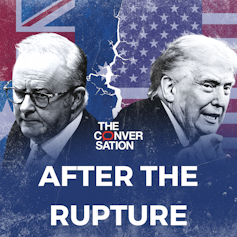
The world order has “ruptured”, Canadian Prime Minister Mark Carney has warned – so it’s time for countries like Australia and New Zealand to forge a new, less US-reliant future. In this six-part series, we’ve asked top experts to explain what that future could look like – and the challenges that lie ahead. Not the act of a friend The uncomfortable reality is that the United States has moved from rule setter to rule breaker. That gives the US enormous scope to “friend coerce” its allies, threatening withdrawal of security guarantees while beating them with tariff and other trade tools. Trump’s unilateral tariffs, layered over existing “national security” tariffs and a baseline levy on all imports, have left Australian exporters facing higher barriers. In this environment, deeper economic integration with China brings its own geopolitical risk. We could move to enhance our free-trade agreement with China by broadening services commitments, easing investment screening, or adding new digital and green economy rules. But this would entrench trade relations with China just as Washington is trying to “de-risk” them. That could inflame perceptions in US security circles that Australia is hedging too far economically, even if the intent is purely commercial. Canada faces the storm, too Canada is experiencing US pressure first-hand. Canadian Prime Minister Mark Carney, in Australia last week, has emerged as a leading voice against what he calls economic “coercion” by dominant powers. He said countries cannot live within the lie of mutual benefit through integration, when integration becomes their source of subordination. Canada faces a particularly difficult situation. Three-quarters of Canadian exports go to the United States, making up about one-fifth of Canada’s entire economy. Carney’s visit aimed to strengthen trade and defence ties between middle powers that share similar challenges. Both Australia and Canada are seeking ways to reduce dependence on unpredictable American trade policies – while maintaining crucial security relationships. As global trade rules falter, how can Australia protect itself from economic coercion?
Mutual interests: Canadian PM Mark Carney with Anthony Albanese at a press conference last week. Lukas Coch/AAP

The US has other options for tariffs

More country-specific tariffs are likely, using Section 301 of the US Trade Act of 1974. This can be applied where the US “finds” that a foreign country’s trade practices are unjustifiable, unreasonable or discriminatory to US commerce.

Countries that wobble in implementing the ad hoc trade deals agreed after tariffs were imposed will be investigated. China is already subject to four waves of tariffs, cumulatively covering two-thirds of its exports to the US.

Under a separate law, the US imposed a variety of sectoral tariffs on products, such as steel, aluminium and auto parts. More will likely follow.

Australia may be subjected to these new sectoral tariffs. They could have far greater impacts than last year’s 10% “reciprocal” tariff.

For Australia, deeply integrated with US security but increasingly exposed to US economic coercion, that poses a hard question. What can we build into our existing trade relationships to avoid becoming collateral damage in the next escalation?

Trade deals have quietly done their job

The answer is not to abandon free-trade agreements (FTAs) in favour of a vague new class of “economic security agreements”.

Rather, Australia should modernise our FTAs, investment partnerships, and financial arrangements so they provide genuine resilience when the next shock hits, whether it comes from Washington or Beijing.

Our largest goods and services partners are almost always FTA partners – we have a range of agreements with China, Japan, South Korea and other Asian nations.

These agreements have served to grow and diversify Australia’s trade over two decades.

Walking away from FTAs in the name of “economic security” would be like cancelling your home insurance because the neighbourhood has become more dangerous.

Don’t reinvent the wheel in the name of economic security

There is now a fashion for narrow “economic security” deals on critical minerals and supply-chain resilience that sit alongside FTAs.

Australia is already part of this world through bilateral critical minerals partnerships and joint-funding commitments with the US, EU, Japan, UK, South Korea, India, France and Germany.

These arrangements do not replace FTAs; they overlay and complement them.

Moreover, the essential economic security tools are already available inside modern FTAs and related instruments. These include:

  • chapters on supply chain resilience, export restrictions and transparency
  • provisions on investment screening and security exceptions
  • cooperation on critical minerals, clean energy and advanced technologies.

Collectively, these signal to markets that partners will privilege each other when crises hit. That contributes to building economic resilience in key supply chains.

Critical minerals could be Australia’s leverage

In critical minerals, Australia holds genuine structural leverage with the US and other partners. So, too, does Canada.

Australia supplies a significant share of US imports of uranium, niobium, tantalum and vanadium ores, and titanium — all vital for nuclear energy, aerospace, defence, and advanced batteries.

We are also the world’s leading producer of lithium and a major player in rare earths, with companies such as Lynas now producing key heavy rare earths outside China for the first time.

Australia and Canada signed a series of new agreements on critical minerals during Carney’s visit.

Recent US-Australia arrangements propose substantial joint financing for critical minerals projects. The EU’s critical minerals partnership with Australia explicitly aims to reduce European dependence on China by backing Australian projects.

This gives us crucial leverage in key bilateral trade and investment partnerships, should we wish to use it.

Build collective resilience with like-minded partners

Australia’s best defence isn’t to retreat from openness, but to strengthen and diversify the rules-based system that supports it.

By working with like-minded middle powers such as Canada, the EU, Japan, and others, Australia can build resilience against economic coercion from any direction – whether from supposed friends or declared rivals.

As Carney’s visit demonstrates, middle powers face similar challenges and can achieve more by standing together than by standing alone.

Authors: Peter Draper, Professor, and Executive Director: Institute for International Trade, and Director of the Jean Monnet Centre of Trade and Environment, Adelaide University


Read more https://theconversation.com/as-global-trade-rules-falter-how-can-australia-protect-itself-from-economic-coercion-276523

The Cost Difference Between Early Repairs and Delayed Replacement

Automotive maintenance often involves a choice between addressing a small issue immediately or waiting until a component fails completely. When it c...

What Is a Stainless Steel Bar? Applications, Benefits, and Buying Tips

Stainless steel is one of the most widely used materials across industrial and commercial sectors, known for its strength, corrosion resistance, and...

Scholars in Developing Nations Depending on Z library

Access to books often shapes the course of study for scholars who live in regions with thin library shelves and slow supply chains. Many students wo...

6 Cheapest POS Systems in Australia (2026)

The cheapest POS systems in Australia for 2026 are POSApt, Square, Zeller, Loyverse, Epos Now, and Shopify POS (Lite). However, “cheap” does no...

The Ultimate Guide to Automating Your Weekend Yard Chores

We all look forward to the weekend as a chance to unwind after a long week of work. You probably picture yourself relaxing on the patio with a cold ...

How Ignoring Regular Car Servicing Can Lead to Costly Repairs

Owning a car gives you a sweet sense of freedom and comfort. You can go wherever you want, whenever you want. But with that freedom comes responsibili...

Someone Trips at Your Fundraiser. Now What? Understanding Public Liability for NFPs

Three months of planning. Volunteers giving up their weekends. Sponsorships chased, catering sorted, tables decorated. And then, about an hour into ...

Stainless Steel Tube: A Complete Specification Guide for Engineers, Project Managers, and Industrial Buyers

Few materials in the industrial and manufacturing world are as universally relied upon — or as frequently misspecified — as stainless steel tube...

How to Choose the Right Barber Shears Scissors for Professional Results

Since a barber is only as good as their tool, choosing the right barber shear scissor must not be taken lightly. Most barbers end up buying the first ...

Why Commercial Construction Companies Play A Critical Role In Modern Urban Development

Urban development requires highly organised planning, engineering expertise, and professional construction teams capable of delivering complex build...

Essential Features for Comfortable Family Caravan Trips

Choosing the right van for family travel requires careful consideration of how the space will be used on a daily basis. Families have specific needs...

Chatswood Tutor: Helping Students Achieve Academic Success With Personalised Learning

Education plays a crucial role in shaping a student’s future, and many students benefit from additional academic support outside the classroom. A pr...

How External Consulting Can Guide Enterprise IT Strategy and Procurement

Internal IT teams carry deep operational knowledge, but that familiarity can create blind spots in strategic decisions. An external IT consultant br...

Why Sports Nutrition Australia Is Important for Performance and Recovery

Athletes and fitness enthusiasts place significant demands on their bodies during training and competition. Maintaining energy levels, supporting mu...

How Body Contouring Bundoora Helps Improve Shape And Confidence

Modern aesthetic treatments have made it possible to refine body shape without the need for invasive surgery. One of the most popular non-surgical o...

Why Plantation Shutters Are a Stylish and Practical Choice for Modern Homes

Window coverings play a major role in the comfort, privacy, and overall design of a home. Homeowners often look for solutions that provide both visu...

Why a Retractable Hose Reel Is Essential for Efficient Water Management

Managing hoses efficiently is important for both residential and commercial environments. Whether watering gardens, cleaning outdoor areas, or maint...

Best Ways to Trade In Your Old Tech for Cash in Australia

Upgrading your mobile is exciting, but many Australians are left wondering what to do with the device they no longer use. Instead of leaving it in a...