

Sure, save furry animals after the bushfires – but our river creatures are suffering too
- Written by Jamie Pittock, Professor, Fenner School of Environment & Society, Australian National University
The hellish summer of bushfires in southeast Australia triggered global concern for our iconic mammals. Donations flooded in from at home and around the world to help protect furry species.
But there’s a risk the government and public responses will not see the fish for the koalas.
Of the 113 priority fauna species identified by the federal government as worst impacted by bushfires, 61 (54%) are freshwater species that live in or around our inland rivers, such as fish, frogs, turtles and the iconic platypus.
These animals and ecosystems were already struggling due to prolonged drought and mismanagement of the Murray Darling Basin. Saving koalas and other mammals is of course important, but freshwater species should also be a priority for post-fire environmental programs.
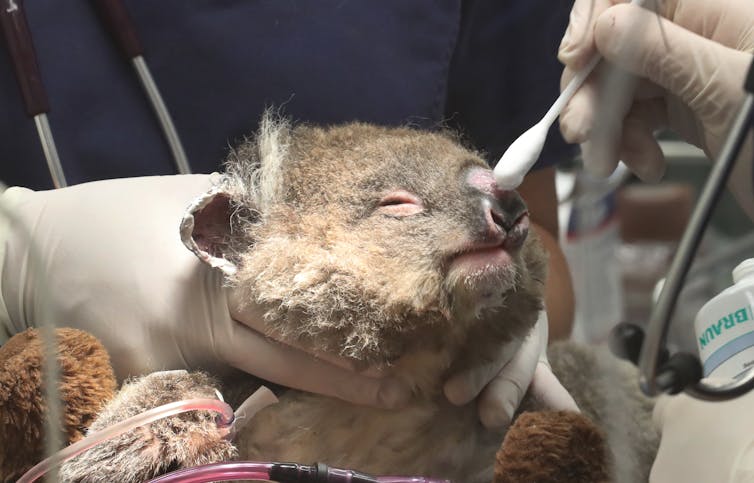 People flocked to help the koala recovery effort after the fires.
David Crosling/AAP
People flocked to help the koala recovery effort after the fires.
David Crosling/AAP
A picture of devastation
The government’s priority species list includes three turtle species, 17 frogs, 22 crayfish, 17 fish and the platypus. Rounding out the list is an alpine stonefly, although many other invertebrates are also likely to be affected (as well as other species that depend on moist, streamside forest habitats).
Excluding tropical savannah, the recent bushfires burnt more than 7.7 million hectares in Victoria, South Australia, New South Wales, Queensland and Western Australia. Rainforests and riparian (riverside) forests were extensively damaged along the Australian east coast and alps. These are normally moist environments, which are not adapted to fire.
Plant and animal species at the edge of waterways, in peat wetlands and in riverside forests are likely to have been burnt or killed by heat, such as crustaceans , lizards, and corroboree and mountain frogs in the alps and east coast rainforests.
Read more: Fire almost wiped out rare species in the Australian Alps. Feral horses are finishing the job
Burnt riverside forests no longer shade the water, making water temperatures hotter and leading to increased evaporation that may stress surviving wildlife. The loss of vegetation cover also leaves prey exposed to predators.
Following recent rain, water flowing into rivers has washed ash into streams. This clogs fish gills and brings nutrients that drive algal blooms. Sediment washed into waterways fills in the gaps between rocks and holes in river beds – places where many species shelter and breed. For instance, the River Murray catchment’s last population of Macquarie perch was impacted as rain washed ash and sediment into Mannus Creek in southern NSW.
Fires tend to burn forests in patches, sometimes leaving refuges for land-based animals. However fire damage to waterways flows downstream, systematically degrading the habitat of aquatic animals by leaving little clean water to hide in.
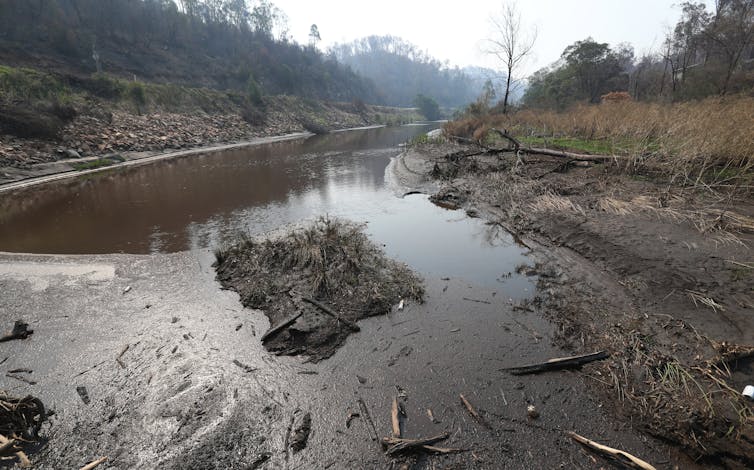 Bushfire silt clogging the usually pristine Tambo river in the Victorian high country in January.
David Crosling/AAP
Bushfire silt clogging the usually pristine Tambo river in the Victorian high country in January.
David Crosling/AAP
Long-term damage
The devastating impact of the fires in river environments may be long-lived.
When aquatic animals species are wiped out in particular rivers, they may not be able to recolonise from surviving populations in other unconnected rivers.
Some species will invariably now be closer to extinction. For example many key peat swamp habitats of the critically endangered northern corroboree frog have been burnt in the Bogong Peaks and Brindabella mountains of NSW and the ACT.
Read more: The sweet relief of rain after bushfires threatens disaster for our rivers
And after fires, fast-growing young eucalyptus forests transpire much more water than older burnt trees. This may reduce inflows into streams for a century.
The recent bushfires followed several years of extreme drought across much of Australia. In the Murray-Darling Basin, these challenges were compounded by poor water management that contributed to dried-up rivers and mass fish deaths.
Water-sharing rules in the basin determine how much water is allocated to agriculture and the environment. Current water-sharing plans do not explicitly include allocations to manage losses due to climate change, and as the plans will only be updated once a decade, it is questionable whether they will be adjusted to sustain flows needed to conserve threatened species.
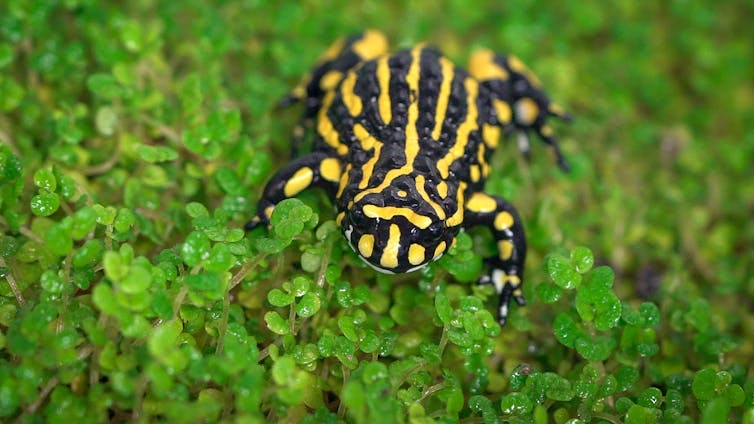 Much corroboree frog habitat was destroyed during the fires.
Melbourne Zoo
Much corroboree frog habitat was destroyed during the fires.
Melbourne Zoo
Here’s what to do
After the fires, government officials and scientists rescued a number of “insurance” populations of threatened aquatic animals such as turtle and fish species, and took them to captive breeding facilities, such as the stocky galaxias fish in the alps. We must ensure healthy habitat is available for these animals to re-establish viable populations when released.
In the short term, we must protect surviving and regenerating habitat. Government programs are off to a good start in promising to cull feral predators such as cats and foxes, as well as grazing animals such as pigs, deer and goats. The NSW and Victorian governments must also remove feral horses in the Australian Alps that are damaging the swamp habitats and streams.
Now so many infested riverside forests are accessible, it is a key time to control weed regrowth.
Read more: Last summer's fish carnage sparked public outrage. Here's what has happened since
In the medium term, we should expand programs to fence livestock out of waterways, install other watering points for these animals and revegetate stream banks.
Deep holes in rivers and streams with cool water are important refuges for aquatic animals, and ways to restore them should be investigated.
Impediments to fish migration, such as weirs, should be removed or fish “ladders” installed to aid fish movement. Aquatic species often won’t breed unless the water is the right temperature in the right season; to prevent the release of overly cold water from the bottom of dams, better water release structures should be installed.
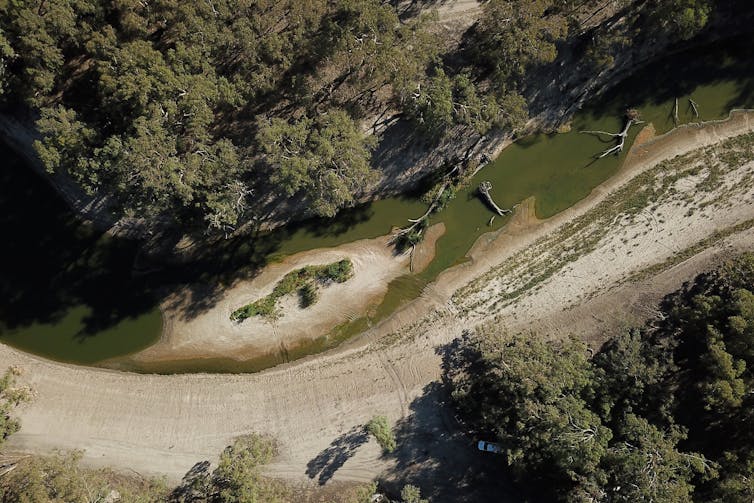 Years of drought meant rivers and aquatic life were already vulnerable before the fires.
Dean Lewins/AAP
Years of drought meant rivers and aquatic life were already vulnerable before the fires.
Dean Lewins/AAP
An opportunity for change
Successive governments have been asleep at the tiller when it comes to threatened aquatic animals. Official recovery plans for many fire-affected species have not been adequately funded or implemented.
In the Murray-Darling Basin for example, a native fish strategy was shelved in 2013 after the NSW government reportedly pulled funding.
The impending release of a new fish strategy, and other post-fire recovery actions, are an opportunity for governments to right past wrongs and ensure our precious freshwater species thrive into the future.
Authors: Jamie Pittock, Professor, Fenner School of Environment & Society, Australian National University

















