

NT rock art thousands of years old sheds new light on the mysterious Tasmanian tiger
- Written by: Paul S.C.Taçon, Chair in Rock Art Research and Director of the Place, Evolution and Rock Art Heritage Unit (PERAHU), Griffith University
Extinct animals have long fascinated people around the world – from dinosaurs, to giant kangaroos, to enormous flightless birds and almost unimaginable sea creatures.
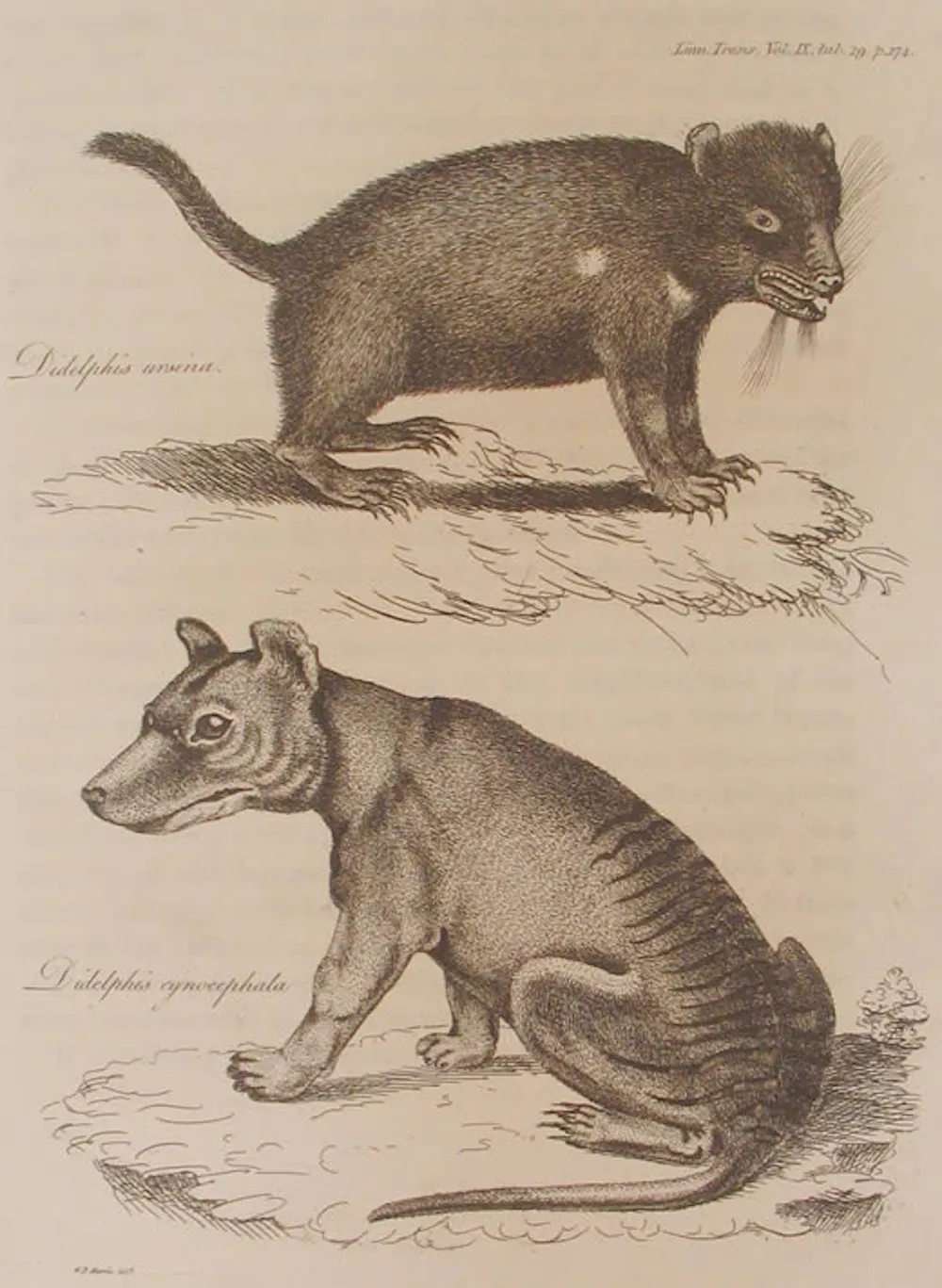
But one of the most intriguing is the Tasmanian tiger, also known as the thylacine (Thylacinus cynocephalus).
These large dog-like animals with stripes on their backs once roamed throughout the Australian mainland. But when Europeans colonisers arrived, thylacines were only found in Tasmania, hence the name Tasmanian tiger.
Our team of researchers has been documenting depictions of thylacines and other creatures at rock art sites in Arnhem Land, Northern Territory, for decades.
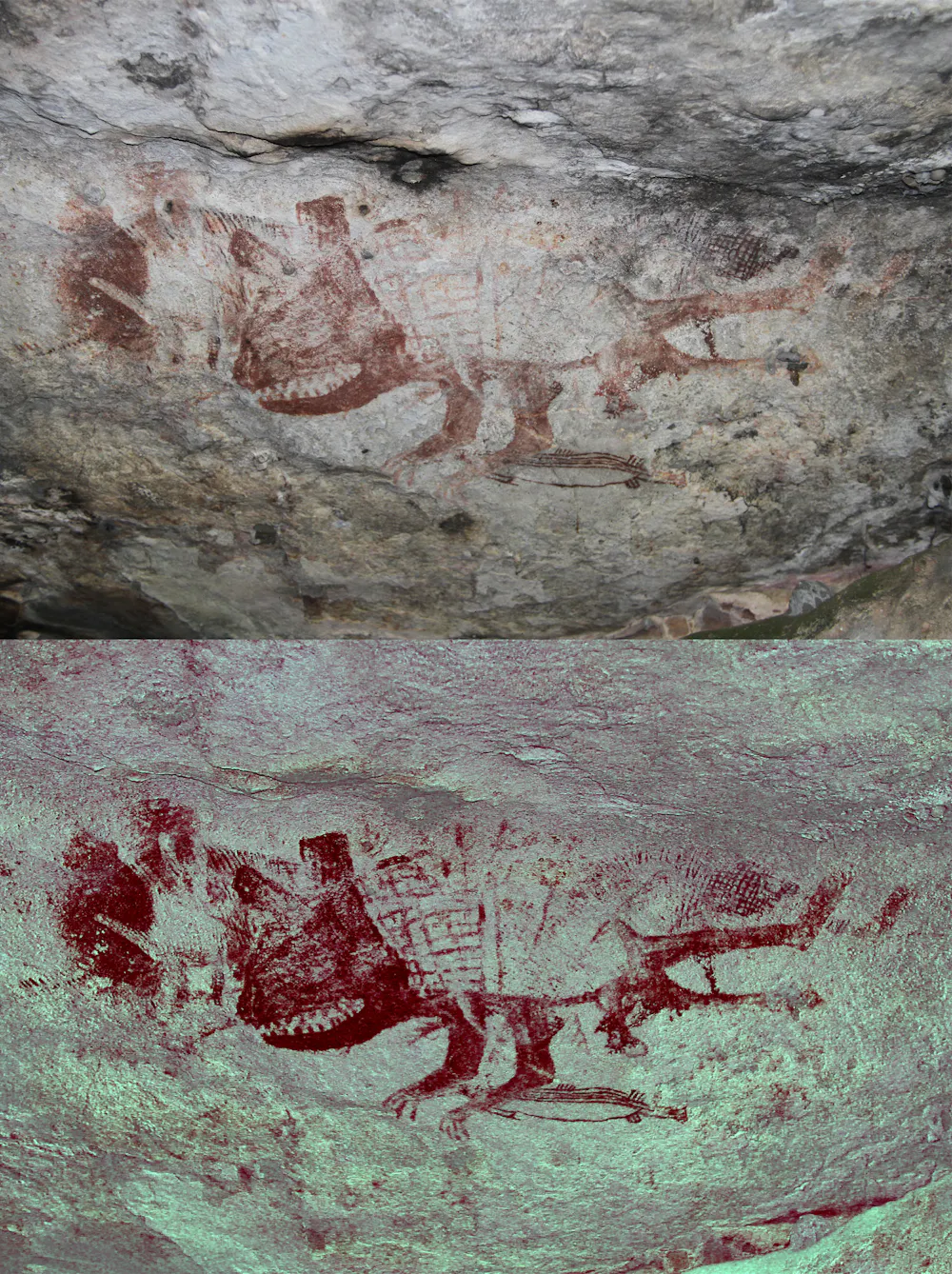
Today, we publish new research on rock art in north-west Arnhem Land, including 14 rock paintings of thylacines and two of Tasmanian devils. A few of these paintings were previously known but not described, while others were identified by our team over the past three years.
Besides rock art, we also examined recent paintings on bark, paper and canvas – as well as information from Aboriginal elders. Our findings emphasise how thylacines are still important to Arnhem Land Aboriginal communities today.
Memories of a curious creature
Scientists studying fossil remains suggest the thylacine became extinct on the Australian mainland about 3,000 years ago. The Tasmanian devil disappeared from the continent about the same time. Dingoes, humans and ancient climate change have been implicated in their demise.
The last known thylacine in Tasmania died in Hobart’s Beaumaris Zoo in 1936, but reports of tiger sightings in rugged, remote parts continued. Recent research suggests the thylacine may have persisted in Tasmania until the 1980s.
In the mid-1800s, Aboriginal people in Tasmania told settlers many things about thylacines, including that they had a powerful swimming ability, much like domestic dogs.
In the 1900s, rock paintings and engravings of thylacines were recorded at various locations on mainland Australia, especially in the north of the continent. Arnhem Land is particularly rich in images of this curious creature.
While making a digital tracing of a rock painting, co-author Joey Nganjmirra identifies the subject as a thylacine.Paintings in red, white and yellow
Our research focuses on rock paintings from Awunbarna (Mount Borradaile) and Injalak Hill (near Gunbalanya), east of the East Alligator River that separates Arnhem Land from Kakadu National Park.
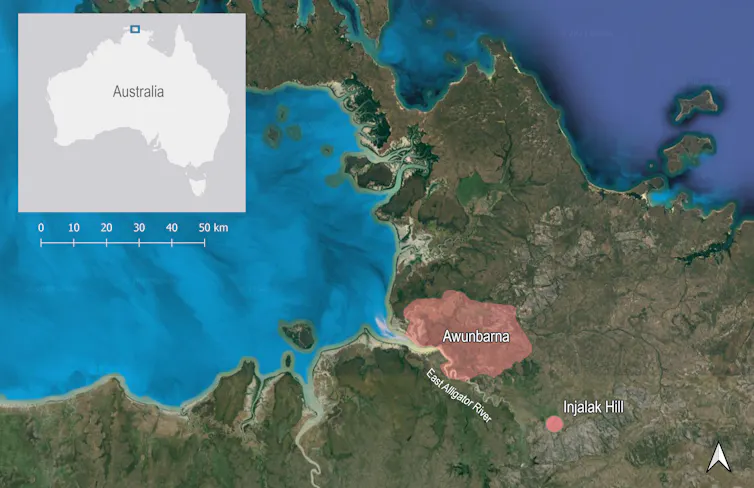
Since 2018, we have been working with local Aboriginal community members to record hundreds of rock art sites in each location – some of which include thylacine paintings.
North-west Arnhem Land is well known for its rich galleries of rock paintings. These have been made over at least the past 15,000 years and feature unique styles and subject matter. Our new findings add to the region’s cultural and scientific importance.
The thylacine and devil paintings we examined were made in various Aboriginal art styles. They were usually made with red and sometimes yellow ochre in various styles. The oldest were made about 15,000 years ago, while others were made at various times since.
Two of the paintings were made using white pipe clay (kaolin) with red ochre.
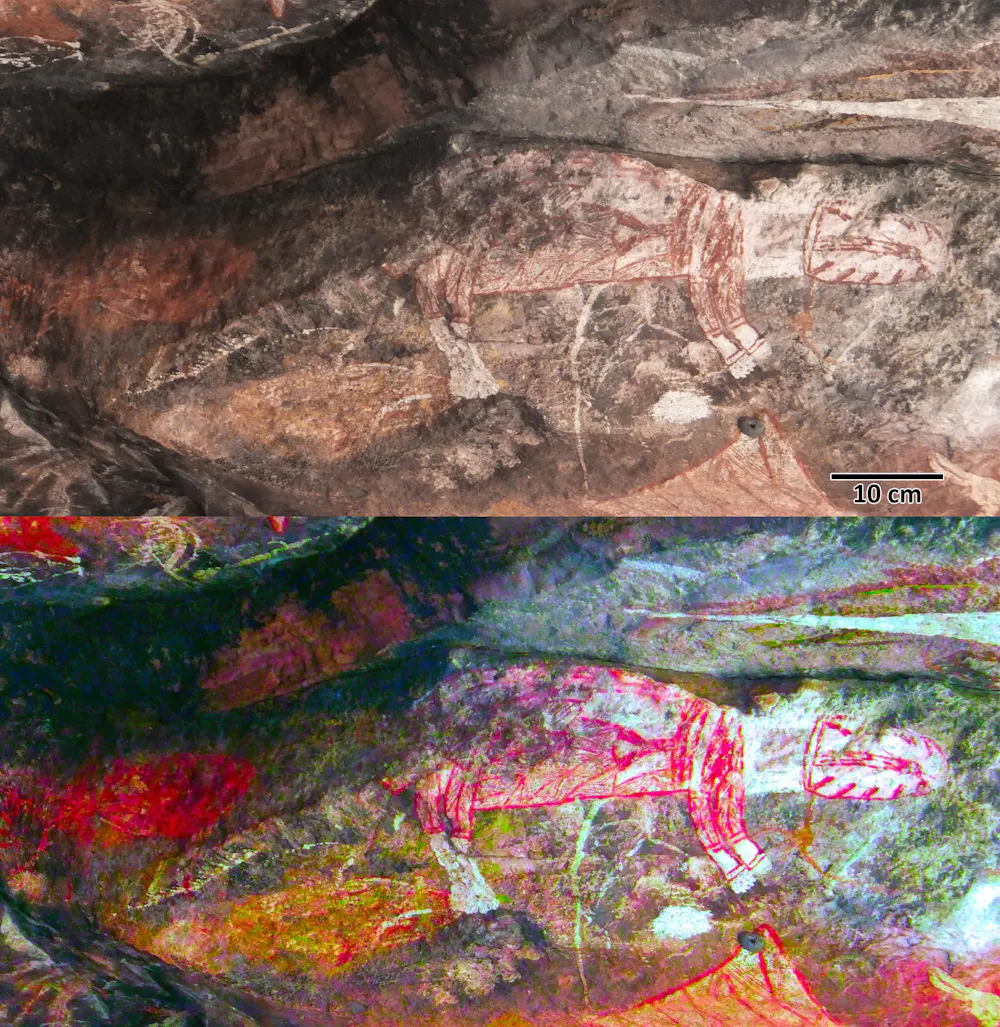 Red and white painting of a thylacine, Main Gallery, Injalak Hill and enhanced version.
Paul S.C. Taçon, Author provided (no reuse)
Red and white painting of a thylacine, Main Gallery, Injalak Hill and enhanced version.
Paul S.C. Taçon, Author provided (no reuse)
One red and yellow thylacine painting had fine white cross-hatching added to its body within the past few hundred years.
The white pigment does not last long and easily flakes off. It is coarse and sits on the rock surface rather than penetrating and staining the way red ochre does. Most paintings with white are less than 1,000 years old.
This suggests some depictions of the two extinct species are more recent than we might have expected.
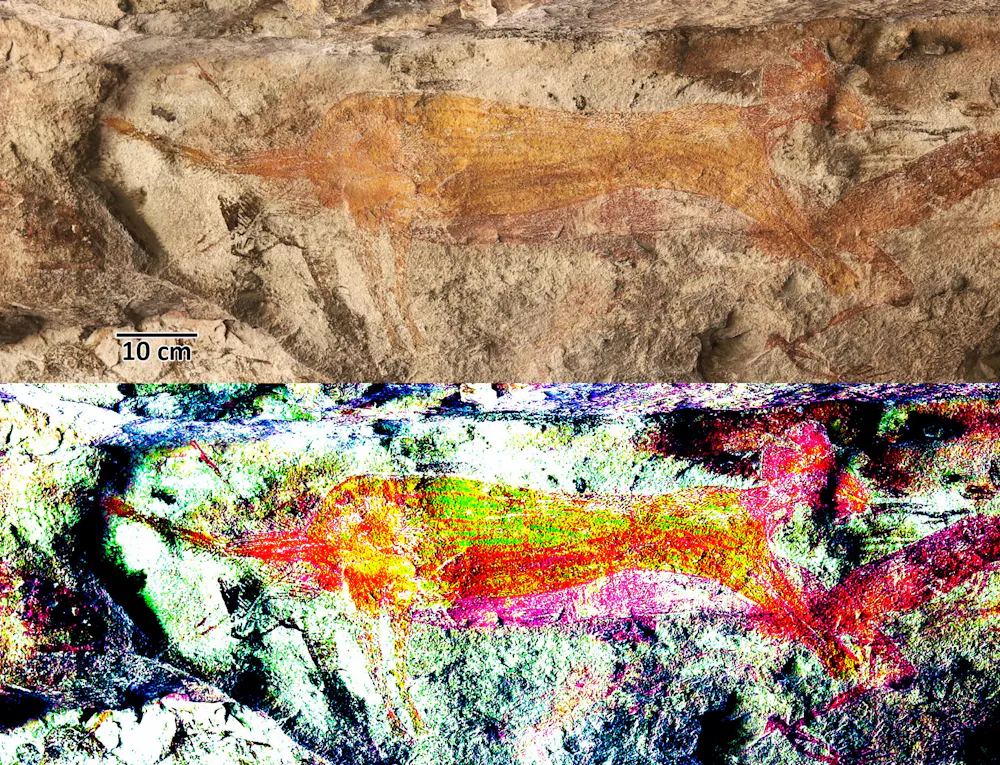 The yellow and red Injalak Hill thylacine (top) and a lab-processed version (bottom). Fine white hatched lines were added to the body in the past few hundred years.
Ben Dyson, Author provided (no reuse)
The yellow and red Injalak Hill thylacine (top) and a lab-processed version (bottom). Fine white hatched lines were added to the body in the past few hundred years.
Ben Dyson, Author provided (no reuse)
Rock art depictions of thylacines are much more numerous and widespread across mainland Australia than Tasmanian devils. Including our new findings, only 25 Tasmanian devil images have been documented – versus more than 160 thylacine depictions.
Thylacines may have survived much longer in pockets of northern Australia than Tasmanian devils, but were likely also more culturally important.
 An Awunbarna thylacine in the Large Naturalistic style, about 15,000 or more years old. A painting of a macropod has been superimposed over it.
Paul S.C. Taçon, Author provided (no reuse)
An Awunbarna thylacine in the Large Naturalistic style, about 15,000 or more years old. A painting of a macropod has been superimposed over it.
Paul S.C. Taçon, Author provided (no reuse)
At three rock art sites we recorded pairs of thylacines. Some Aboriginal elders we worked with had stories about Ngalyod (Rainbow Serpents) having two thylacines as pets that would swim in rock pools where Ngalyod resided.
The tails of the thylacines are shown in a few different positions – and some thylacines are depicted with teeth.
These variations don’t seem to be linked to the style or age of the work. It’s more likely they relate to different ways paintings were used to pass on information about the animal.
 An Injalak Hill Large Naturalistic style thylacine with sharp teeth (top), and a lab-processed version (bottom).
Craig Bangarr, Author provided (no reuse)
An Injalak Hill Large Naturalistic style thylacine with sharp teeth (top), and a lab-processed version (bottom).
Craig Bangarr, Author provided (no reuse)
Stories passed down through generations
Contemporary artists in western Arnhem Land have long been inspired by these paintings and related stories. Today, they continue to portray the thylacine across various forms of media. They also have a name for thylacines: Djankerrk.

The thylacine lives on in western Arnhem Land, not as a living animal or a ghost from the past, but as a creature that still has present day relevance. Our new research, conducted in collaboration with community members, contributes towards our understanding of what makes the thylacine so meaningful.
Authors: Paul S.C.Taçon, Chair in Rock Art Research and Director of the Place, Evolution and Rock Art Heritage Unit (PERAHU), Griffith University



















