

Google AI


Modern Australian

Built to last? History shows us the art of reform that’s both bold and enduring

  • Written by: Pat Leslie, Senior Lecturer, Crawford School of Public Policy, Australian National University

Reform, while never an easy task, is probably more difficult now than it used to be. Not only is declining trust a problem, belief in governments’ ability and willingness to affect real change is also in decline.

There’s also the tyranny of the election cycle. Often real reform takes much longer than the three-year terms, not to mention assessing whether any given policy decision was effective.

The attitudes of voters are also unpredictable: just ask the prime ministers who proposed the last eight referendums, all of which failed to win popular support.

So what does it take? Australian history shows lasting reform is about building coalitions, managing the stakeholders who can make or break your reforms, and having the somewhat magical ability to read the moment correctly.

Method 1: building it from scratch

First, there’s the hard way: start from first principles. This means reckoning with existential political questions: who do we represent? What vision of Australia do we want to manifest?

From there, you develop policy to fit the vision and communicate it with the public (ideally in a highly compelling way). The party wins in an election and implements the policy in government.

While the policy may be in place, you then have to win the public debate for keeping the policy long term, so your reforms are not immediately repealed when you lose power.
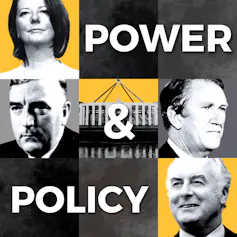
Built to last? History shows us the art of reform that’s both bold and enduring
Politics and policy share a love-hate relationship, but we can’t have one without the other. In this six part series, we’re chronicling how policies have shaped Australia’s prime ministers, for better or worse, and what it means for how politicians tackle today’s big challenges. If you can do all of that, and that’s a big “if”, you can sit back and watch your legacy take shape. But of course, this method is contingent on a lot of things going very right. This doesn’t happen often and there are only a few arguable exceptions. Medibank, the Whitlam government’s universal insurance model of healthcare fits some of these criteria well. Whitlam’s unusually ambitious policy program for the 1972 federal election was based on the ideas of equality, serving ordinary Australians and an expansive attitude to what the government in Canberra should be able to do. Medibank and its insistence that universal healthcare was a federal responsibility was a key part of the success of the “It’s Time” campaign that won power for Labor after 23 years in opposition. The difficulties began in implementation, and the policy was blocked several times before being passed by parliament after a joint sitting in 1974. After Whitlam’s dismissal, the policy was modified heavily by the Fraser government, before the Hawke-era reforms which renamed the program “Medicare”. Despite this, Medicare is so embedded into Australian society that it’s almost impossible to imagine repealing it. But Medicare is a rare success story in a sea of grounded, sunk or scuttled policy proposals. Method 2: seizing the opportunities Then there’s the “easy” way: simply open the door for a policy whose time has come. Here, the skill is not so much in policy development, but in guessing which policies might have the best chance of long-term success. It relies more on political calculus, both within a party and in the community. Most lasting reforms fit this entrepreneurial description of policymaking more cleanly. Even Medibank itself was a policy program inspired by European programs implemented decades earlier and adapted to Australia for Whitlam by health researchers. In the case of superannuation, recent research makes the argument that the 1980s reforms that created today’s system were actually accidental, to a surprising extent. Paul Keating and Bob Hawke laughing in front of the media in the 1980s
The Prices and Incomes Accord provided Paul Keating and Bob Hawke with untapped potential for other reform. Hulton Archive/Getty

The origins of the modern system had its roots not in pension reform, but in finding a work-around between the government and unions to enable wage increases without causing inflation. Workers could take the pay rise as deferred payment through superannuation schemes.

What turned this negotiation into a lasting policy reform was that politicians in Bob Hawke and Paul Keating recognised the opportunity the Prices and Incomes Accord represented.

Seizing the opportunity for real reform relies on the combination of opportunity and political expertise, during periods political historians call “critical junctures.” According to academic Emily Millane, modern superannuation occurred during one of these periods. The timing and sequence of events had to be just right, or little would have happened at all.

What not to do

When politicians sell the policies to the Australian public, they’re making a bet with history. Sometimes they win, sometimes they lose.

Most governments can pass legislation for any policy reform they like, provided they have the numbers.

But this cuts both ways: what is stopping the next administration from winding back your reforms? This is where the “shadow of the future” constrains politicians in the choices they make. Why spend your time on big reforms when you know they likely won’t survive?

One example of a policy that was developed, debated publicly, enacted, and then swiftly canned by a new administration is the Turnbull government’s reforms to the Australian Education Act, popularly known as Gonski 2.0.

Under this scheme, the Turnbull government made school funding allocations more needs-based and addressed long-standing inconsistencies in funding across each state. This included tackling controversial “special deals” for the Catholic and independent sectors.

Gonski 2.0 played by the book. Procedurally, the bill passed through the Senate without compromising its main intent.

But the reform’s fatal weakness was political: it failed to account for the organised stakeholders who stood to lose out.

From the outset, Catholic school bodies mounted a fierce campaign against the new arrangements, arguing they would be worse off relative to independent schools.

Scott Morrison dances in a crowd of dancing primary school students
Scott Morrison danced for joy when he struck a peace deal with Catholic schools in 2018. Joel Carrett/AAP

When Scott Morrison replaced Turnbull in August 2018, the political calculation was straightforward: a well-organised lobby was threatening to cause trouble at the 2019 election — and with the Opposition Leader Bill Shorten also siding with the non-public schools, the pressure was mounting from all sides.

Morrison’s response was to offer a $4.6 billion compensation package to the Catholic and independent sectors, thus gutting the reforms.

As Adam Piccoli of the Gonski Institute said bluntly at the time: “This is purely a political fix to shut down a powerful lobby group.”

The lesson is stark. Good policy and procedure are usually necessary, but not sufficient for lasting reform.

It is not always possible to account for the decisions of your successors — but you can try to shore up political support to make repeal too costly to attempt.

Better in hindsight?

Finally, why does it seem like modern politicians have no great reforming ideas? Well it’s probably because it’s too soon to tell.

Our evaluation of policy success and failure is dependent on our point of view. Some policies look good at first, and their flaws become more obvious later on, while others grow in appreciation over time.

From the perspective of modern readers, Medicare and perhaps even superannuation seem obvious solutions to obvious policy problems, but they were far more contested in their early years.

The currently embattled NDIS is a good example. It may one day prove to be a keystone no-brainer Australian social policy, if it survives.

And for the government under Anthony Albanese, its noted incrementalist approach may, in the end, add up to more than the sum of its parts. But we probably won’t know until it’s long disappeared in the rear-view mirror.

Authors: Pat Leslie, Senior Lecturer, Crawford School of Public Policy, Australian National University


Read more https://theconversation.com/built-to-last-history-shows-us-the-art-of-reform-thats-both-bold-and-enduring-276747

Pool and Deck Design: How to Plan the Perfect Outdoor Living Space for Your Sydney Home

For many Australians, the backyard is where life happens. Summer barbecues, weekend swims and long evenings outdoors are all part of the lifestyle, ...

Is Solar Pool Heating Worth It? What Sydney Homeowners Should Know

There's nothing quite like a backyard pool on a hot Sydney day. But once autumn rolls in, many pools sit unused for months because the water is simp...

Planning a Luxury House Move: A Week-by-Week Timeline for Prestige Sydney Homes

Selling or buying a prestige home is a major milestone. Whether it's a waterfront residence in Birchgrove, a grand Federation home in Haberfield or ...

Downsizing or Upgrading Your Caravan? Here's How to Sell It Without the Hassle

Selling a caravan can feel like a major task, especially when you are unsure about its value, paperwork, or how to find a buyer. Whether you are dow...

The Best Overseas Adventure Holidays for Australians Who Love the Outdoors

Australia offers no shortage of incredible outdoor experiences, but sometimes the best way to satisfy your sense of adventure is to head overseas. A...

Cape Town Wine Shuttle: Winelands Tasting & Tours

Embark on an unforgettable journey through the picturesque Cape Winelands, where world-class wines and breathtaking scenery await. Our Cape Town Win...

Metal Fabrication: Choosing Metal Fabrication Melbourne Services for Custom Projects

What Modern Metal Fabrication Involves From individual components to complete structures, metal fabrication brings together processes such as desig...

Why Giant Rats Tail Grass Keeps Coming Back After Spraying

Giant Rats Tail Grass (GRT) is one of the most frustrating pasture weeds for farmers and lifestyle property owners. You spray an infested area, see th...

When Custom Cardboard Boxes Make Sense for Your Business

Custom cardboard boxes can be useful when a standard carton does not fit a product, packing method or presentation requirement particularly well. A ...

Full-Height vs. Pop-Top Caravan: Which Is Better for Family Travel across WA?

A pop-top caravan is an excellent choice for travellers who want the comfort of a caravan without committing to a larger, bulkier setup. With a lowe...

Bottle Label Printing: Key Factors for a Professional Finish

Why the Printing Method Matters When businesses need packaging or printed containers developed for a particular application, the right supplier can m...

Virtual Livestock Fencing and GPS Tracking: Improving Visibility Across Cattle Properties

What Virtual Livestock Fencing Means for Modern Cattle Management Managing cattle across extensive properties requires more than knowing where anim...

Sydney Pawnbrokers Explained: How Hocking Your Car Actually Works

Sometimes you need cash, and you need it soon. If you own a car, you may already have a way to get it. That's what people mean when they say they've...

Moving Interstate from the Gold Coast to Brisbane (or Back)? What Removalists Wish You Knew First

Have you talked to anyone who’s done the move? They say the same thing: the drive up the M1 is the easy part. It's everything around it that catches...

Why the Spring School Holidays Are a Great Time to Visit Coffs Harbour

The spring school holidays are a good time to spend a few days on the Coffs Coast. The weather is starting to warm up, there is plenty to do outdoor...

What to Do When an Older Car Is No Longer Worth Keeping in Melbourne

Ever looked at another repair quote and wondered whether your old car is still worth the trouble? It is a common turning point for Melbourne motoris...

Your Baby's First Year: A Local Guide to Feeding, Sleep, and When to Get Extra Support

Ask ten parents in a Brisbane mothers' group how their baby is feeding or sleeping, and expect ten different answers.  Someone's baby sleeps throug...

Kitchen and Laundry Makeover Ideas That Don't Require a Full Renovation

Full kitchen renos are expensive — and most people don't actually need one.  They need the kitchen to stop looking like it's stuck in 2009, or they...
















