

Preserved orchids show pollination has fallen 60% since the 1970s
- Written by: Joanne Bennett, Senior Research Fellow Gulbali Institute, Charles Sturt University
With their dazzling blooms, orchids are among the most famous and collected flowering plants on Earth.
But orchids are not just beautiful and rare. They can also provide clues into the broader health of global ecosystems.
From the outside, ecosystems can look healthy while species reproduction rates are quietly collapsing, due to a decline in the number of bees and other pollinators such as flies and wasps. That’s in part what makes pollination failure so dangerous – and so hard to detect.
However, orchids have a very specialised biology which allows them to act as early indicators of pollination decline. And as our recent research, published in the journal Global Change Biology, shows, they’re telling us pollination is under pressure and has been for a long time. This threatens everything from global biodiversity to ecosystem resilience and food production.
No plan bee
Most plants are flexible. If one pollinator disappears, another might fill the gap. But for many orchid species, there is no other pollinator.
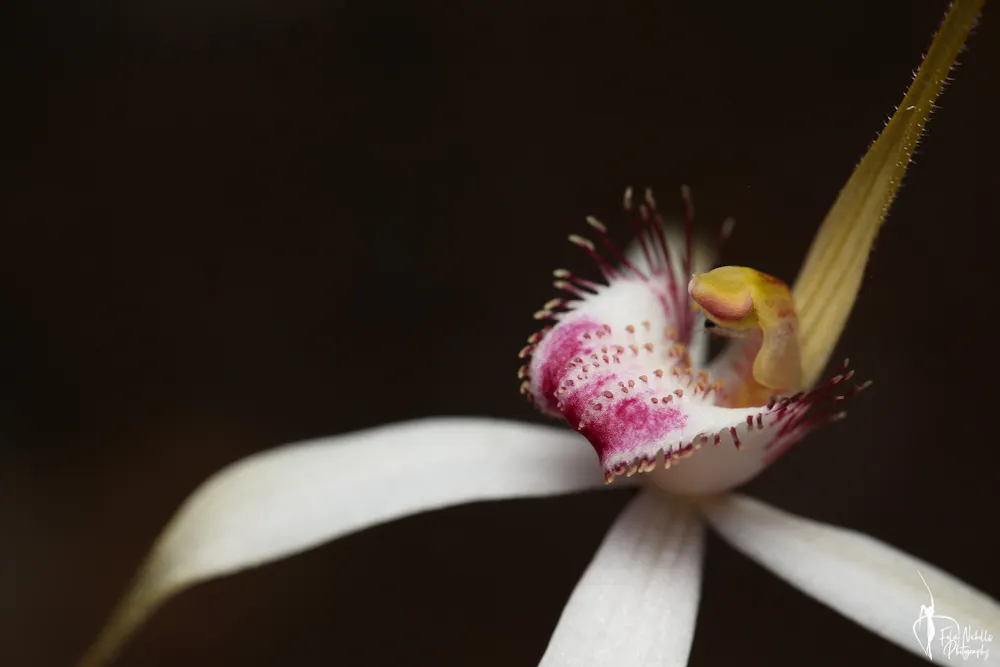
Many orchid species rely on a single pollinator, or a very narrow group of them. To attract these pollinators, orchids use specific scents, colours and shapes.
Some orchids chemically mimic the pheromones of female insects, tricking males into attempting to mate with the flower. Others flower only during short windows of time when their pollinator is active.
This tight ecological coupling means orchids may not be able to compensate when conditions change. If climate shifts, land use changes, or pollinator activity or emergence changes, orchid reproduction may fail.
The impact of pollination failure on orchid populations may not be seen for some years, as individual orchids – many of which retreat to an underground tuber when not flowering – may live for many years or even decades.
Turning collections into data
Proving long-term pollination decline in plants has been incredibly difficult. Reduced pollination in the field, unless for an agricultural crop, often goes unnoticed.
Few studies track reproduction consistently over decades.
While widespread declines in pollinators have been documented in Europe and North America, equivalent evidence from Australasia is lacking. A major review published in 2023 even asked whether the region had dodged the bullet, but concluded a lack of data was to blame, not immunity.
But orchids leave behind a record of visitation. When pollinators visit orchids, they remove pollen packets in a way that can be seen and measured even on dried orchid specimens. And herbaria around the world hold hundreds of thousands of these specimens, collected over centuries.
In our study, we analysed more than 10,000 preserved orchid flowers collected across Australia.
These specimens act like ecological time capsules, allowing us to measure pollination services directly, long after the season in which they were collected from the wild.
We found pollination services have declined by more than 60% since the 1970s. Mean pollination services declined with increasing land-use intensity, and temporal declines in pollination service were associated with rising temperatures.
A global pattern
This is a global pattern.
The first study to apply this approach, published in 2010, showed a long-term decline in the removal of pollen packages in the orchid Pterygodium catholicum from Signal Hill, South Africa.
More recently, an analysis using collections at the Royal Botanic Gardens, Kew, in the United Kingdom, examined removal of pollen packages across three orchid genera from Africa, the Americas and Europe.
That study found significant declines in pollinia removal in African (Disa) and American (Oncidium) orchids, particularly among species with deceptive or highly specialised pollination strategies. European Ophrys showed mixed trends depending on pollinator group.
Together, these studies show that declines in pollination are most pronounced in orchids that rely on specialised pollinator interactions.
This reflects broader evidence for what’s known as “pollen limitation”, where plant reproduction is constrained by a lack of effective pollination worldwide.

A window to the past
This emphasises why herbarium collections matter. Rather than stacks of old, dry plants, they provide a window to the past. This is invaluable to understanding environmental change.
Preserved orchid specimens provide rare long-term evidence of ecological change that cannot be replaced by short-term field studies.
When pollination fails, plant populations may persist for a time. But without reproduction they are already in decline.
Applying this approach across Australia’s orchid diversity could allow pollination failure to be detected earlier and more consistently at a continental scale.
Right now, orchids are sending a clear signal. Pollination is under pressure, and it has been for decades.
Authors: Joanne Bennett, Senior Research Fellow Gulbali Institute, Charles Sturt University
Read more https://theconversation.com/preserved-orchids-show-pollination-has-fallen-60-since-the-1970s-280819


















