

Self-isolating for coronavirus is impossible for tens of thousands of New Zealanders – unless we help them fast
- Written by Clare Aspinall, PhD Student He Kainga Oranga, Housing and Health Research Group, University of Otago
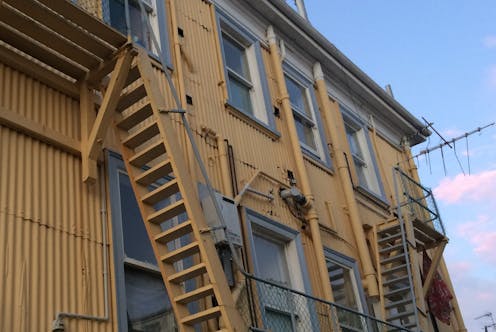
In less than 48 hours, all people in New Zealand will have to self-isolate, unless they are essential service workers. This is our best chance to stop the spread of COVID-19.
But what about the tens of thousands of New Zealanders who don’t have a secure home, or enough living space to avoid close or prolonged contact with others?
In Canada homelessness agencies report action against COVID-19 has not happened quickly enough and services have not received adequate support from government, putting the lives of some of the most vulnerable people in society at risk.
At a time when the New Zealand government is trying hard to stamp out coronavirus to avoid wider community spread, looking after the health of New Zealanders who are homeless, or living in crowded or emergency accommodation, has never been more urgent.
One-in-100 people in NZ are homeless
According to the 2013 census around 41,000, or 1-in-100 New Zealanders, were homeless.
This includes 28,500 New Zealanders living as temporary residents in severely crowded housing, 8,490 living in non-private accommodation run by private landlords and community organisations, as well as 4,197 who are without habitable accommodation. That’s tens of thousands of people without secure or adequate accommodation.
We’ll have to wait for the 2018 census to know more recent figures, and do have to take into account the NZ$2.2-billion plus per year spent on housing assistance and NZ$197-million over three years to fund 2,700 places in Housing First.
Even if the situation has improved for some people since then, given the increase in demand for housing, and the government’s increased funding for community housing providers, it is likely that the number of households living in crowded or non-private accommodation has increased between census.
Housing solutions for the next 48 hours and beyond
Government has the chance to move swiftly and make people’s accommodation more secure and prevent wider community spread of the coronavirus.
Building new housing is the long-term answer. But in the next 48 hours, local and central government can redirect accommodation that is no longer used by tourists for use as family homes and self-contained accommodation. That way, people who are currently homeless, living in non-private or crowded accommodation are protected.
People and families can self-isolate if they can control who they share their home with. This redirection will guarantee an income for those impacted by cancellations to accommodation bookings due to travel restrictions. Action is in society’s interest.
Under the New Zealand Influenza Pandemic Plan, national and local agencies, led by Ministry of Health and public health units, will work together in response to COVID-19.
Local pandemic responses must consider public health and community welfare. It is critical that agencies establish clear lines of communication and understand one another’s roles, as quickly as possible.
Given the risk for people who are homeless, each community needs to establish a list of organisations who work with people who are homeless, and identify those who are most vulnerable to COVID-19. Some public health units have begun to do so.
Community Housing Aotearoa (CHA), a peak body for the community housing sector, is well placed to link lead government agencies and public health units with community housing providers and homelessness services to implement pandemic plans.
Lead government agencies need to ensure community housing providers and homelessness services have access to the resources and equipment they need to prevent the spread of COVID-19 and deal with the consequences, if containment is no longer possible.
Some of the NZ$300 million attached to the government’s new Homelessness Action Plan 2020-2023 could be prioritised and brought forward for this purpose.
Identify those in need
In the next 48 hours, government priority needs to focus on sourcing self-contained accommodation for people without shelter, living in communal forms of housing, and crowded housing with large numbers of people and families sharing facilities.
Groups who are most at risk can be identified through community housing providers who have contracts with the Ministry of Housing and Urban Development, landlords who have multiple bonds lodged with the Ministry of Business, Innovation and Employment, and some councils that register boarding houses.
Local environmental health officers and homelessness agencies will know where people who require protection and support are. Priority can start with households who are medically most vulnerable and extend to as many households as possible to reduce the risk of transmission.
The government’s immediate priority needs to focus on supporting organisations to obtain self-contained accommodation for people sleeping rough or living in emergency housing that uses dormitory style accommodation.
It is not possible for people to protect themselves from infection and self-isolate in these situations. There is a risk infection will spread quickly in these environments.
Families who are living in communal emergency housing or severely crowded housing are another priority group. To prevent spread of COVID-19, the government needs to provide self-contained accommodation with adequate bedrooms for household members and a private bathroom, or more than one bathroom for larger families.
There is a window of opportunity for government to seek accommodation, so people are able to self isolate to protect themselves. In turn this protects the community and public health.
Supplying quarantined households in need
In the next 48 hours, government and community agencies need to clarify who will fund and deliver supplies for households in self-isolation or living in premises that have been quarantined. As yet this is unclear.
Households will need food, medicine, extra cleaning and personal hygiene products for each member of the family. These measures to protect and support people are especially important over the next month, but may be required through multiple waves of the pandemic. The response will need to remain in place until hopefully a vaccine is found.
This pandemic is an extraordinary situation. It highlights the importance of the right to housing. Housing has a central role in promoting population health and avoiding health inequalities.
We are in a window of opportunity to act, where it is critical to prioritise and do everything possible to address homelessness. Such measures will help to prevent the wider spread and impact of COVID-19 across New Zealand.
* Stay in touch with The Conversation’s coverage from New Zealand experts by signing up for our weekly newsletter – delivered to you each Wednesday.
Authors: Clare Aspinall, PhD Student He Kainga Oranga, Housing and Health Research Group, University of Otago

















