

how the poppy has endured as our symbol of war and remembrance
- Written by: Rowan Light, Lecturer in History, University of Auckland, Waipapa Taumata Rau
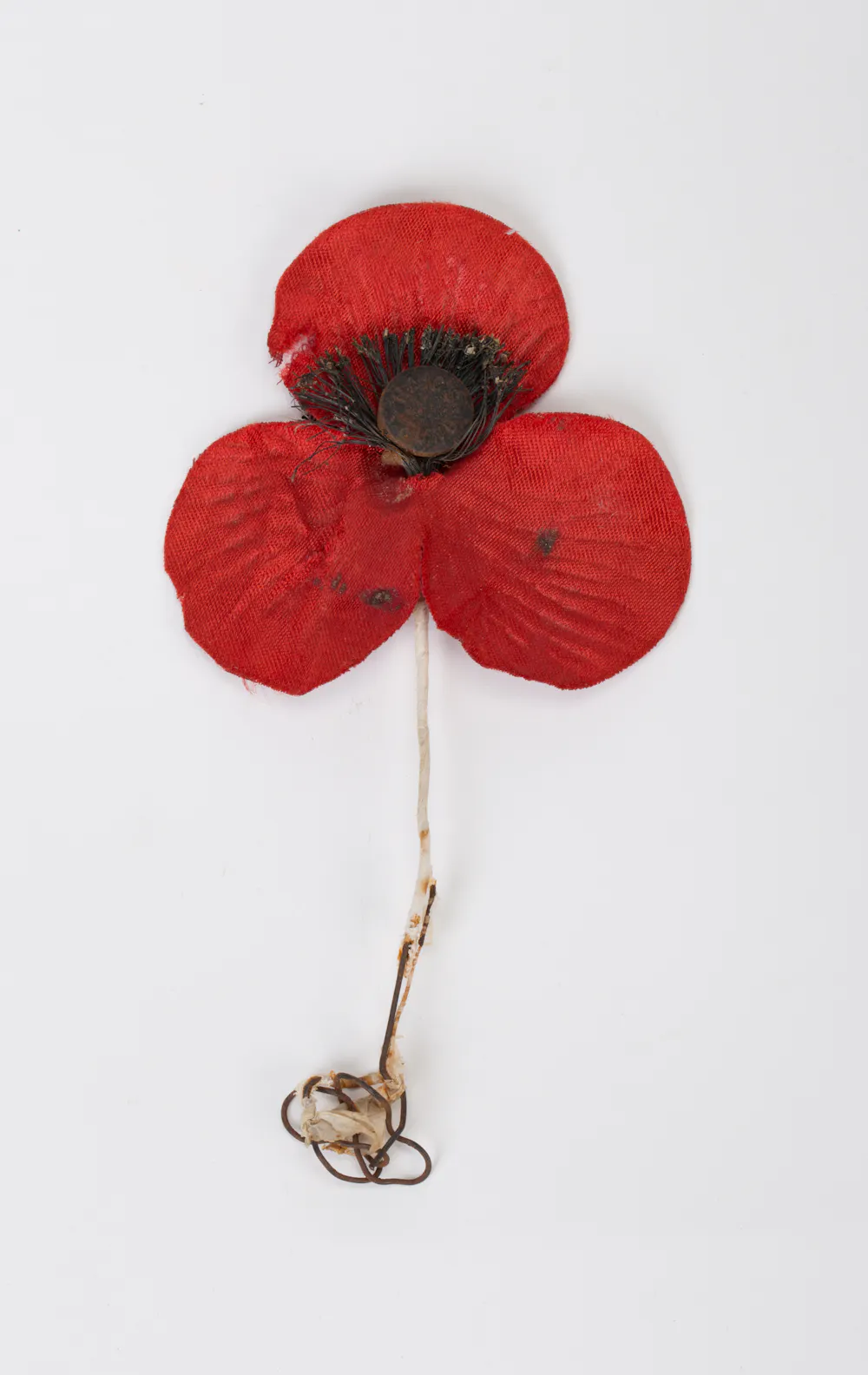
In 1916, in the middle of the Great War, 2nd Lieutenant Leonard (Len) James Shaw of the 2nd Auckland Battalion sent a pressed Flanders poppy in folded paper to his niece Jessie Osborne in Waikato.
Shaw had picked the poppy at night from his trench on the Western Front. His sporadic correspondence with Jessie was a small but vital connection to his family and home.
“I thought you might like some little thing,” he wrote in an accompanying letter, “pieces of shells are too big to send, and I think flowers much nicer.”
Shaw was following a centuries-long practice of using material objects to make sense of calamitous violence. Today, the poppy reminds us of the role those objects play in how we remember war.

In my 2023 book Why Memory Matters, I explored different “languages of memory” – written stories of the past, but also the sites, images and practices we use to make sense of change.
I would add to this the objects that texture and configure our lives, and which we imbue with values and meanings over time. Academics call this “material history”.
Since the 19th century, soldiers have collected objects to make sense of their experience. In the New Zealand Wars, we know British soldiers looted battlefields and wāhi tapu (sacred sites) as part of the regimental prize system.
When Anzacs such as Shaw travelled to Egypt and London during the first world war, they sought out souvenirs as military tourists that would act as repositories of challenging memories.
In Shaw’s case, personal tokens became family memories and then cultural artefacts. In 2002, the descendants of Jessie Pearson (née Osborne) donated Shaw’s poppy to the Auckland War Memorial Museum Tāmaki Paenga Hira.
I’m interested in how objects travel through families and museums and change the meaning of war over time. A brief material history of the poppy suggests it’s one of the most potent examples of this process.
How the poppy spread
After 1918, the popularity of John McCrae’s famous poem In Flanders Fields saw the cultural spread and sale of poppies in Britain and France to bolster morale and raise funds to support the orphans and widows of soldiers.
This reflected the industrial scale of the war: poppies, like medals, were mass-produced by associations such as the British Legion factory, which produced an early type made from cloth. Poignantly, the factory employed ex-servicemen who had been severely disabled during the war.
The rise of the poppy as a postwar emblem also showed how materials were repurposed to remember the fallen, through commemorative practices that emerged in the 1920s, such as Poppy Day. As early as 1923, New Zealanders were trying to import poppy seeds from Flanders to grow and sell as mementos.
There was a quirk here: in Britain, the poppy was (and still is) associated with the remembrance of the Armistice on November 11, which New Zealanders also observed.
But the delay in shipping silk and cloth poppies from Europe meant the New Zealand Returned and Services’ Association (the RSA), repurposed them for April 25. Poppy Day has taken place in the lead up to Anzac Day every year since 1922 (other than 2020 because of COVID).
This connection created another quirk: New Zealanders now associate the original Flanders poppy with Gallipoli, transplanted both literally and figuratively.
Part of Poppy Day’s appeal lay in its imperial and international resonance, as the allied nations turned to protecting some semblance of global peace in institutions such as the League of Nations.
Crucially, as Anzac Day morphed into a solidly male veterans’ ritual, selling poppies was also something civilians, especially women’s groups, could lead. In photographic archives we see groups of women carefully pinning flowers to the chests of veterans.
Historians estimate that by the end of the second world war, one in every two New Zealanders wore the red flower of remembrance.
 Images of poppies projected onto parliament buildings in Wellington, 2006.
Getty Images
Images of poppies projected onto parliament buildings in Wellington, 2006.
Getty Images
A fiercely protected symbol
I’ve written previously about the increasing public ownership of Anzac Day after 1965 as the original Anzacs passed away, a change symbolised by the 1978 plastic poppy.
It’s significant the WW100 commission, established to mark the 2015 centenary of the first world war in New Zealand, made the poppy its symbol.
In 2026, the RSA’s decision to produce a biodegradable, paper version is a return to old practices. Despite its imperial origins, the poppy is still seen as a national symbol today, one that is fiercely protected.
The Auckland War Memorial Museum introduced a Rainbow-friendly poppy alongside the traditional red flower in 2021, which provoked the ire of some conservative groups.
You can now leave a “virtual poppy” at the museum’s online cenotaph, which records those New Zealanders who have served and died in wartime. Len Shaw is remembered among them.
A month after sending the poppy home, he was killed at the Battle of Broodseinde in the third Ypres campaign, a devastating action that wiped out the officers of the 6th (Hauraki) Company.
Shaw was identified by his binoculars and pocketbook, and buried shortly after in a small village outside Cambrai. The poppy that recorded his war experience became a memento of his death for a grief-wracked Auckland family far from the ruins of the frontline.
Understanding this history allows us to glimpse the deeper significance of pinning a small poppy to our chests in 2026, and how we are wearing memories of war that echo down from the 20th century into our cultural life today.
Authors: Rowan Light, Lecturer in History, University of Auckland, Waipapa Taumata Rau


















