

Possums and gliders are pushing a native bird to extinction. What can we do?
- Written by: Bianca McBryde, PhD Candidate, Behavioural Ecology and Conservation, University of Sydney
From brightly coloured birds to the much-loved sugar glider, Australia’s native animals are a sight to behold.
The island continent is home to nearly 600,000 plants, animals and insects, many of which are found nowhere else in the world.
Tragically, though, we’re losing more of these species to habitat destruction and climate change.
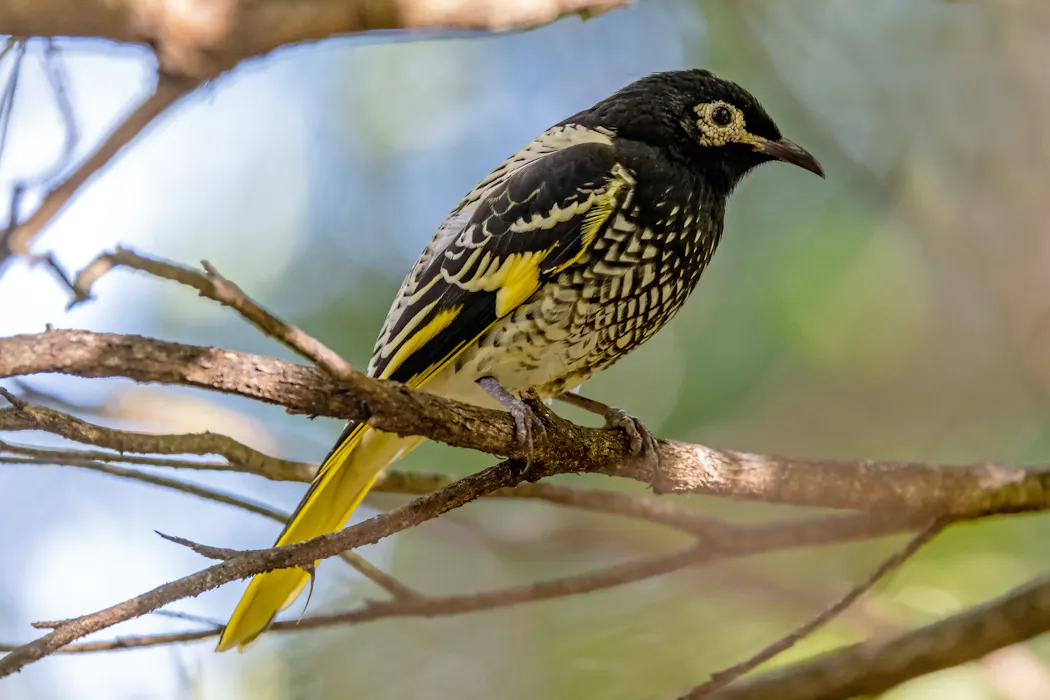
Worse still, conservationists are increasingly seeing one native species threaten the survival of another. One example is the critically endangered regent honeyeater, currently being threatened by native possums and gliders.
Our new study shows this trend could mean at-risk bird populations go extinct much earlier than they otherwise would.
Why native birds matter
Australia has more than 800 native bird species – more than almost anywhere else in the world. And they’re a vital part of our unique ecosystems, helping to spread pollen and seeds and ensuring some plants and animals don’t become too numerous.
But many bird species are now at risk from ongoing degradation of our natural environment through land clearing, urbanisation and the introduction of pest species.
Clearing land to make way for farms or houses has hit Australia’s woodlands particularly hard. Woodlands are full of trees and shrubs, like forests, but have have thinner canopies to let more sunlight in.
Since European colonisation, we’ve cleared roughly 80% of many temperate woodlands in Australia. As a result, one in five of our unique native woodland birds are currently in decline.
When one native species threatens another
Native predators and prey are generally able to coexist. If a predator drives its main food source to extinction, it would threaten its own survival. This rarely occurs in nature.
Usually, two native species maintain their coexistence through an evolutionary arms race. If the predator gets faster or smarter, the prey follows suit.
But if prey numbers suddenly drop due to other factors – such as habitat loss and invasive species – even occasional attacks from a native predator could push a species over the edge.
The regent honeyeater is a prime example. Less than a century ago, these striking black-and-yellow birds once filled the forests and skies of southeastern Australia in flocks of hundreds. However, they’re now on the brink of extinction due to the effects of habitat loss and increased competition. Today, there are fewer than 300 regent honeyeaters left in the wild.
In our new study, we looked at how predation by possums and gliders – which sometimes eat bird eggs and nestlings – may affect the survival of regent honeyeaters.
We found even occasional predation by these two species increased the regent honeyeater’s chance of going extinct in the next 20 years by 35%. This is significant because infrequent predation by a native species doesn’t typically threaten the survival of native prey.
This matters more because regent honeyeater numbers are so low. If there were 1,000 of these birds alive – the same number there were in the 1990s – our research shows predation by possums and gliders wouldn’t have the same impact.
An ethical dilemma
The case of regent honeyeaters, possums and gliders is an example of a “conservation conflict”. These conflicts arise when protecting one native species may come at the cost of another. For example, squirrel gliders predate on regent honeyeaters, but they are also threatened in multiple Australian states. So efforts to protect regent honeyeaters from predation by possums and gliders may interfere with squirrel glider conservation.
Conservationists have limited options when it comes to stopping predators eating threatened bird species. At present, the only widely used method is killing predators.
Culling invasive predators may be necessary for conservation in certain situations. For example, in Australia we routinely cull feral cat and fox populations to protect native species and livestock.
But it’s much more contentious to kill one native species to protect another, especially when the predator species isn’t the main cause of decline.
Yet if we do nothing, we might lose endangered species – such as the regent honeyeater – forever.
Read more: Most native bird species are losing their homes, even the ones you see every day
So, what can we do?
To protect possums, gliders and regent honeyeaters, it’s vital to bring back woodlands. Governments and conservation organisations are already working to restore habitat for regent honeyeaters.
Even so, it can take years to fully restore these areas. And while endangered bird populations remain low, predation by other native species will remain a problem.
That’s why researchers are investigating ways to protect threatened species without killing predators. One approach is spreading certain bird smells to deceive predators. Another is using tree collars to protect nests.
These methods are promising, but won’t work everywhere. Our research shows possums don’t use bird odour to find nests, so spreading smells around is unlikely to affect them. Gliders also move easily through tree canopies, so tree collars likely won’t stop them accessing nests.
As we lose more of our native animals, these conservation conflicts will only become more common. But to save the regent honeyeater, we must explore new non-lethal ways of managing predation by possums and gliders. Hopefully, these will help us protect other endangered species too.
Authors: Bianca McBryde, PhD Candidate, Behavioural Ecology and Conservation, University of Sydney


















