

Cities are getting hotter – and bigger. New research reveals the scale of the challenge
- Written by: Hamish Lewis, Lecturer in Climate Change, University of Waikato
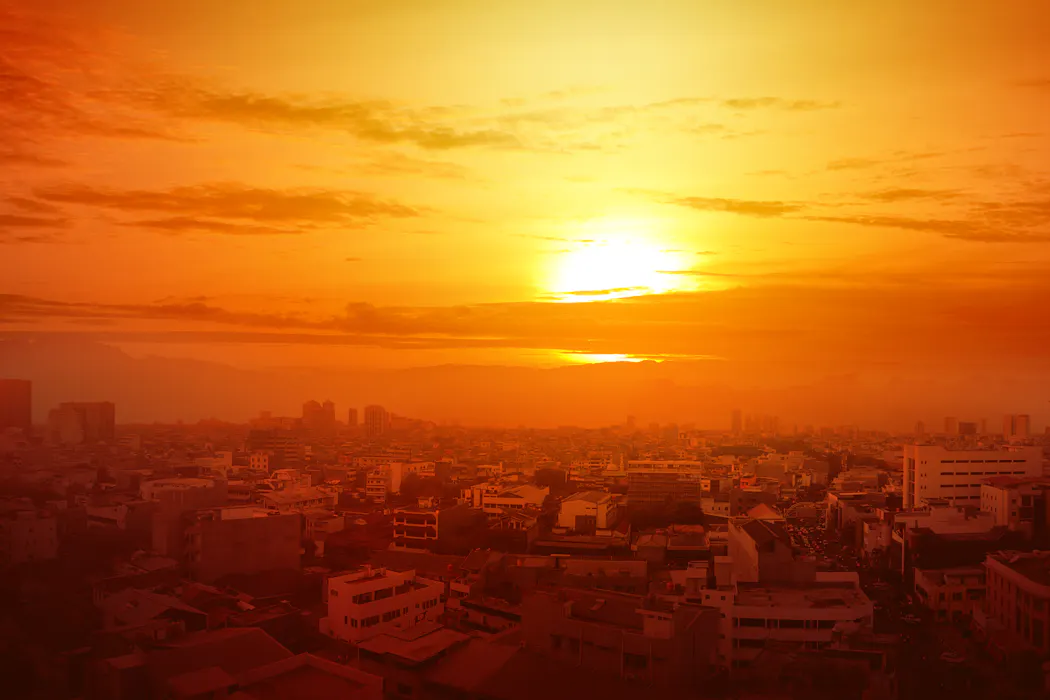
We tend to think of climate change impacts as dramatic and destructive. Storms and floods that bring down landslides and swamp streets, or raging wildfires that tear through forests and farmland.
Heatwaves, by contrast, often pass for many with little more than a few sleepless nights and headlines about hot weather. What we don’t see is the human cost that is often only counted long after the event is over.
It’s seen in spikes in mortality rates – or in hospital admissions for heatstroke, dehydration and heart problems – that correspond with the worst days or weeks of the heat.
More than a third of heat-related deaths are already attributable to climate change, and the risks will only rise as global temperatures continue to climb, with heat extremes projected to become more intense and more frequent in the decades ahead.
As warming continues, just what might future heat exposure look like? And what difference might today’s decisions make in changing the maths?
Our newly published research suggests that bold climate action taken now could potentially spare billions of people from heatwaves likely to be more severe than any the world has yet experienced.
Degrees of difference, billions at risk
Much research has focused on the impacts of a world 1.5C or 2C warmer than pre-industrial levels – the symbolic thresholds that underpin the Paris Agreement.
But those limits are fast becoming less theoretical. Between February 2023 and January 2024, global temperatures exceeded 1.5C over a 12-month period for the first time.
Scientists now expect the world to cross that threshold more permanently in the coming years. On current trends, 2C could follow within a few decades.
With that in mind, we instead examined warming levels more closely tied to real-world policy.
Based on existing emissions pledges, we examine scenarios where global temperatures rise by between 1.9C and 3.1C above pre-industrial levels by the end of this century – depending on how fully governments deliver on their commitments.
At the lower end, a 1.9C world reflects highly ambitious implementation of current pledges made under the Glasgow Climate Pact. At the upper end, 3.1C represents a future where existing policies continue with limited ambition for further emissions reductions.
At each of these warming levels, we assessed how many people in urban environments would be exposed to heat extremes that are statistically implausible in today’s climate.
In the high-end scenario, roughly four billion urban residents could face heat extremes unlike anything seen today – and occurring as often as once a decade. With 1.9C of warming, meanwhile, that number drops sharply to around one billion.
In other words, a sizeable proportion of the world’s population is likely to endure more extreme heat events, across every pathway that presently lies before us.
But, with every degree of warming avoided, around 2.5 billion fewer urban residents would be exposed to them.
A question of policy, not nature
While confronting, these headline figures mask a more troubling reality. Those most at risk – particularly the very young and very old – are often the least equipped to adapt.
We found a large share of the exposed population is concentrated in rapidly growing regions such as South and Southeast Asia, where urban populations are already highly vulnerable to extreme heat.
Within these crowded cityscapes, economically and socially marginalised communities are most likely to be affected because they often face higher heat exposure and fewer resources to cope.
This pressure is also being compounded by the urban heat island effect, in which built-up areas trap heat and push temperatures higher than in surrounding regions.
In Europe’s 2022 heatwave, for instance, more than 60,000 excess deaths – above what would normally be expected – were recorded, with impacts most severe in cities where heat was intensified. In 2021, a record-breaking heatwave in western Canada saw temperatures approach 50C, contributing to hundreds of deaths, many in urban homes without adequate cooling.
All the while, the world’s urban population is quickly climbing. Around 55% of people lived in towns and cities in 2018 – a share projected to rise to 68% by 2050, adding several billion more urban residents.
Such projections only raise the urgency of ambitious climate action.
While people can take steps to shrink their carbon footprint, the greatest responsibility ultimately lies with leaders charged with developing and implementing policies to cut emissions.
That’s because even small amounts of warming avoided can have outsized benefits, pulling billions of people out of the firing line.
Authors: Hamish Lewis, Lecturer in Climate Change, University of Waikato


















