

how a modest investment in NZ’s eye health would make a big difference
- Written by: Lucy Goodman, Research Fellow, School of Optometry and Vision Science, University of Auckland, Waipapa Taumata Rau
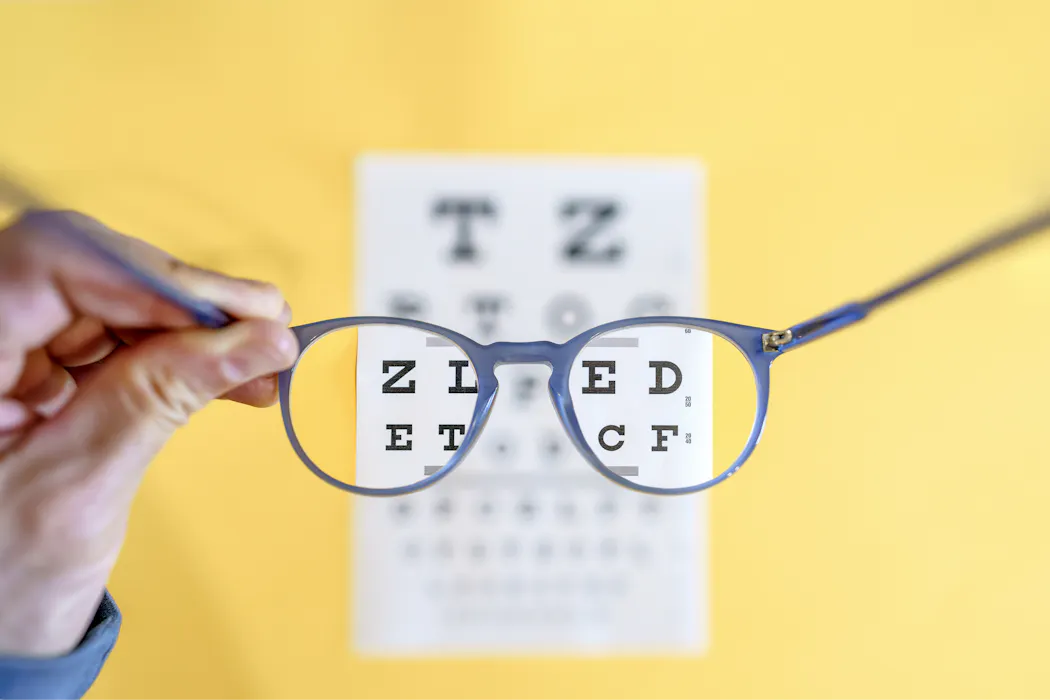
Few things matter more to us than our eyesight. We fear losing it even more than some life-threatening conditions.
Yet for many New Zealanders, access to routine eye care remains out of reach. This is despite the wide-ranging impacts of vision loss for both individuals and society.
It limits opportunities for work and study, raises the risks of traffic accidents and falls, and is linked with higher rates of depression and dementia. Globally, the annual cost in lost productivity has been estimated at nearly NZ$700 billion.
What’s more, it is mostly avoidable. More than 90% of vision loss can be prevented or treated with simple, cost-effective care such as glasses or cataract surgery.
In dollar terms, providing funding for spectacles and eye examinations for New Zealanders could provide a $36 benefit for every $1 spent.
If Aotearoa matched Australia’s public funding policies for community eye care, allocating just 1.2% of its health budget could fund 2.4 million eye examinations and 60,500 pairs of glasses. Current funding delivers eye care services to 25,000 children for about 0.02% of the health budget.
With the government now deliberating its 2026 health budget, our preliminary research looks at what it could cost to make routine eye care a reality for all New Zealanders.
A plight out of sight
Anyone reading this article in New Zealand through a pair of $2 reading glasses isn’t alone in choosing cheap solutions to improve their vision. As many as one in four Kiwi patients may be skipping or delaying specialised eye care because of the cost.
Routine eye examinations and spectacles are delivered almost exclusively by optometrists in private practice, with very little public funding to offset the costs.
This places New Zealand behind other countries, including Australia, the United Kingdom, Ireland and the United States, which fund routine eye care for some or all of their population.
For Kiwis needing financial support for eye care, options are limited. The children of Community Services Card holders can access up to $287.50 for an eye test and glasses via Enable New Zealand.
People on low-incomes can apply for a $280 loan from Work and Income New Zealand, which must be repaid. Spectacles are not currently available in the public sector. Despite advertised “$0 eye tests” and discounted spectacles, the reality is that eye examinations and spectacles remain unaffordable for many.
Optometry services provide more than a new pair of frames. Regular eye examinations are essential to detect and treat progressive conditions such as glaucoma and diabetic retinopathy which are asymptomatic in their early stages.
By excluding this preventative eye care from the public health agenda, New Zealand is leaving some communities to live with an avoidable burden.
In particular, eye care services are two to three times less accessible for Māori and Pacific people than for other New Zealanders.
One recent study found that in an inner-city Auckland community with a high Māori and Pacific population, half of residents with vision loss had never had an eye examination, while three-quarters had never been prescribed custom spectacles.
Should NZ adopt Australia’s model?
If New Zealand seeks a fairer model for eye health, policymakers have only to look across the Tasman.
In Australia, all citizens and permanent residents are eligible for Medicare-funded, comprehensive eye examinations delivered by optometrists.
Around one-third of its population uses these services every year. Uptake is highest among older adults, while additional policies target Indigenous Australians, for example via state-funded spectacle subsidies.
If New Zealand saw similar uptake, we estimate that adopting a comparable model would cost around $349 million a year, funding approximately 2.4 million eye examinations.
An additional $13 million would deliver around 60,500 spectacles to people who need them the most. Even this generous costing is comparable with other health investments, such as the Labour Government’s 2023 proposed investment of $390 million to extend free dental care to approximately 800,000 19–30 year olds.
Universal funding is not the only option: more targeted approaches could prioritise those at greatest risk of avoidable vision loss.
For instance, our analysis indicates that public investment of $89 million could subsidise approximately 760,000 examinations for Community Services Card holders who are most likely to need financial support.
Just $37 million would fund eye care for children under 15 years, aligning with universal dental and GP services for this age group. At the other end of the age spectrum, around $166 million per year would support eye care for older adults, who have the greatest need.
This investment would arguably be more effective than the $61 million proposed within the 2020 health budget to fund one-off “eye health checks”, for which there is no evidence of population-level benefit.
Healthy eyes should not be a luxury. New Zealand can and should include eye examinations and spectacles within its health expenditure.
Preventative eye care is a cost-saving investment that will reduce the societal and economic impacts of vision loss. For policymakers, it as an opportunity to invest in an area of health that has remained out of sight for too long.
Authors: Lucy Goodman, Research Fellow, School of Optometry and Vision Science, University of Auckland, Waipapa Taumata Rau


















