

The UAE is leaving the OPEC oil cartel. What could that mean for oil prices?
- Written by: Jamie Cross, Assistant Professor of Econometrics & Statistics, Melbourne Business School
The United Arab Emirates (UAE) has announced that on May 1, it will leave both the Organization of the Petroleum Exporting Countries (OPEC) and the larger OPEC+ group. By withdrawing, the UAE will now be able to independently decide how much oil it produces and sells.
This matters – and not just because the UAE is one of the world’s top ten oil producers. The country also has the capacity to increase its output by about one million barrels per day.
So, if the UAE chooses to ramp up production, could it put downward pressure on the price of oil once shipments can resume through the Strait of Hormuz?
With severe geopolitical tensions still disrupting the market, the immediate question is less about when we can expect cheaper oil and more about how the uncertainty feeds into what comes next.
Read more: UAE’s OPEC exit has been long in the works – and may mark the beginning of a Gulf realignment
What is OPEC?
OPEC was founded in 1960 to “harmonise the petroleum policies of its member countries as part of its efforts to safeguard their interests”. Iran, Iraq, Kuwait, Saudi Arabia and Venezuela were the five founding members.
The Emirate of Abu Dhabi became a member in 1967, and the UAE as a whole remained a member after the country’s federation in 1971. It is currently the third-largest oil producer among members, trailing Saudi Arabia and Iraq.
The group will have 11 members after the UAE exits on May 1.
OPEC+ is a larger group of oil-producing countries (including Russia) that also works together to set oil policy.
What does OPEC actually do?
OPEC’s statute states the organisation will:
devise ways and means of ensuring the stabilisation of prices in international oil markets with a view to eliminating harmful and unnecessary fluctuations.
In practice, that means collectively agreeing on and setting production quotas for its member countries, allowing it to influence global oil prices.
OPEC is widely referred to as a cartel. In broad terms, this refers to a group of producers who would otherwise be in competition but instead agree to work together to control supply and set prices.
But OPEC and some of its members have repeatedly rejected this characterisation, saying the group does not operate as a cartel.
What could this mean for oil prices?
OPEC members currently produce around one third of the world’s crude oil, but around half of oil exports.
OPEC’s influence on the oil price depends on coordinated changes in production. By agreeing to collectively limit, or to expand, the supply of oil in the market, OPEC can manipulate the price to meet its objectives.
The UAE alone is the world’s eighth-largest oil producer, and accounts for about 4% of the world’s oil production.
The UAE’s exit from OPEC therefore allows the country to break free of current agreements and increase its total exports. This would increase competition in global oil markets, putting downward pressure on prices over the medium term.
Little relief in the near term
This does not mean consumers should expect immediate relief. Oil prices are still being shaped by geopolitical disruptions due to the Iran war. The Strait of Hormuz, which normally carries about a fifth of the world’s oil and gas, remains effectively closed to shipping traffic, which has already caused major disruption.
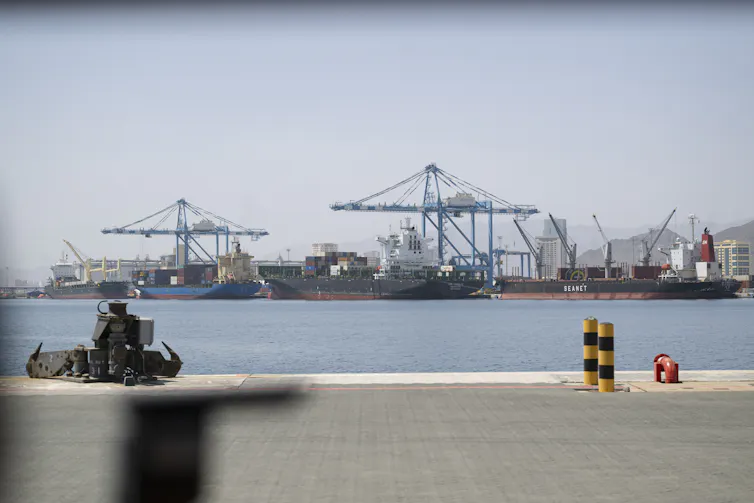
This means that the UAE cannot simply increase its supply in the short term, and any price relief will take time to come. The UAE does have an export route that avoids the strait, via the Port of Fujairah on the country’s east coast. But this cannot handle the country’s total production and completely offset disruption in the strait.
This does not mean the announcement will have no short-term effects at all. The oil price can move in response to news about future supply, even before production changes.
For example, research on OPEC news announcements finds oil supply news alone can have significant short-term effects on oil prices, and broader macroeconomic consequences for economic activity, inflation and exchange rates.
All eyes on the future
Announcements like this can also generate a lot of speculation and uncertainty. Looking to history offers some clues.
My own previous research shows uncertainty about future oil market conditions can lead firms to insure against future disruptions by changing how much oil they stockpile. At the same time, financial speculators may also place bets in futures markets about what the oil price will be.
These forces can move prices even without an immediate supply shock. My research suggests the price moves seen in the 1979 oil crisis were primarily driven by precautionary motives, while the 1985–86 price collapse was mostly driven by speculation.
This complexity means today, it’s difficult to know what to expect.
If traders believe the UAE’s exit from OPEC will eventually lead to higher production, this could put downward pressure on futures prices. But if they believe the exit increases geopolitical tension – and raises the risk of a future price war – we could instead see more volatile oil prices rather than a clean fall.
Authors: Jamie Cross, Assistant Professor of Econometrics & Statistics, Melbourne Business School


















