

Apps such as Stremio let you stream for free. How do they work? And are they legal?
- Written by: Marc C-Scott, Associate Professor of Screen Media | Deputy Associate Dean of Learning & Teaching, Victoria University
For a brief period, film and TV piracy in Australia seemed to be somewhat under control.
When Netflix launched in Australia in 2015, it provided a service the local media sector had lacked for years: instant, affordable and extensive access to a broad library of movies and series.
A decade later, that optimism has somewhat faded. Audiences now navigate an increasingly fragmented streaming market, spanning Apple TV, Binge, Disney+, HBO Max, Netflix, Paramount Plus, Prime Video, Stan, and sports services such as Kayo Sports. The list goes on.
And as the number of streaming platforms grows, so too do subscription costs. In 2025, Australians spent almost A$4 billion on streaming subscriptions, with the average household paying around $42 per month, up 18% on the previous year.
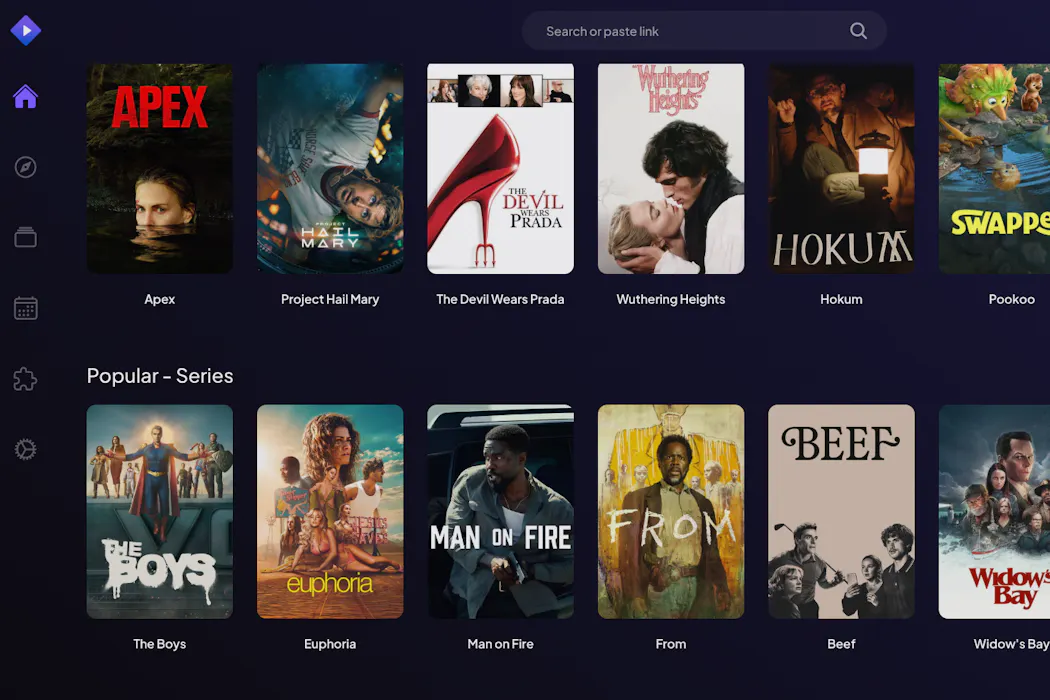
These costs are pushing viewers towards alternatives such as Stremio – one of several media aggregation apps through which viewers can access pirated content.
Australia’s long piracy history
Australia has historically recorded some of the world’s highest piracy rates for film and TV.
In 2015, the ABC reported 29% of Australians aged 18–64 illegally downloaded movies or TV shows – and 54% aged 18–24 did so regularly.
Much of this stemmed from frustrations with content access. Australian audiences have faced delayed release windows, geo-blocking and expensive pay-TV exclusivity deals. For many, piracy was a workaround for a distribution system that felt restrictive and outdated.
One example was when Foxtel secured exclusive Australian rights to Game of Thrones, forcing viewers to subscribe to its services to access the show. It’s no surprise that in 2015 Australia accounted for 11.6% of global illegal sharing of the show’s fourth season – with Melbourne being the top city globally (3.2%).
Back in 2015, I and other analysts argued blocking websites and targeting users would be less effective than increasing affordability and access through legitimate channels.
Streaming reduced friction (initially)
Industry surveys from 2014–15 showed piracy rates beginning to decline after Netflix’s launch. One study found the share of Australians engaging in online piracy dropped by 4%.
Netflix was widely viewed as a “game-changer” in the fight against piracy. Rather than navigating unreliable websites and waiting for downloads, viewers could pay a relatively low monthly fee to access extensive libraries of content.
But the streaming landscape has since shifted dramatically. Libraries are now fragmented across competing services, with films and series jumping between platforms as licensing agreements change.
Viewers have to maintain several subscriptions to legally access a broad range of content. Many can’t afford this.
Enter Stremio
This is the environment in which apps such as Stremio, as well as Nuvio, Kodi and Plex, have gained popularity.
Stremio was developed by Bulgarian company Smart Code OOD in the mid-2010s. Rather than hosting films or television shows itself, this free media aggregation platform lets users organise content from multiple services, both legal and illegal, through a single interface.
Apple, Foxtel, Google and many Smart TVs already offer similar aggregation services, allowing users to browse content across multiple streaming libraries through a single interface. Both Apple TV and Foxtel’s “All in One Place” approach are designed to simplify navigation across fragmented services, while still requiring users to hold the relevant subscriptions.
These systems are responding to consumers’ growing frustration with streaming fragmentation. But using them to access a wide variety of content still incurs high costs.
Meanwhile, content aggregator apps are generally free (or cheap). However, they also support third-party add-ons that can connect users to peer-to-peer torrent networks. This is where they enter legally and ethically complex territory.
The apps themselves are not inherently illegal. However, using them to access copyrighted content through torrent streams will generally constitute copyright infringement under Australian law.
Australia’s anti-piracy framework, particularly Section 115A of the Copyright Act 1968, allows copyright holders to seek Federal Court orders blocking websites primarily designed to infringe copyright.
But the legal responsibility surrounding platforms such as Stremio is complex, because multiple actors are involved. Stremio provides the interface. Third-party distributors supply the copyrighted material. And users access the content through add-ons.
In practice, copyright holders have typically targeted “distributors” and “access points”, such as torrent sites like The Pirate Bay.
But Stremio is an aggregation interface – not a content host or distributor – so it does not fit neatly into these categories.
It’s also worth noting that while users accessing unauthorised streams may be breaching copyright law, enforcement against individual users remains relatively uncommon in Australia.
Piracy as a user-experience problem
Streaming services once reduced piracy by offering convenience, access and affordability. In other words, they provided a better experience than illegal torrenting.
But the streaming landscape has changed. With viewers facing growing costs and “subscription fatigue”, content aggregators apps will become increasingly attractive, regardless of whether the sources are legitimate.
This should raise concerns for the industry.
If streaming fragmentation continues at the current rate, piracy may no longer be seen as a fringe activity operating outside of mainstream media consumption. It may become the only practical response to a system that has become restrictive, expensive, and difficult to navigate.
Authors: Marc C-Scott, Associate Professor of Screen Media | Deputy Associate Dean of Learning & Teaching, Victoria University


















